What happens when nature’s warnings go unheeded, and a volcano that never sleeps erupts with deadly force?
Welcome to FreeAstroScience.com, where we break down the science behind the headlines and bring you stories that matter. Today, we’re diving into the dramatic May 8, 2026 eruption of Mount Dukono in Indonesia—a tragedy that claimed three lives, sent a 10-kilometer ash column skyward, and left a nation asking hard questions about risk, reason, and respect for the Earth’s power.
Stick with us to the end. You’ll not only understand what happened on that fateful day, but you’ll also see why the lessons from Dukono matter for anyone who loves adventure, science, or simply wants to keep their mind awake in a world full of surprises.
- What Happened on May 8, 2026? The Eruption Unfolds
- Who Were the Hikers? The Human Cost of Adventure
- Why Were They There? Ignoring Warnings and the Price Paid
- What Kind of Volcano Is Mount Dukono?
- How Often Does Dukono Erupt? A Volcano That Never Sleeps
- How Does Indonesia Warn About Volcanoes?
- Why Is Indonesia So Volcanic? The Ring of Fire Explained
- What Are Lahars? The Hidden Danger After the Ash
- What Can We Learn? Reason, Risk, and the Sleep of Reason
What Happened on May 8, 2026? The Eruption Unfolds
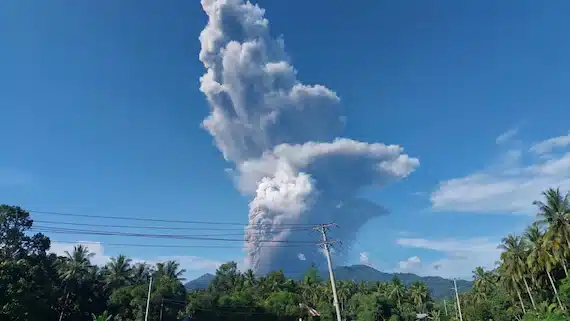
At 7:41 AM local time on May 8, 2026, Mount Dukono—known in Indonesia as Gunung Dukono—roared to life. The volcano, perched on Halmahera Island in North Maluku, sent a towering ash column 10 kilometers (over 6 miles) into the sky. For those nearby, the world turned gray in minutes. Ash rained down, the air thickened, and the ground trembled.
The eruption was sudden, but not entirely unexpected. Dukono had been restless for weeks, with nearly 200 smaller eruptions since late March. Yet nothing matched the violence of this blast. The ash cloud drifted north, threatening the city of Tobelo and nearby villages. Authorities worried about more than just falling ash—they feared lahars, deadly volcanic mudflows, if rain hit the fresh deposits on the slopes.
| Time (Local) | Event |
|---|---|
| 07:41 | Eruption begins; 10 km ash column forms |
| Shortly after | Ash cloud moves north toward Tobelo; lahar risk rises |
| Morning | 20 hikers reported trapped; rescue teams mobilized |
| Morning | Three hikers confirmed dead; 15 rescued and hospitalized |
| Ongoing | Search suspended for the day; bodies remain on mountain |
Who Were the Hikers? The Human Cost of Adventure
Behind every headline, there are real people. On that morning, 20 hikers—9 from Singapore and 11 Indonesians—were on the slopes of Dukono. They were drawn by the thrill of adventure, the promise of a sunrise above the clouds, and perhaps the hope of seeing a volcano up close. But nature had other plans.
When the eruption struck, chaos followed. Three hikers—at least two Singaporeans and one Indonesian—lost their lives. The rest faced a desperate struggle for survival. Rescue teams, braving ash and unstable ground, managed to save 15 people and get them to hospitals. Two hikers stayed behind to help recover the bodies of their friends. The search was called off for the day, with plans to resume at first light.
The pain of loss rippled far beyond the mountain. Families waited for news. Communities mourned. And all of us were reminded that adventure, while exhilarating, always carries risk.
Why Were They There? Ignoring Warnings and the Price Paid
Here’s the thing: Dukono wasn’t open to visitors. Since April 17, 2026, the area had been officially closed. Scientists at PVMBG (Indonesia’s Center for Volcanology and Geological Hazard Mitigation) had seen the warning signs—rising tremors, frequent small eruptions, and swelling ash plumes. They issued press releases. They put up signs along every access trail. The message was clear: stay away.
Yet, the hikers went anyway. Maybe they thought the risk was overblown. Maybe they trusted their luck. Maybe they just wanted that perfect photo. Whatever the reason, the decision proved fatal for three and nearly so for many more. It’s a hard lesson, but one we can’t ignore: when science speaks, we need to listen.
What Kind of Volcano Is Mount Dukono?
Mount Dukono isn’t your average volcano. It’s a complex volcano, meaning it has multiple overlapping craters and a broad, low profile. Its main active crater, Malupang-Warirang, is almost perfectly round—360 meters across and 230 meters deep. There’s a secondary crater, Malupang Wariang, about a kilometer southwest of the summit. The volcano rises to about 1,185–1,273 meters above sea level, dominating the northern part of Halmahera Island.
Dukono is famous for its Strombolian and Vulcanian eruptions. That means it doesn’t just ooze lava—it explodes, hurling ash, rocks, and lava bombs skyward. Ash columns can reach 10 kilometers, and ashfall can blanket areas up to 15 kilometers away. The volcano is watched closely by PVMBG, with an observation post in Mamuya Village.
| Attribute | Details |
|---|---|
| Location | Halmahera, North Maluku, Indonesia |
| Coordinates | 1.69950500°N, 127.87810500°E |
| Elevation | 1,185–1,273 m above sea level |
| Main Crater | Malupang-Warirang (360 m diameter, 230 m deep) |
| Secondary Crater | Malupang Wariang (700 x 570 m, 1 km SW of summit) |
| Volcano Type | Complex (multiple overlapping craters) |
| Eruption Style | Strombolian & Vulcanian (explosive, ash, lava bombs) |
| Monitoring Agency | PVMBG (Observation post: Mamuya Village) |
How Often Does Dukono Erupt? A Volcano That Never Sleeps
Some volcanoes sleep for centuries. Dukono barely naps. Its first recorded eruption was in 1550—a blast so fierce it filled the strait between Halmahera and Mount Mamuya with lava. Since then, it’s erupted in 1719, 1868, 1901, and, most dramatically, almost continuously since 1933. In 2026 alone, there were 93 eruptions before the deadly May 8 event.
This isn’t just a volcano; it’s a reminder that the Earth is always moving, always changing. For locals, Dukono is both a neighbor and a threat—predictable in its unpredictability.
| Year(s) | Event |
|---|---|
| 1550 | First recorded eruption (VEI=3, explosive + lava flows) |
| 1719, 1868, 1901 | Smaller eruptions |
| 1933–present | Near-continuous activity |
| 2026 | 93 eruptions (Jan–May), including deadly May 8 event |
How Does Indonesia Warn About Volcanoes?
Indonesia doesn’t take volcanoes lightly. The country uses a four-level alert system, managed by PVMBG. Each level signals a different degree of danger, from “Normal” to “Warning.” On May 8, Dukono was at Level III—“Standby”—meaning a major eruption was possible, and the area was off-limits.
| Level | Name | Meaning | Color |
|---|---|---|---|
| I | Normal | No unusual activity | Green |
| II | Alert (Waspada) | Increased activity; caution advised | Yellow |
| III | Standby (Siaga) | Major eruption possible; area closed | Orange |
| IV | Warning (Awas) | Major eruption imminent or underway | Red |
Why Is Indonesia So Volcanic? The Ring of Fire Explained
Indonesia sits right on the Pacific “Ring of Fire”—a giant horseshoe of tectonic plate boundaries that stretches from South America, up through Alaska, across to Japan, and down to New Zealand. This is where the Earth’s plates crash, grind, and dive beneath each other, creating earthquakes and volcanoes by the dozen.
With about 120–130 active volcanoes, Indonesia is the most volcanic country on Earth. That means eruptions aren’t rare—they’re part of daily life. For millions, volcanoes are both a threat and a source of fertile soil, fresh water, and even tourism. But as Dukono showed, the risks are always real.
What Are Lahars? The Hidden Danger After the Ash
When a volcano like Dukono erupts, the danger doesn’t end when the ash stops falling. If rain hits fresh ash deposits, it can mix with rocks and debris to form lahars—fast-moving volcanic mudflows that can bury villages, block rivers, and sweep away anything in their path.
After the May 8 eruption, authorities warned that the ash cloud was drifting north, putting Tobelo and nearby communities at risk. If heavy rain came, lahars could follow. That’s why the exclusion zone wasn’t just about the eruption itself—it was about what might come next.
What Can We Learn? Reason, Risk, and the Sleep of Reason
The story of Mount Dukono’s 2026 eruption isn’t just about geology or tragedy. It’s about the choices we make when faced with risk. Science gave clear warnings. Authorities closed the mountain. Yet, some ignored the signs, and lives were lost.
At FreeAstroScience, we believe in keeping our minds awake—never letting the sleep of reason breed monsters. Nature is powerful, unpredictable, and sometimes unforgiving. But with knowledge, respect, and a willingness to listen, we can stay safe and keep exploring the wonders of our world.
So, next time you see a warning sign—whether on a volcano, a weather app, or in your own life—pause. Think. Ask questions. And remember: reason is our best guide through the wild beauty of this planet.
Final Thoughts
Mount Dukono’s eruption on May 8, 2026, was a stark reminder of nature’s power and the cost of ignoring science. Three lives were lost, many more were changed forever, and a nation was reminded that adventure must always be balanced with caution. We hope this story inspires you to stay curious, stay safe, and keep your mind active—because the sleep of reason truly breeds monsters.
Come back to FreeAstroScience.com, where complex scientific principles are explained in simple terms. Let’s keep learning, questioning, and exploring—together.