Breakthroughs in condensed matter physics are uncovering nanoscale “swirls” of charge and spin, called polar nanotextures, with huge potential for next‑generation electronics.
In the past, these patterns were observed only in complex materials. Now, thanks to van der Waals ferroelectrics, they can be made in ultra‑thin, two‑dimensional layers that can be switched on and off with an electric field. Even more exciting, researchers have seen these swirls in special stacked structures called moiré superlattices, opening the way to new, energy‑saving devices.
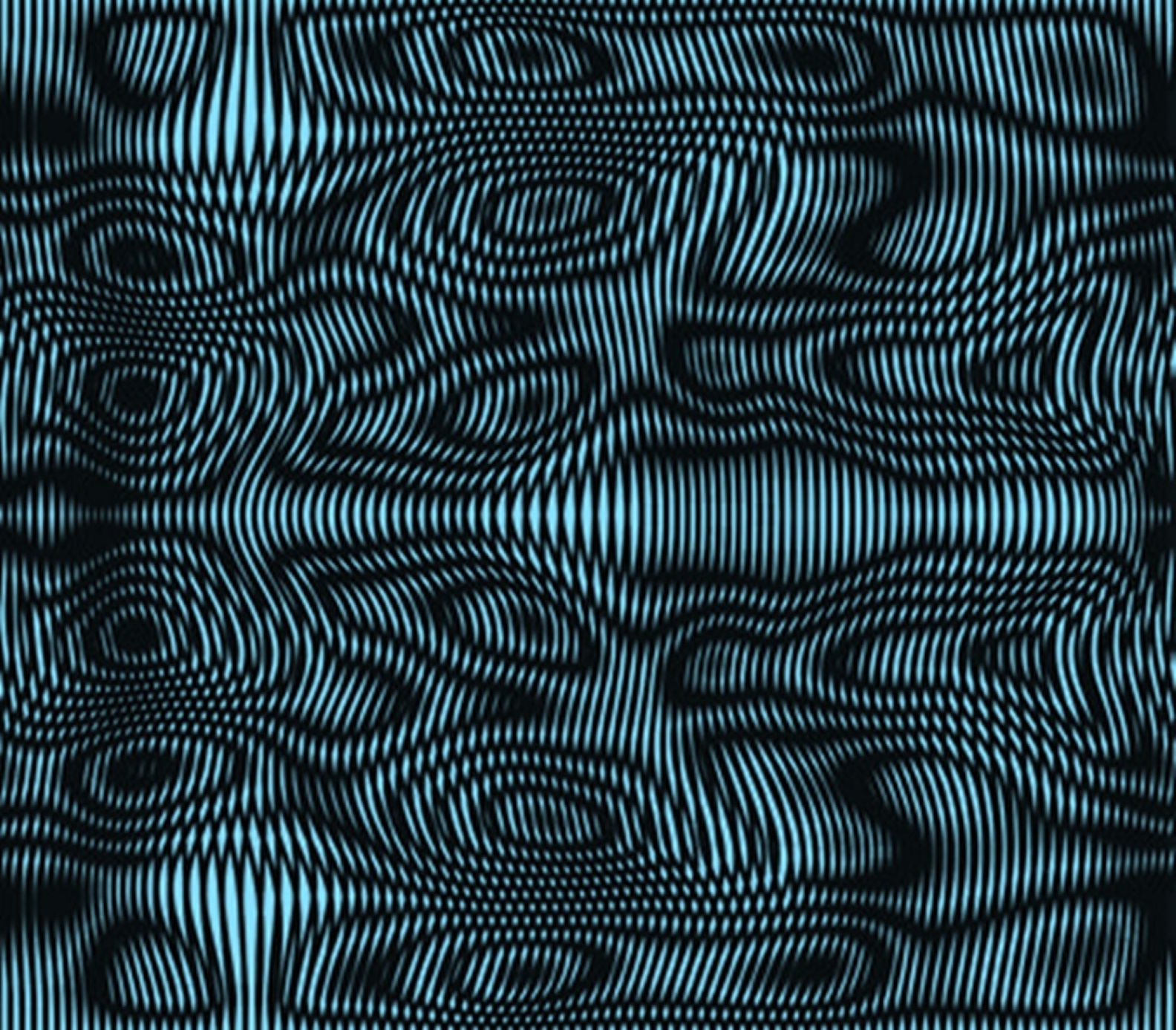
From swirled interference patterns believed to be nothing more than mineral pixels, new frontiers in nanoscale science are evolving. Researchers at Flinders University, in collaboration with Monash University and Nanyang Technological University in Singapore, are investigating atomic-scale moiré patterns in ferroelectric materials, a development that can change low-energy electronics and photonics forever.
“Just as overlapping pixels on a screen can create wave‑like distortions, stacking atom‑thin layers in slightly misaligned ways produces superlattice patterns with entirely new physical properties,” explains Dr. Pankaj Sharma of Flinders University’s Institute for Nanoscale Science and Technology. “These include superconductivity, exotic insulating states, and now ferroelectricity.”
Ferroelectricity, the electric counterpart to magnetism, occurs due to the formation of a switchable electric polarization by the alignment of tiny dipoles in a material. The team used advanced microscopy to examine the formation of polarization textures in moiré materials. Early experiments demonstrated unusual electronic and optical properties that might enable the development of ultra-fast and low-power computers.
Josh Edwards, a PhD student in the Sharma Lab, highlights the potential: “These polar structures can respond rapidly to external stimuli. That means they could outperform magnetic systems currently being explored for high‑density memory and neuromorphic computing.”
The findings show that at the nanoscale, moiré ferroelectric materials can be designed to maintain polarization in intricate, chiral patterns. Stacking the two-dimensional sheets enables researchers to exert unprecedented control over how charge moves and interacts, potentially leading to devices that are faster, smaller, and many times more energy-efficient than those we currently use.
In other words, a phenomenon that would have once been considered an optical aberration could form the basis for new nanoelectronics.