The Hidden Danger Beneath the Water: How Pool Drains Can Trap a Person
Have you ever wondered what’s really happening beneath the calm surface of a swimming pool? We tend to think of pools as places of joy, relaxation, and summer fun. But what if a small opening at the bottom — a drain no bigger than a dinner plate — could hold a person underwater with a force equal to a 250-kilogram weight pressing down on their body? Welcome to FreeAstroScience, where we explain complex scientific principles in simple terms. I’m Gerd Dani, writing from the chair where we spend most of our days — a wheelchair — and from the desk of Free Astroscience – Science and Cultural Group, where we believe that understanding the world is the first step to making it safer.
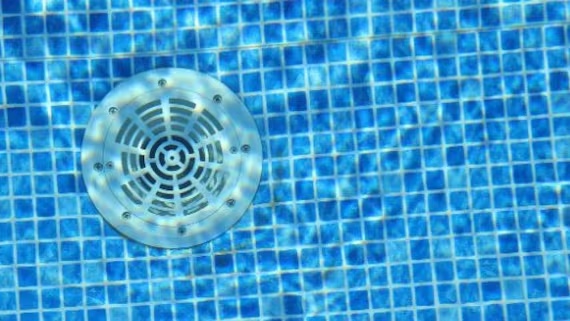
Today, we’re talking about something that doesn’t sound like astrophysics or quantum mechanics, but it’s pure applied physics: the deadly suction force of swimming pool drains. This isn’t a scare piece. It’s a science piece. And by the end of it, you’ll know exactly how pressure, flow, and engineering can turn an innocent pool into a trap — and how proper regulations and awareness prevent that from ever happening.
Stay with us. This one matters.
Why Does Every Pool Need a Filtration System?
Before we get into the physics of danger, let’s understand the physics of hygiene. Every swimming pool — whether it’s in your backyard or at a luxury resort — needs a way to keep its water clean. Without filtration, stagnant water becomes a breeding ground for microorganisms, algae, and bacteria that can make you seriously ill . The alternative? Drain and replace all the water regularly. That’s wasteful, expensive, and impractical. So engineers designed circulation systems: pumps that pull water out through drains, push it through filters (often combined with chemical treatments like chlorine), and return it to the pool — clean, clear, and safe. Here’s the catch. For that system to work, the pump has to create a pressure difference. It lowers the pressure near the drain so that the surrounding water — pushed by gravity and the weight of the water column above — flows toward the drain opening . That pressure difference is where the danger lives.
How Does a Pool Drain Create a Deadly Suction Force?
Think about what happens when you accidentally cover the nozzle of a vacuum cleaner with your palm. Your hand sticks to it. You feel a strong pull. That’s the same principle — just scaled down. Now imagine that same “suction cup effect,” but underwater, with an industrial pump, against the body of a small child. The numbers become frightening fast. A standard pool pump creates a vacuum force that can range from 150 to 250 kilograms (roughly 350 to 500 pounds), depending on the size of the pool and the number of drain openings. That’s not a gentle tug. That’s the equivalent of having a large motorcycle parked on your chest — while you’re underwater. When a body presses against the drain, it blocks the flow of water. The pump keeps running, but no water passes through. This creates a near-vacuum condition between the person’s body and the drain . At that point, the person is stuck. They can’t pull themselves free. Even a strong adult would struggle against that kind of force. A child wouldn’t stand a chance.
The Formula Behind the Force
Let’s break it down with the actual physics. If you remember one equation from school, it’s this one:
🔬 Pressure, Force & Area — The Core Relationship
• P = Pressure difference created by the pump (in Pascals, Pa)
• F = Suction force acting on the body (in Newtons, N)
• A = Area of the drain opening (in m²)
F = 30,000 × 0.08 = 2,400 N ≈ 245 kg of force
That’s the weight of three adult men pressing a child against the drain — all generated by one pump.
The key takeaway? Multiply the pressure difference by the drain area, and you get the force . The bigger the pump, the larger the pressure drop. The bigger the drain, the larger the contact surface. Either way, the resulting force is far beyond what any swimmer — especially a child — can overcome. And once that seal forms between body and drain, the pump just keeps pulling. The person can’t break free without someone shutting the system off.
What Types of Entrapment Can Happen in a Pool?
Not every drain incident looks the same. According to safety documentation and incident reports, there are several types of entrapment :
| Type | Description | Risk Level |
|---|---|---|
| Body entrapment | Torso, back, or buttocks seal against the drain. Most common and most dangerous type. | High |
| Limb entrapment | Arm, leg, or hand gets pulled into or pinned against the drain opening. | Moderate |
| Hair entrapment | Long hair tangles around or gets sucked into the drain grate. | High |
| Mechanical entrapment | Fingers, jewelry, bathing suits, or other objects caught in drain openings. | Moderate |
| Evisceration / organ injury | In extreme cases, direct suction on the abdomen can cause internal organ damage. | Severe |
The most frequent incidents involve body entrapment — when a swimmer’s torso or back covers the drain and seals it completely. Even when the pump isn’t running, a person can get fingers or hair caught in the drain cover. That’s why both active suction and passive entrapment risks need to be addressed by proper design.
What Do Real-World Incidents Teach Us?
This isn’t hypothetical. Across Europe and the United States, children have died because of pool drain suction. In April 2026 alone, two children lost their lives in Italy. Gabriele Ubaldo Petrucci, a 7-year-old boy, drowned on a Saturday afternoon at a thermal pool complex in Suio Terme, Latina province. He was there to celebrate his birthday. According to the family’s lawyer, the suction drain was missing its protective grate entirely at the time of the tragedy. Just days earlier, on Easter Sunday, 12-year-old Matteo Brandimarti died the same way — pulled down by a suction drain in a hotel hot tub near Rimini. These weren’t isolated events. In 2023, an 8-year-old child died in Palombara Sabina, near Rome. In 2018, a 13-year-old girl died at a hotel pool in Sperlonga, also in Latina province. Every single case shares a common thread: a failure of safety systems that were either absent, broken, or improperly maintained. In the United States, similar tragedies led to the passage of the Virginia Graeme Baker Pool and Spa Safety Act in 2007, named after the 7-year-old granddaughter of former Secretary of State James Baker, who died from drain entrapment in a hot tub.
These aren’t statistics. They’re children. And every one of these deaths was preventable.
What Are the European Safety Regulations for Pool Drains?
Let’s be clear: this doesn’t mean pools are inherently dangerous. The risk is entirely avoidable when manufacturers, installers, and operators follow the safety standards . In Europe, two directives govern pool drain safety: – UNI EN 13451-1 — General safety requirements for pool equipment – UNI EN 13451-3 — Specific requirements for water inlets and outlets, including anti-entrapment measures In Italy, public pools must carry a conformity certification under **D.M. 37/08**, which incorporates these European directives. Several Italian regions add their own requirements through regional resolutions . Here’s what the regulations demand:
All these measures share a single goal: reduce the suction force that any one point of a swimmer’s body can experience . A dual drain system, for instance, means a swimmer would have to cover *both* openings simultaneously to create a dangerous seal — something that’s geometrically nearly impossible with a 200 cm gap . In the case of Suio Terme, the protective grate was reportedly absent altogether. That single missing component may have been the primary cause of a child’s death.
—
How Can You Protect Yourself and Your Family?
Whether you own a pool or you’re just visiting one, here are practical steps to keep everyone safe:
- Know where the drains are. Before anyone enters the water, identify the location of all drain openings. Teach your children to stay away from them.
- Check for drain covers. Every drain should have a compliant, intact grate. If you see a drain without a cover — or with a cracked, loose, or missing grate — don’t get in the water. Period.
- Insist on dual drain systems. If you’re building or renovating a pool, install at least two drains spaced at least 200 cm apart . This distributes the suction and makes full-body entrapment almost impossible.
- Install a safety vacuum release system (SVRS). Modern pool pumps can detect a sudden spike in flow restriction — which is exactly what happens during an entrapment — and shut off automatically. Ask your pool technician about SVRS-compliant pumps.
- Keep long hair tied up. Hair entrapment is one of the most common hazards, even when the pump isn’t running . A simple hair tie can prevent a terrifying situation.
- Supervise children at all times. No safety technology replaces adult supervision. Young children should never be unattended near pool drains.
- Work with certified professionals. Pool drain compliance isn’t a DIY project. Hire licensed pool contractors who understand UNI EN 13451 regulations (in Europe) or Virginia Graeme Baker Act requirements (in the US).
Conclusion: Knowledge Is Your Best Safety Net
A swimming pool shouldn’t be a place of fear. It should be a place of laughter, of cool relief on a hot day, of children learning to swim and families making memories. And it can be all of those things — but only when we understand the physics at play and the safety systems designed to protect us. We’ve walked through the science today: how pressure differences create suction forces of 150 to 250 kilograms; how a simple equation — F = P × A — explains why a small drain can exert enormous power; and how European regulations like UNI EN 13451 set clear, measurable standards for grate size, flow speed, and system design . We’ve also seen the human cost when these standards aren’t met. Gabriele, Matteo, and others whose names we carry with us — their stories remind us that physics isn’t abstract. It’s real. It acts on real bodies. And ignoring it has real consequences.
At FreeAstroScience, we don’t just explain science for the sake of knowledge. We explain it because the *sleep of reason breeds monsters*. When we stop thinking, stop questioning, stop paying attention — that’s when accidents happen. Keep your mind active. Keep asking why. Keep learning. Come back to FreeAstroScience anytime. We’ll always be here — making the complex simple, and the invisible visible.
—
📚 References & Sources
- Millennium Pools & Spas — “Are Pool Drains Dangerous?”
- Geopop (Filippo Bonaventura) — “Come fa la pompa di aspirazione di una piscina a intrappolare una persona? La fisica e le normative europee” — April 21, 2026
- [3] European Standards: UNI EN 13451-1 & UNI EN 13451-3 — Pool Equipment Safety Requirements
- [4] Italian Ministerial Decree D.M. 37/08 — Public Pool Conformity Certification