The Universe Is Vast, So Where Is Everyone?
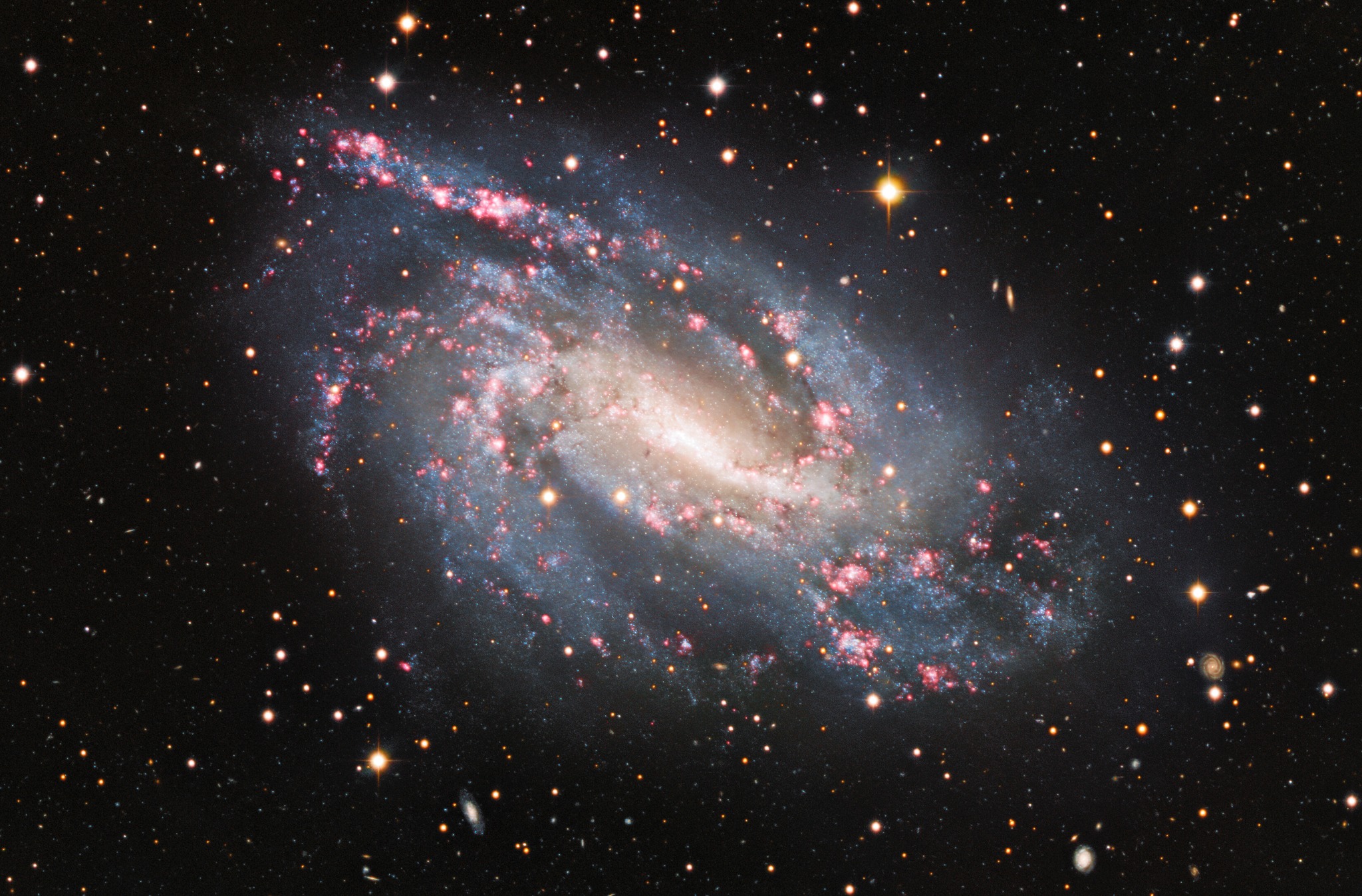
Have you ever stepped outside on a clear night, looked up at a sky full of stars, and wondered — are we really alone in all of that? You’re staring at maybe 2,000 stars on a good night. That’s barely a whisper compared to the estimated 100 billion to 1 trillion stars in our Milky Way alone. And for every star you see, there’s likely an entire galaxy somewhere out there.
Welcome to FreeAstroScience.com, where we break down complex scientific ideas into clear, human language — because the sleep of reason breeds monsters, and we believe your mind should never be turned off. We’re glad you’re here.
Today, we’re tackling one of the biggest, most unsettling questions in all of science: If the universe is so unimaginably large and old, why haven’t we found a single shred of evidence that someone else is out there?
This question has a name. It’s called the Fermi Paradox. And it has kept physicists, astronomers, philosophers, and late-night thinkers awake for over seven decades.
We’ll walk through the paradox itself, the famous Drake Equation, the chilling idea of a “Great Filter,” and some of the strangest — even terrifying — explanations for the cosmic silence. Stick with us to the end. This one’s a journey worth finishing.
📑 Table of Contents
- What Is the Fermi Paradox?
- What Does the Drake Equation Tell Us?
- What Is the Great Filter — And Should We Be Worried?
- What Are the Strangest Explanations for the Silence?
- Are We Just Looking in the Wrong Places?
- Final Reflections
What Is the Fermi Paradox?
The Lunch That Changed Everything
Picture this. It’s 1950. A group of physicists — Enrico Fermi, Edward Teller, Emil Konopinski, and Herbert York — are walking to lunch at the Los Alamos National Laboratory in New Mexico. They’re joking about flying saucer reports and faster-than-light travel .
Then, out of nowhere, Fermi blurts out a question that still echoes through modern science:
“But where is everybody?”
According to Teller, everyone at the table laughed — not because the question was silly, but because they all instantly knew he was talking about extraterrestrial life . That simple question — tossed off like a dinner roll — became one of the deepest puzzles in astronomy.
Fermi was no ordinary thinker. He won the Nobel Prize in Physics in 1938, helped build the world’s first artificial nuclear reactor, and worked on the Manhattan Project . He was famous for posing deceptively simple questions — “Fermi questions” — that hid enormous complexity beneath casual phrasing .
Why Does This Question Still Haunt Us?
Here’s the chain of logic that makes the paradox so stubborn:
- There are 200 to 400 billion stars in the Milky Way .
- Many of those stars are similar to our Sun. Some are billions of years older .
- A good percentage of them host Earth-like planets in habitable zones .
- If life arose on even a small fraction of those planets, intelligent civilizations should number in the thousands — or millions .
- Even at relatively slow speeds, a civilization could colonize the entire Milky Way in just a few million years .
- The Milky Way is about 10 billion years old. That’s enough time for the galaxy to have been colonized a thousand times over .
And yet? Nothing. No signals. No visitors. No cosmic graffiti. The silence is deafening — and it has a name: the “Great Silence” .
Arthur C. Clarke once said something that still gives us chills: “Two possibilities exist: either we are alone in the Universe or we are not. Both are equally terrifying.”
He wasn’t wrong.
What Does the Drake Equation Tell Us?
In 1961 — just eleven years after Fermi’s famous lunch — astronomer Frank Drake hosted a small meeting at the Green Bank Observatory in West Virginia. The topic: does the search for extraterrestrial intelligence even have a shot?
Among the attendees was a 27-year-old Carl Sagan. The group, which also included dolphin-communication researcher John Lilly, called themselves “The Order of the Dolphin” . To organize the discussion, Drake scribbled a formula on the board.
That formula became one of the most famous equations in science.
Breaking Down the Seven Variables
The Drake Equation estimates the number of detectable civilizations in our galaxy. Here it is:
The Drake Equation
N = R* × fp × ne × fl × fi × fc × L
| Variable | Meaning | Estimate |
|---|---|---|
| N | Number of detectable civilizations in our galaxy | ? |
| R* | Rate of star formation per year | 1–10/yr |
| fp | Fraction of stars with planets | ~1.0 |
| ne | Number of habitable planets per system | 0.5–3 |
| fl | Fraction of those planets where life appears | 0.1–1.0 |
| fi | Fraction where intelligent life emerges | Speculative |
| fc | Fraction that develops detectable technology | Speculative |
| L | Average lifespan of a communicating civilization (years) | 10–10,000,000+ |
Sources: Drake (1961), Kepler mission data, SETI Institute estimates
Let’s walk through this.
The first few variables — star formation rate (R*), fraction of stars with planets (fp), and the number of habitable worlds per system (ne) — we can estimate with some confidence today. Thanks to NASA’s Kepler mission, we now know that virtually every star has at least one planet. When you look at the night sky, there are actually more unseen exoplanets up there than visible stars .
We can assign fp a value near 1.0 . And Kepler data suggests between 0.5 and 3 habitable-zone rocky planets per system .
Where things get tricky — and honestly, a bit uncomfortable — is in the later variables. How often does life actually appear? How often does it become intelligent? How long do technological civilizations survive before they burn out?
As SETI pioneer Jill Tarter put it, the Drake Equation is “a wonderful way to organize our ignorance” .
Can We Actually Solve It?
Not yet. And maybe not ever — at least not without finding alien life first.
The variable L — the lifespan of a communicating civilization — carries the most weight. If civilizations tend to destroy themselves within a decade of discovering radio astronomy, then the galaxy is empty. If just 1% figure out how to survive, there could be a million advanced civilizations out there, with the nearest just a few hundred light-years away .
When Drake first presented his equation at Green Bank, estimates for the number of civilizations in our galaxy ranged from 1,000 to 100,000,000 . That gap tells you everything about how much we still don’t know.
In 2016, researchers revisited the equation using newly discovered exoplanet data. They found that humanity would only be unique if the odds of civilization developing on a habitable planet were less than one in 10 billion trillion . Those odds are absurdly slim — which means, statistically, someone else probably showed up at some point.
But then we’re right back where Fermi left us, staring at a silent sky.
And in 2018, Oxford University’s Future of Humanity Institute took a different approach. They reanalyzed the equation’s uncertainties and found a 38 to 85 percent chance that we’re alone in the visible universe — and a 53 to 99.6 percent chance we’re alone in the Milky Way .
That’s… sobering.
What Is the Great Filter — And Should We Be Worried?
If the math says intelligent civilizations should be common, but we see none of them, something must be stopping them. Something brutal. Something nearly impossible to get past.
Economist Robin Hanson proposed this idea in the late 1990s. He called it the Great Filter .
The Great Filter is a hypothetical barrier — some stage in the long road from dead chemistry to galaxy-spanning civilization that almost nothing survives. Every path toward intelligent, spacefaring life hits this wall. And almost nothing gets through .
The terrifying question is: where is the Filter?
Scenario 1: The Filter Is Behind Us (We Got Lucky)
Maybe the hardest step already happened — and we passed it. Maybe life itself is astronomically rare. Or maybe the jump from single-celled organisms to complex, intelligent beings is so improbable that we’re one of the very few who made it .
If this is true, it’s actually good news. It means the road ahead is open. We won the cosmic lottery. The Great Filter is in our rearview mirror.
We know that Earth formed roughly 4.56 billion years ago and firm evidence of life — stromatolites — dates back 3.5 billion years . Life appeared relatively quickly on our planet. But did it appear easily? Or did we just get lucky? We simply don’t know.
Scenario 2: The Filter Is Ahead of Us (We’re in Trouble)
Now for the uncomfortable version. What if the Filter isn’t behind us? What if it’s waiting?
Nuclear war. Climate collapse. Runaway artificial intelligence. A pandemic we can’t contain. These are all real threats that humans have considered as potential extinction scenarios .
Here’s what makes this hypothesis so chilling: the traits that drive a species to develop advanced technology might also carry the seeds of its destruction . Every civilization smart enough to split the atom is smart enough to build a bomb. Every species that masters energy also gains the power to wreck its own world.
If the Great Filter sits ahead of us, then the galaxy isn’t silent because nobody’s out there. It’s silent because nobody survives long enough to make noise .
As one darkly humorous take from Vice puts it: when one alien asks another, “Should we visit that tiny blue planet?”, the other shrugs and says, “The Great Filter will get them soon” .
What Are the Strangest Explanations for the Silence?
Scientists and thinkers have proposed dozens — maybe hundreds — of solutions to the Fermi Paradox. Some are reasonable. Some are wild. A few will keep you up at night.
Let’s look at the most compelling ones.
The Zoo Hypothesis: Are We Being Watched?
What if advanced civilizations know we’re here — and they’re deliberately keeping their distance?
This idea, known as the zoo hypothesis, treats Earth like a cosmic wildlife preserve . Think of Star Trek’s Prime Directive: don’t interfere with a developing civilization. Aliens might be observing us the way we observe gorillas in the Congo — from a distance, without contact, letting things play out naturally .
Interestingly, this was one of the earliest proposed solutions. Russian rocket scientist Konstantin Tsiolkovsky suggested something similar in the 1930s: aliens have quarantined humanity to protect our independent cultural development .
For this to work, though, there’d need to be some kind of galactic agreement — a consensus or a dominant civilization enforcing the rule . One rogue alien tourist would blow the whole thing.
The Dark Forest: Is the Universe a Hunting Ground?
If you’ve read Liu Cixin’s science fiction trilogy The Three-Body Problem, you already know this one. It’s bleak. Really bleak.
The dark forest theory says the universe is like a dark forest full of silent hunters . Civilizations that survive are the ones that learned to stay quiet. If you reveal your position — by, say, broadcasting radio signals into space (hi, Earth) — you risk being destroyed by another civilization that sees you as a potential threat .
Under this theory, the silence isn’t empty. It’s strategic. And if it’s true? Well, we’ve already been shouting into the void for about a century .
That… doesn’t bode well.
The Virtual Reality Trap
Here’s a mind-bending one. What if advanced civilizations don’t bother colonizing the galaxy because they’ve turned inward instead?
Once a species creates sufficiently advanced computing and simulation technology, maybe expanding through physical space becomes pointless. Why endure the cold vacuum between stars when you can build infinite virtual worlds inside a machine?
It’s a strange thought — a civilization so advanced it becomes invisible, not because it died, but because it stopped caring about the physical universe.
Maybe We’re Simply the First
There’s also a humbler possibility: somebody has to be first. Maybe that’s us.
The universe is 13.8 billion years old , but the conditions for life as we know it — the right stars, the right chemistry, enough heavy elements forged in earlier supernovae — may have only become common relatively recently.
If that’s the case, we’re not alone because the universe is empty. We’re alone because the party hasn’t started yet . We’re the early birds. The rest of the guests are still getting dressed.
Are We Just Looking in the Wrong Places?
Before we spiral too deep into existential dread, let’s take a breath. There’s a simpler — and frankly, more encouraging — explanation for the silence:
We’ve barely looked.
Our own planet’s signals have traveled about 100 light-years into space. That’s a tiny bubble in a galaxy that spans 100,000 light-years . We’ve been listening for alien signals for only about 60 years, and studies show that, relative to the size of the universe, we’ve searched one minuscule corner .
We might also be listening on the wrong frequencies. Alien technology could rely on communication methods we haven’t developed yet — maybe something like quantum entanglement, or technologies we can’t even imagine .
As astrophysicist Kaitlin Rasmussen of the University of Michigan points out, upcoming generations of large telescopes will let us peer into the atmospheres of Earth-sized planets, giving us far better data about habitable conditions across the galaxy . We’re getting closer to answering at least some of the Drake Equation’s unknowns.
SETI researcher Jason Wright at Penn State acknowledges that theoretical work on the Fermi Paradox faces “strongly diminishing returns” without real data, and he advises researchers to “stay close to the data” .
The best discovery could be one observation away.
Final Reflections: The Question That Won’t Let Go
So, where does all of this leave us?
We’ve walked through the logic of the Fermi Paradox — how a simple lunchtime question from 1950 became one of the deepest unsolved problems in science. We’ve broken down the Drake Equation, that elegant attempt to organize everything we don’t know about alien life into a single formula. We’ve stared into the abyss of the Great Filter and wondered whether the barrier is behind us or ahead. And we’ve explored some of the strangest, most haunting explanations for why the universe stays quiet.
The honest answer? We don’t know. We’re roughly where ancient humans were when they debated whether lightning came from Zeus . The difference is that we now have the tools — better telescopes, better data, better questions — to start chipping away at the answer.
One thing is certain: the only definitive answer we can ever get to the question of whether alien life exists is “yes.” Until that day comes, the possibility will always remain that we simply haven’t found it yet .
And that, in its own strange way, is a reason to keep looking.
This article was written and prepared for you by FreeAstroScience.com, where we take complex scientific ideas and explain them in terms that make sense. We believe that knowledge isn’t a privilege — it’s a right. And we believe your mind should stay active, always, because the sleep of reason breeds monsters.
Come back to FreeAstroScience.com anytime. There’s always more to learn — and the universe isn’t done surprising us yet.
📚 References & Further Reading
- Fermi Paradox — Wikipedia
- The Fermi Paradox and Drake Equation — The Planetary Society
- The Fermi Paradox: Where Are All the Aliens? — The Planetary Society (2025)
- The Drake Equation and the Fermi Paradox — CUNY Astrobiology
- The Fermi Paradox — Where Is Everybody? — Vice
- The Fermi Paradox — Wait But Why
- The Fermi Paradox: Where Are All the Aliens? — Britannica