The Schrödinger’s Cat Paradox, an enigmatic quantum physics concept, has piqued the curiosity of many. This thought experiment was put forth by the famed Austrian physicist, Erwin Schrödinger, in 1935, posing a conundrum around our conception of reality, especially at the subatomic level. The paradox proposes that Schrödinger’s Cat is in a quantum superposition of life and death states simultaneously. But, what makes this feasible?
Demystifying the Schrödinger’s Cat Paradox
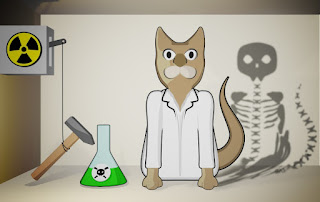
The paradox was conceived as a theoretical experiment to shed light on quantum physics’ peculiarities. Imagine a scenario where a cat is enclosed in a box with a radioactive substance and a Geiger counter. The fate of the cat comes down to whether the radioactive substance disintegrates or not. If it disintegrates, the Geiger counter triggers a poison release, resulting in the cat’s demise. Conversely, if the substance remains intact, the cat survives. The quantum superposition principle suggests that until the box is opened and the cat’s state observed, it exists in a superimposed state of life and death. This paradoxical notion throws a spotlight on reality’s nature, revealing how our physical world perception is constrained by quantum laws, which often contradict our everyday experiences.
The Cat’s Dual Fate: Survival or Death by Gas
In the first scenario, the cat survives, while in the second, it succumbs to gas suffocation. This stark contrast underscores the paradox’s essence, representing one of the quantum physics field’s most captivating challenges. It illustrates the divergence between the subatomic world and our perceived reality, suggesting that observation can influence reality itself. Despite appearing bizarre and counterintuitive, the Schrödinger’s Cat Paradox stands as a landmark in our universe’s understanding.
Gerd Dani — Founder & Director Gerd Dani is the visionary in a wheelchair behind FreeAstroScience. An astronomy graduate and a master's in physics, he founded this blog in June 2020, driven by a passion for breaking down complex scientific and philosophical concepts into bite-sized, digestible pieces. As President, he is dedicated to making science accessible to everyone, from students to seasoned academics.
(()=>{async function handleCredentialResponse(response){try{const res=await fetch('https://freeastroscience.com/wp-login.php?action=googlesitekit_auth',{method:'POST',headers:{'Content-Type':'application/x-www-form-urlencoded'},body:new URLSearchParams(response)});/* Preserve comment text in case of redirect after login on a page with a Sign in with Google button in the WordPress comments. */ const commentText=document.querySelector('#comment')?.value;const postId=document.querySelectorAll('.googlesitekit-sign-in-with-google__comments-form-button')?.[0]?.className?.match(/googlesitekit-sign-in-with-google__comments-form-button-postid-(\d+)/)?.[1];if(!! commentText?.length){sessionStorage.setItem(`siwg-comment-text-${postId}`,commentText);}location.reload();}catch(error){console.error(error);}}if(typeof google !=='undefined'){google.accounts.id.initialize({client_id:'251104905146-eghigrtua82ec7aan4em9fle9u5f0ilc.apps.googleusercontent.com',callback:handleCredentialResponse,library_name:'Site-Kit'});}const defaultButtonOptions={"theme":"outline","text":"signin_with","shape":"rectangular"};document.querySelectorAll('.googlesitekit-sign-in-with-google__frontend-output-button').forEach((siwgButtonDiv)=>{const buttonOptions={shape:siwgButtonDiv.getAttribute('data-googlesitekit-siwg-shape')|| defaultButtonOptions.shape,text:siwgButtonDiv.getAttribute('data-googlesitekit-siwg-text')|| defaultButtonOptions.text,theme:siwgButtonDiv.getAttribute('data-googlesitekit-siwg-theme')|| defaultButtonOptions.theme,};if(typeof google !=='undefined'){google.accounts.id.renderButton(siwgButtonDiv,buttonOptions);}});/* If there is a matching saved comment text in sessionStorage,restore it to the comment field and remove it from sessionStorage. */ const postId=document.body.className.match(/postid-(\d+)/)?.[1];const commentField=document.querySelector('#comment');const commentText=sessionStorage.getItem(`siwg-comment-text-${postId}`);if(commentText?.length && commentField && !! postId){commentField.value=commentText;sessionStorage.removeItem(`siwg-comment-text-${postId}`);}})();
var astra = {"break_point":"921","isRtl":"","is_scroll_to_id":"1","is_scroll_to_top":"1","is_header_footer_builder_active":"1","responsive_cart_click":"flyout","is_dark_palette":"","revealEffectEnable":"","edit_post_url":"https://freeastroscience.com/wp-admin/post.php?post={{id}}&action=edit","ajax_url":"https://freeastroscience.com/wp-admin/admin-ajax.php","infinite_count":"2","infinite_total":"0","pagination":"number","infinite_scroll_event":"scroll","no_more_post_message":"No more posts to show.","grid_layout":{"desktop":3,"tablet":1,"mobile":1},"site_url":"https://freeastroscience.com","blogArchiveTitleLayout":"layout-2","blogArchiveTitleOn":"1","show_comments":"Show Comments","enableHistoryPushState":"1","masonryEnabled":"","blogMasonryBreakPoint":"0"};
//# sourceURL=astra-theme-js-js-extra