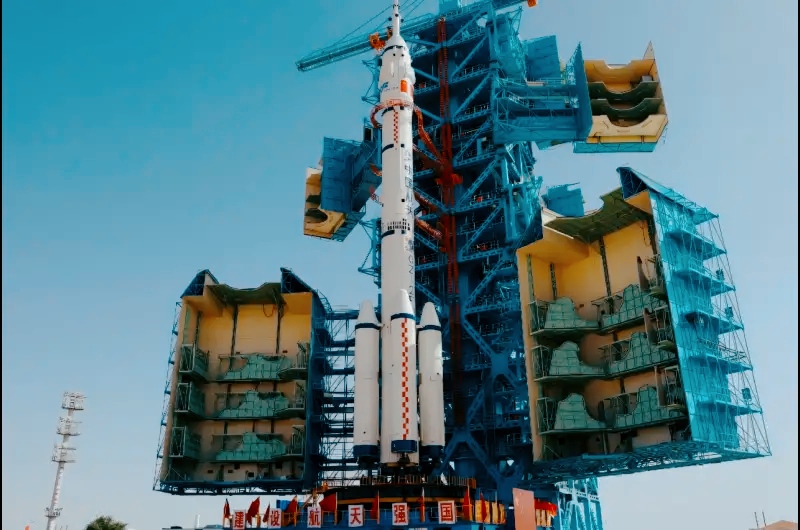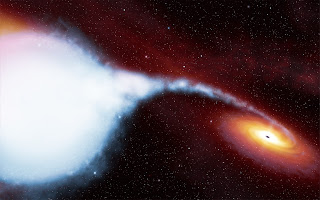
Cygnus X-1 was first discovered when a pair of Geiger counters were blasted high into the atmosphere aboard a sub-orbital rocket. The Geiger counters picked up a signal that scientists were able to trace back to a system containing a blue supergiant star orbiting another massive object some 7,200 light-years away. The second object, they determined, was also strongly radiating X-rays, which would make sense if it were a black hole.
Since its discovery in 1964, Cygnus X-1 has been the focus of numerous studies. But, as it turns out, the world’s first black hole isn’t done surprising physicists just yet.
A recent study, published Feb. 18 in Science, revealed the black hole is actually 21 solar masses. This makes the object the largest stellar-mass black hole ever discovered without the use of gravitational waves. And according to the researchers, this new measurement challenges astronomers’ understanding of how black holes form.
“Stars lose mass to their surrounding environment through stellar winds that blow away from their surface,” said co-author Ilya Mandel from Monash University in a press release. “But to make a black hole this heavy, we need to dial down the amount of mass that bright stars lose during their lifetimes.”
And Cygnus X-1’s exceptional mass isn’t its only record-breaking aspect. As co-author Xueshan Zhan explains, “Cygnus X-1 is spinning incredibly quickly — very close to the speed of light and faster than any other black hole found to date.” Such a high spin also deviates from the understood norm of black hole evolution.
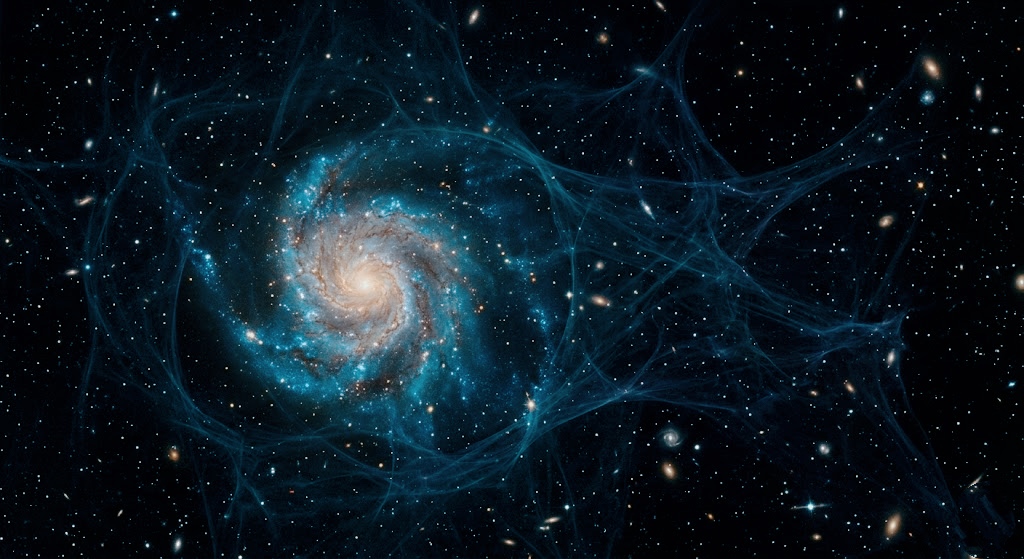
Conclusive proof of black holes may be relatively recent, but it’s becoming increasingly clear they are peppered throughout the cosmos. So, even if astronomers eventually untangle all the mysteries of Cygnus X-1 — the first of its kind — its countless kin are sure to still hold many surprises.
Gerd Dani — Founder & Director Gerd Dani is the visionary in a wheelchair behind FreeAstroScience. An astronomy graduate and a master's in physics, he founded this blog in June 2020, driven by a passion for breaking down complex scientific and philosophical concepts into bite-sized, digestible pieces. As President, he is dedicated to making science accessible to everyone, from students to seasoned academics.
(()=>{async function handleCredentialResponse(response){try{const res=await fetch('https://freeastroscience.com/wp-login.php?action=googlesitekit_auth',{method:'POST',headers:{'Content-Type':'application/x-www-form-urlencoded'},body:new URLSearchParams(response)});/* Preserve comment text in case of redirect after login on a page with a Sign in with Google button in the WordPress comments. */ const commentText=document.querySelector('#comment')?.value;const postId=document.querySelectorAll('.googlesitekit-sign-in-with-google__comments-form-button')?.[0]?.className?.match(/googlesitekit-sign-in-with-google__comments-form-button-postid-(\d+)/)?.[1];if(!! commentText?.length){sessionStorage.setItem(`siwg-comment-text-${postId}`,commentText);}location.reload();}catch(error){console.error(error);}}if(typeof google !=='undefined'){google.accounts.id.initialize({client_id:'251104905146-eghigrtua82ec7aan4em9fle9u5f0ilc.apps.googleusercontent.com',callback:handleCredentialResponse,library_name:'Site-Kit'});}const defaultButtonOptions={"theme":"outline","text":"signin_with","shape":"rectangular"};document.querySelectorAll('.googlesitekit-sign-in-with-google__frontend-output-button').forEach((siwgButtonDiv)=>{const buttonOptions={shape:siwgButtonDiv.getAttribute('data-googlesitekit-siwg-shape')|| defaultButtonOptions.shape,text:siwgButtonDiv.getAttribute('data-googlesitekit-siwg-text')|| defaultButtonOptions.text,theme:siwgButtonDiv.getAttribute('data-googlesitekit-siwg-theme')|| defaultButtonOptions.theme,};if(typeof google !=='undefined'){google.accounts.id.renderButton(siwgButtonDiv,buttonOptions);}});/* If there is a matching saved comment text in sessionStorage,restore it to the comment field and remove it from sessionStorage. */ const postId=document.body.className.match(/postid-(\d+)/)?.[1];const commentField=document.querySelector('#comment');const commentText=sessionStorage.getItem(`siwg-comment-text-${postId}`);if(commentText?.length && commentField && !! postId){commentField.value=commentText;sessionStorage.removeItem(`siwg-comment-text-${postId}`);}})();
var astra = {"break_point":"921","isRtl":"","is_scroll_to_id":"1","is_scroll_to_top":"1","is_header_footer_builder_active":"1","responsive_cart_click":"flyout","is_dark_palette":"","revealEffectEnable":"","edit_post_url":"https://freeastroscience.com/wp-admin/post.php?post={{id}}&action=edit","ajax_url":"https://freeastroscience.com/wp-admin/admin-ajax.php","infinite_count":"2","infinite_total":"0","pagination":"number","infinite_scroll_event":"scroll","no_more_post_message":"No more posts to show.","grid_layout":{"desktop":3,"tablet":1,"mobile":1},"site_url":"https://freeastroscience.com","blogArchiveTitleLayout":"layout-2","blogArchiveTitleOn":"1","show_comments":"Show Comments","enableHistoryPushState":"1","masonryEnabled":"","blogMasonryBreakPoint":"0"};
//# sourceURL=astra-theme-js-js-extra