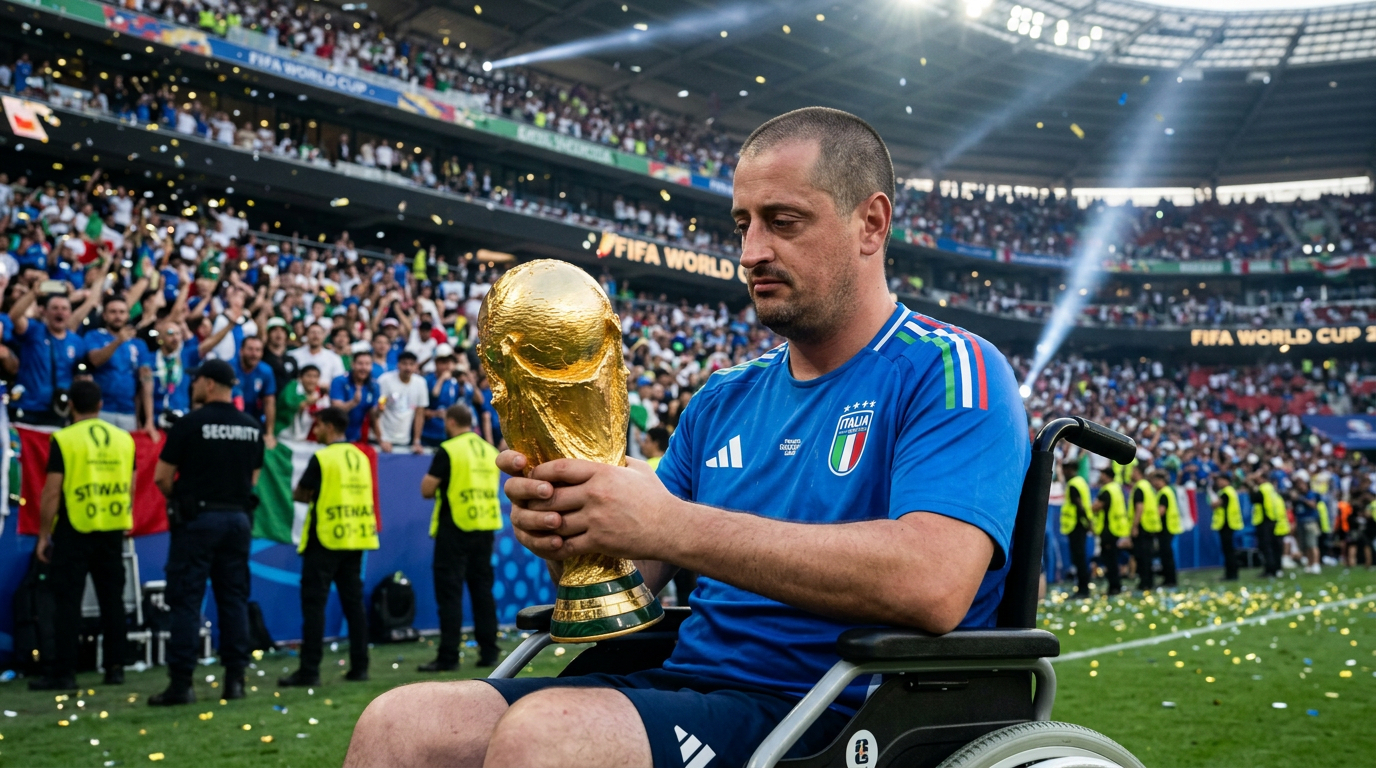
When the Ball Rolls and the World Trembles
A reflection on the 2026 World Cup opening, written from a wheelchair in Rimini, with peace on my mind and football in my heart
The whistle blew without us.
Today, June 11, 2026, the FIFA World Cup kicked off at the Azteca Stadium in Mexico City, with co-hosts Mexico facing South Africa in a poetic rematch of the 2010 opener. Shakira danced in yellow and white with fifty performers, Bocelli’s voice climbed into that thin Mexican air, and Burna Boy joined the celebration of “Let’s Go”, the official anthem of this tournament shared between the United States, Mexico, and Canada. And yet, sitting here in Rimini, watching the spectacle unfold on my screen, I felt a strange hollow in my chest.
No Azzurri. Again.
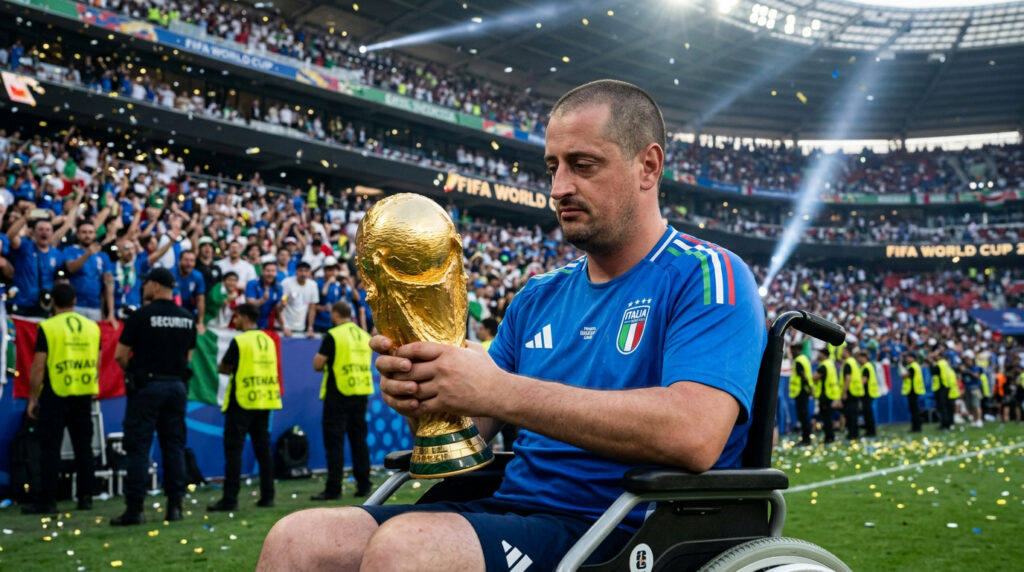
For the third consecutive time, Italy will not be at the World Cup. No blue shirts filling the streets of Bologna, Milan, or my adopted Rimini. No grandmothers shouting at televisions, no children painting their cheeks green-white-red. Just a quiet summer where football happens to other people. If you’ve ever loved something fiercely and watched it disappear, you know the feeling. It’s not anger. It’s a kind of exile.
A Tournament Born Under Strange Stars
Let’s be honest about what’s happening here. The 2026 World Cup arrived with the heaviest baggage any tournament has carried in decades. It was supposed to be the first World Cup with a proper human rights framework. Instead, the political climate in the United States has cast a long shadow over the festivities, and many around the world are having second thoughts about the whole affair.
The numbers are staggering — 104 matches, 48 teams, three host countries. The scale matches the ambition, but also the contradictions. Outside the Azteca tonight, mothers of the desaparecidos and teachers were protesting, while hundreds of police officers were deployed to keep their voices from reaching the stadium during the ceremony. In New York, journalists reported the first heavily armed police presence in Times Square they’d seen all week. The party started, yes — but with riot shields at the door.
Some commentators are even asking why nobody seems to care this year, suggesting the World Cup no longer towers over the sporting universe the way it used to, with club football building its own global empire.
I think there’s something deeper going on, though.
The World Behind the World Cup
Football has always been a mirror. You showed me a stadium and I’d tell you about the country around it. Right now, the mirror reflects a planet at war with itself — Gaza bleeding, Ukraine still fighting, threats and tariffs and tantrums echoing from capitals run by men who confuse cruelty with strength.
The wars are started by the powerful. They’re fought by the ordinary.
That sentence has been rattling in my head all morning. The young soldier in a trench somewhere did not vote for this. The mother burying her child in Gaza did not vote for this. The Iranian engineer, the Russian conscript, the Palestinian poet, the Israeli grandmother who remembers a different country — none of them designed this nightmare. And yet they pay for it with their bodies, while the architects of the chaos sip coffee in marble rooms.
So when I watch Shakira sing tonight, when I see Del Piero’s beautiful idea of putting every single substitute on the pitch alongside the starters during the national anthems , I want to believe in something simple. Football, at its best, is a language without borders. Eleven against eleven. A ball, two goals, ninety minutes. Everyone equal under the same sky.
That’s not naïve. That’s the whole point.
What 1986 Whispers to 2026
Tonight at the Azteca, the giant screens at both ends of the stadium played footage from the 1986 World Cup. The same stadium. The same stage where Maradona’s “Hand of God” became myth, where genius and controversy danced together exactly forty years ago. The fans in those seats tonight remember. Some dreamed of this moment for four decades.
Forty years. I’m approaching the age.
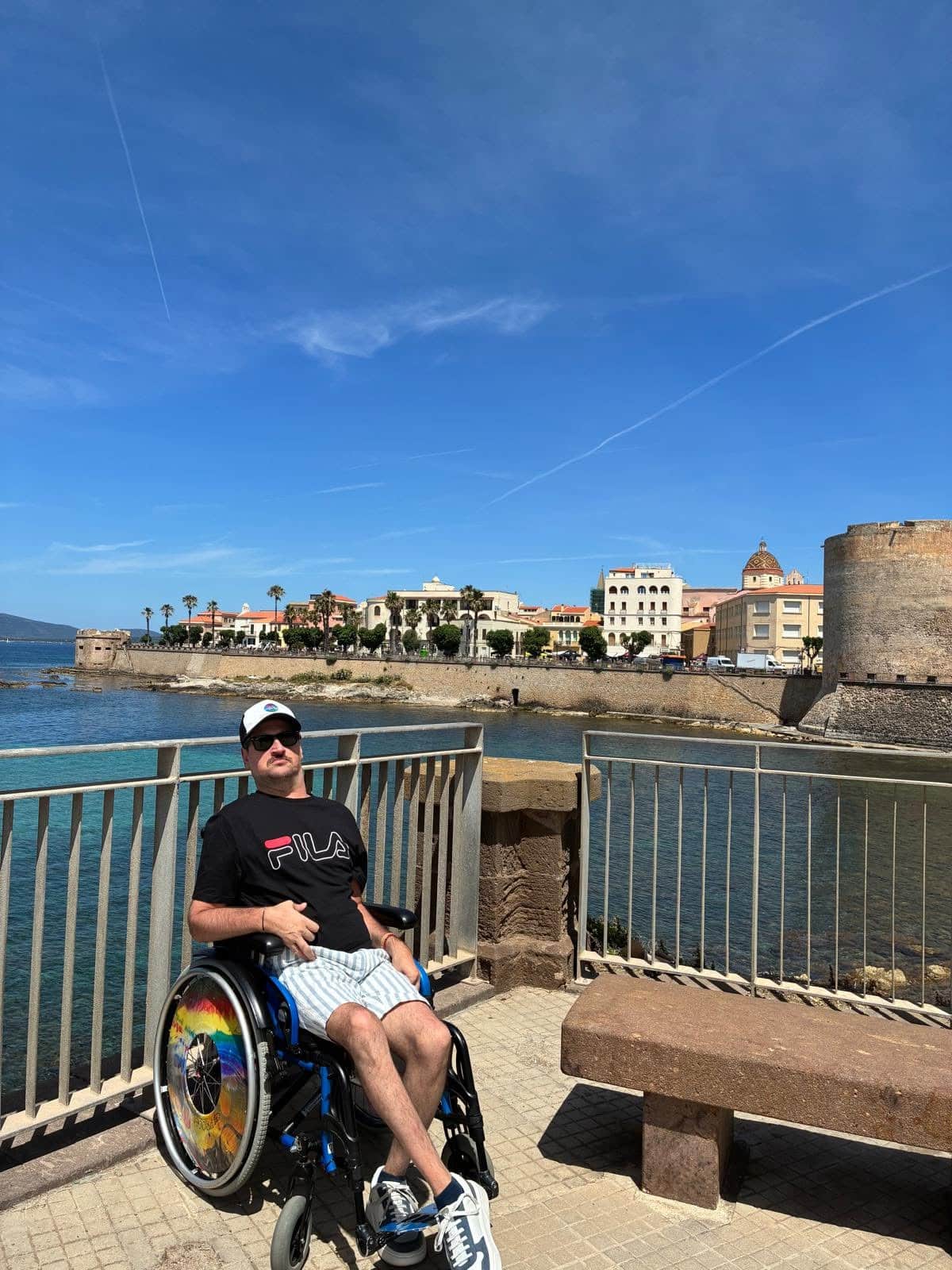
I was born in Albania in 1986, the year that the ball flew into the English net under that small Argentinian fist. By the time I understood what football was, my family had already moved to Italy for my medical care. The wheelchair came, the surgeries came, the dystonia stayed. And football — Italian football, with all +its melodrama and beauty — became one of my anchors. So tonight, watching Mexico host the world without my country in the picture, I’m reminded that absence is also a form of presence. We feel what we miss. We become what we longed for.
The Football Itself
Let’s not forget there’s a match to watch. Mexico fielded Wolves striker Raul Jiménez up front, with seventeen-year-old Gilberto Mora on the bench — the youngest player at the entire World Cup, who will become the second-youngest ever to appear at a finals if he steps onto the grass . South Africa, returning to a World Cup for the first time since they hosted in 2010, named Burnley’s Lyle Foster in their starting eleven.
Chris Sutton predicted a tight 1-0 to Mexico . He noted that this Mexican side feels mediocre going forward, with few players from Europe’s top five leagues, and that South Africa relies almost entirely on players from their own domestic league . A modest opener, perhaps. But the first goal of any World Cup carries weight beyond its scoreline. It announces: we’re here, we’re alive, the ball still rolls.
In Los Angeles, nearly 2,000 miles from the action, fans of Mexican heritage gathered at the LA Memorial Coliseum fan zone with downtown skyscrapers as backdrop . Angel, Carol, and Xochitl — three friends born in LA with roots in Mexico — said they were thrilled just to share the experience together, even far from the pitch . That detail moved me more than any goal will. Football as family glue. Football as belonging.
What I’m Cheering For
Since Italy isn’t there, who do I support?
Tonight, I’m cheering for Mexico — for the indigenous costumes that opened the ceremony, the Aztec dancers, the futuristic gold and silver outfits that turned the Azteca into something between a temple and a spaceship . I’m cheering for South Africa, whose presence reminds us that 2010 happened, that the vuvuzela once shook the world, that hosting can transform a nation. I’m cheering for the seventeen-year-old Mora, who’s young enough to be my nephew and brave enough to stand on the biggest stage in sport.
Mostly, though, I’m cheering for what football still represents when we let it.
A handshake before kickoff. A shirt swapped after ninety minutes. A Palestinian and an Israeli watching the same match in different cities, briefly forgetting they’re supposed to hate each other. A boy in a wheelchair in Rimini believing, against all evidence, that the world can still be beautiful.
The Peace We Keep Waiting For
I won’t pretend a tournament can fix what madmen have broken. Bibi won’t put down his weapons because Shakira danced. Putin won’t withdraw because Bocelli sang. The men who profit from chaos don’t watch opening ceremonies for moral instruction.
But every time eleven strangers from one country face eleven strangers from another, and the only violence is a sliding tackle, the only border is a chalk line, the only weapon is a left foot — something stubborn in our species refuses to die. Call it hope. Call it foolishness. I call it the reason I keep going.
Never give up. Not on football, not on peace, not on each other.
The whistle blew without Italy tonight. But it blew for all of us anyway. And somewhere between Shakira’s chorus and the first dribble of the first match, I remembered why I fell in love with this sport in the first place — and why, even from a wheelchair in a small Italian town, I still believe the future is worth playing for.
Forza la pace. Forza il calcio. Forza la vita.