
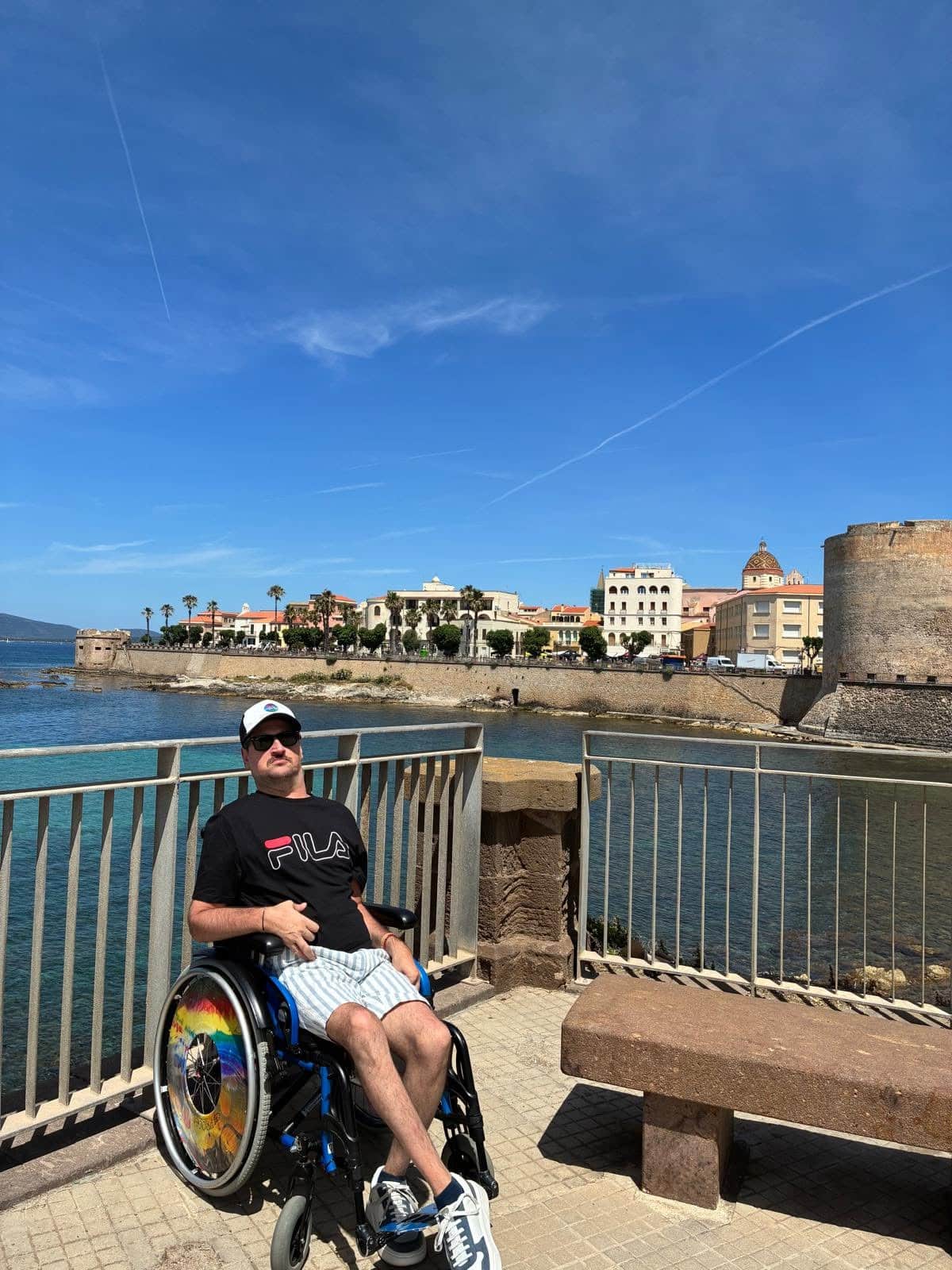
Three Days in Alghero, and Sardinia Stole a Piece of Me
A wheelchair, a glass of white mirto, and the cobblestones of a Catalan city by the sea.
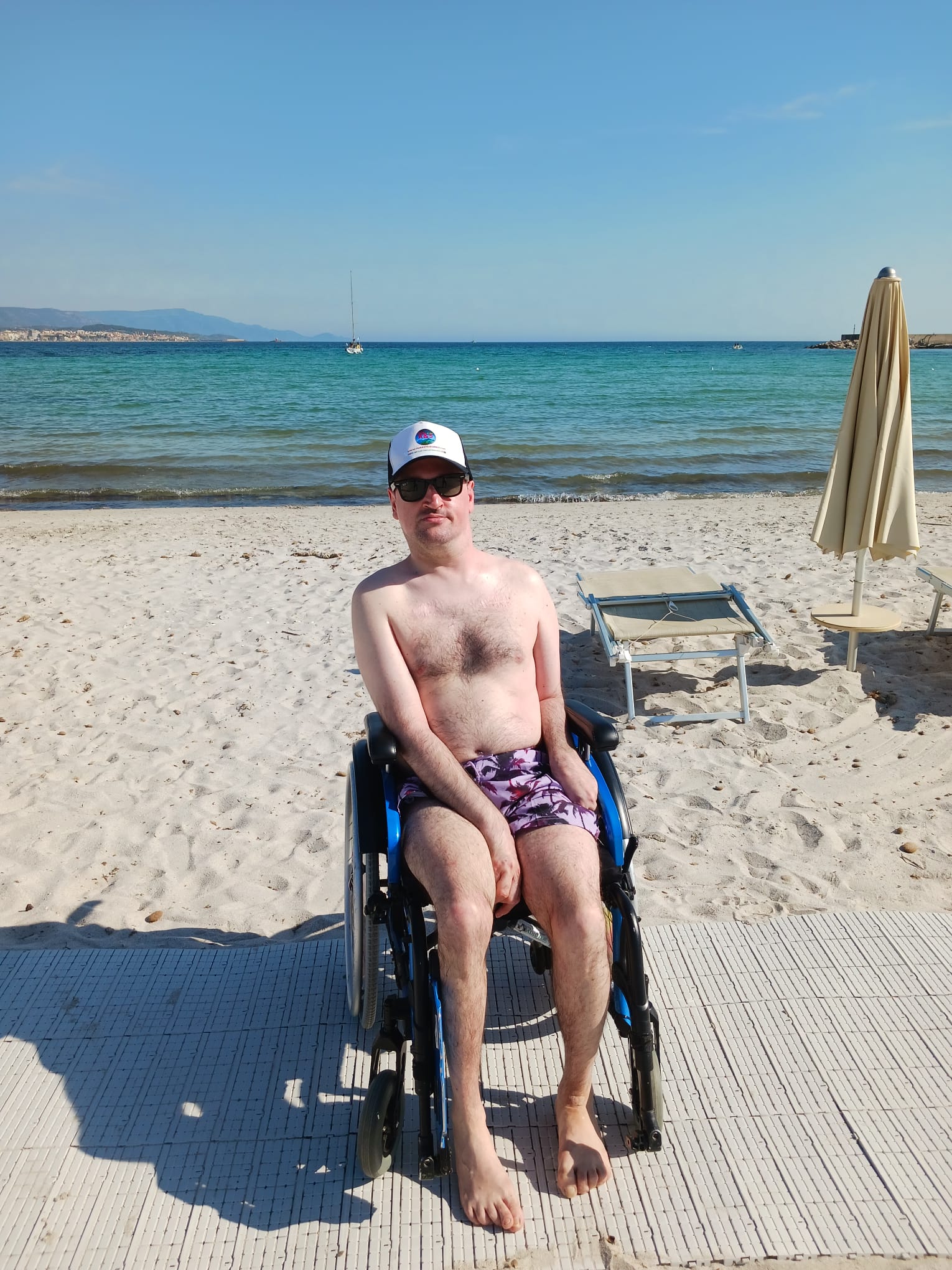
I’m back in Rimini. My desk is dusty, my notebook is full, and my heart is still somewhere between a narrow alley and a sunset over Capo Caccia. So let me tell you about Alghero — the way I’d tell a friend over coffee, before the cup goes cold.
A City That Speaks Two Languages and One Truth
Here’s something most travel guides bury halfway down the page: in Alghero, people still speak Catalan. Not Italian with a twist, not a dialect — actual Catalan, the language of Barcelona, washed ashore on a Sardinian coast in the 14th century. Street signs come in two tongues, and conversations float past you like salt on the breeze.
That detail alone tells you everything. Alghero isn’t just a Sardinian town — it’s a Catalan enclave, a stubborn little outpost of culture that refused to forget where it came from. Walking through it (or, in my case, rolling through it) feels like reading a bilingual poem written by the sea.
The historic center sits inside fortified walls, a maze of cobbled alleys laid down some 700 years ago. Every stone has been polished by footsteps, by rain, by the weight of stories.
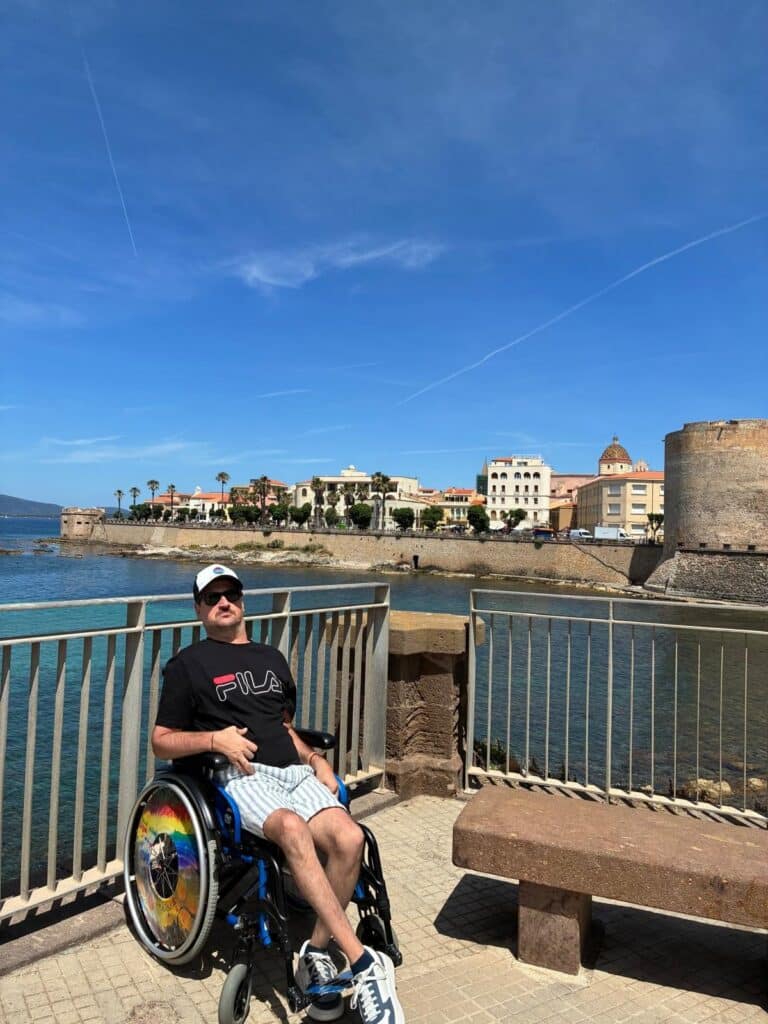
Getting Lost on Purpose
There’s a phrase I kept hearing before the trip: you can’t say you’ve visited Alghero without getting lost in its cobbled alleys. I thought it was tourist-brochure poetry. It isn’t.
The Old Town is small enough to cross in 1 to 2 hours if you’re efficient. But efficiency is the enemy of Alghero. You’re meant to wander. You’re meant to stop in front of a coral shop because the red catches the light just so. You’re meant to look up — actually up — and notice the tiny hand-made cages and lamps hanging above the streets, because the locals here apparently decided long ago that boring art was beneath them.
I rolled into a side street I hadn’t planned to enter, and a woman leaned out of a balcony and said bon dia. Not buongiorno. Bon dia. That’s Alghero in two syllables.
The center pulses with artisan workshops, small boutiques, and trattorias where the menus are handwritten. It’s the kind of place where the walls themselves seem to breathe — sea-scented air, sunlit piazzas, a Mediterranean dream that somehow survived the 21st century.
What I Ate, What I Drank, What I’ll Remember
I made a rule for myself: only local food. No compromises, no international menus, no “safe” choices. Three days, one cuisine.
Sardinian seafood deserves its reputation. I had fish so fresh it tasted like the morning. I had pasta with bottarga that made me close my eyes mid-bite — the kind of moment where you forget you’re a science writer and remember you’re just a human with taste buds.
And then there was the mirto bianco. White mirto. If you’ve only had the red version, you’re missing half the story. The white one is lighter, almost herbal, with a finish that lingers like a good memory. I drank it slowly, on a small terrace, while the sun did its slow Sardinian thing over the rooftops.
Alghero is also famous for red coral — the jewelry shops glow with it, and there’s a whole museum, the Museo del Corallo, dedicated to the craft. I didn’t buy any. I just looked. Sometimes that’s enough.
Accessibility, Honestly
Let me be straightforward, because I know some of you read FreeAstroScience precisely because I write from a wheelchair. Cobblestones are cobblestones. They’re beautiful, and they’re a workout. The historic center has its challenging corners, and some of the bastions involve patience and planning.
But here’s the thing — the people made the difference. A waiter who moved a table without being asked. A stranger who held a heavy door. A shopkeeper who came out from behind her counter to point me toward a smoother route. Human kindness, as I’ve said many times, doesn’t need a translator. Not Italian, not Catalan, not English. Just kindness.
This is something I want every disabled traveller to hear: don’t let cobblestones decide your itinerary. Plan smart, ask locals, and go anyway.
Why a Three-Day Trip Matters to a Science Writer
You might be wondering what any of this has to do with FreeAstroScience. Fair question.
Science isn’t only what happens in laboratories. It’s also what happens when a curious mind meets a new place — the geology of those limestone cliffs at Capo Caccia, the marine biology of the red coral beds, the linguistics of a Catalan dialect surviving on an Italian island, the physics of light bouncing off whitewashed walls at golden hour. Travel is field research for the soul.
I came home with a notebook full of ideas, three articles already half-written in my head, and a renewed sense of why I do this work. Cities like Alghero remind me that knowledge isn’t separate from beauty — they’re the same thing, looked at from different angles.
(For the record: when I write about complex science here on FreeAstroScience, I simplify. Always. That’s the promise. Travel posts like this one are the easy part — wait until I tell you about the geology of Sardinia’s coastline. That’ll be a longer evening.)
What I’m Taking Back to My Desk
Three days. One small Catalan-Sardinian city. A glass of white mirto and a wheelchair that survived 14th-century cobblestones with dignity intact.
Here’s what Alghero left me with: the conviction that never giving up isn’t only about big battles. Sometimes it’s about choosing to roll down one more alley when your arms are tired, because the next corner might be the one you remember for the rest of your life.
So now I’m back in Rimini. The sea here is different — flatter, quieter, more familiar. But I’m carrying a piece of Sardinia with me, and I’ll be writing from that place for a while.
The next article is already brewing. Stay close.
Written from my desk in Rimini, with a small bottle of mirto bianco still half-full beside the keyboard. — Gerd

I appreciate the detailed explanation. Very helpful.