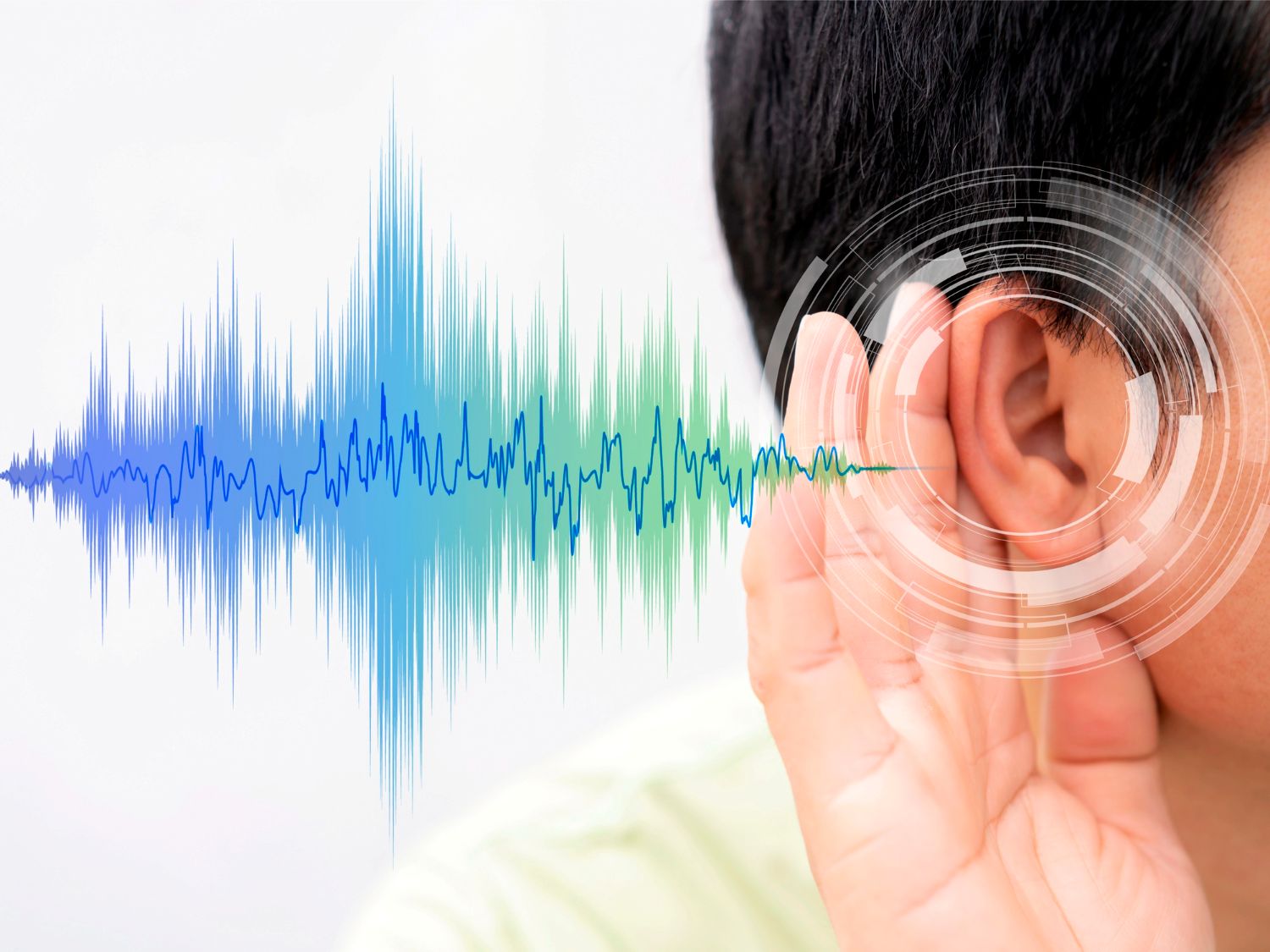
You probably already have millions of conversations taking place all around you. Now imagine that it’s a cafe; voices wash over each other like riptides in a storm, and yet somehow you are tuning out everyone except — the one single person that you want to hear? This has always been a dream for millions who find it difficult to think in noisy environments.
Now, researchers at Columbia University’s Zuckerman Institute have reached an important milestone on the way to making it a reality. They provide the first direct evidence from human studies that hearing devices controlled by brain activity can help a person to extract a voice from background noise.
The neural net of their system serves as an extension, a digital and auditory stretch, of the user, taking advantage of a common cognitive phenomenon: the brain’s capability to tune in on one voice in a crowded environment and amplifying the desired conversation.
Senior author Nima Mesgarani, PhD, a principal investigator at Columbia’s Zuckerman Institute, said, “This science empowers us to think beyond traditional hearing aids, which simply amplify sound, toward a future where technology can restore the sophisticated, selective hearing of the human brain.”
Conventional hearing aids work as stout devices; they amplify all sounds with nothing to fade the chatter, clinking cups, and background music, and that chatter overwhelms the audience. What is really required is some capacity to magnify the voice that counts.
Auditory attention decoding (AAD) is the decoding of neural signals directly from auditory data to identify the speaker a listener is paying attention to. The study used high-density intracranial electroencephalography (iEEG) in patients with epilepsy requiring invasive monitoring for surgical planning to create a closed-loop brain-controlled hearing system.
The system decoded attention in real time using electrodes implanted in patients’ brains while they listened to one of two simultaneous, overlapping conversations. It isolated the attended talk, enhancing that voice and reducing background noise automatically.
This dynamical amplification followed both instructed and spontaneous shifts of attention. In various experiments, it was found that the technology increased speech understandability, allowing listeners to hear words more clearly. It helped lower listening effort, alleviating the cognitive load of communication in noise. However, participants consistently preferred the system.
This is the first direct evidence that a real-time auditory brain–computer interface can improve perception. It establishes a performance baseline for similar assistive hearing technologies in the future and helps move AAD from an idea to a workable solution.
An international group of researchers developed algorithms that analyze brainwaves in real time, identifying which voice a patient zooms in on. The system then quickly amplifies that conversation, making it easy to understand, whether the researchers direct attention or the patient chooses to listen freely, just as in real life.
Dr. Mesgarani said, “For this to work in real time, the system has to be very fast, accurate, and stable for the experience to feel pleasant for the listener.”
The implications go way beyond hearing aids. AAD could reshape how humans interact with machines, enabling personalized audio experiences in virtual reality, conferencing, and beyond. It is not just about listening; it is about giving people control over their sound environment.
The scientists showed that their system could accurately identify which conversation participants they were focusing on. This also helped clarify the selected speech and make it easier to process mentally. During the trials, participants repeatedly favored the system guided by their own brains over listening alone.
The comment one volunteer left relating to her uncle struggling with hearing loss: “Can you imagine if this technology existed in a world where he could access it? He might actually live a much more peaceful life.”
Scientists say, “This research lays the groundwork for future wearable systems that could one day integrate brain sensing with advanced audio processing. This would assist people with hearing loss and potentially augment hearing and reduce fatigue from listening for anyone in everyday challenging environments such as restaurants, classrooms, busy workplaces, and family gatherings.”