Could a landfill in Ushuaia really be the source of a deadly hantavirus outbreak?
Welcome, dear reader. We’re glad you stopped by FreeAstroScience.com, where we break down complex science into words you can actually use. Today we’re looking into a story that reads like a detective novel: a 70-year-old Dutch birdwatcher, a cruise ship at the end of the world, and a virus that keeps epidemiologists awake at night. Stick with us until the last line. We promise the final twist changes everything you’ve read in the news so far.
📋 Table of Contents
- Who was the “patient zero” on the MV Hondius?
- Was the Ushuaia landfill really the source?
- Why do local scientists reject the landfill theory?
- Where did the infection probably happen?
- How serious is hantavirus in Argentina right now?
- What should we take home from this story?
Who was the “patient zero” on the MV Hondius?
His name was Leo Schilperoord. Dutch, 70 years old, passionate about birds. He and his 69-year-old wife had been traveling for five months straight before boarding the expedition ship MV Hondius on April 1, 2026 .
Think about that for a second. Five months on the road, moving across Argentina, Chile, and Uruguay. They landed in Argentina on November 27, 2025, and kept going south until they reached Tierra del Fuego, the island province at the tip of South America .
Leo boarded the cruise. A few days later, he fell ill. On April 11, he died onboard. The culprit? The Andes virus, a strain of hantavirus that circulates in parts of Chile and Argentina.
Now the whole world wants to know: where did he pick it up?
Was the Ushuaia landfill really the source?
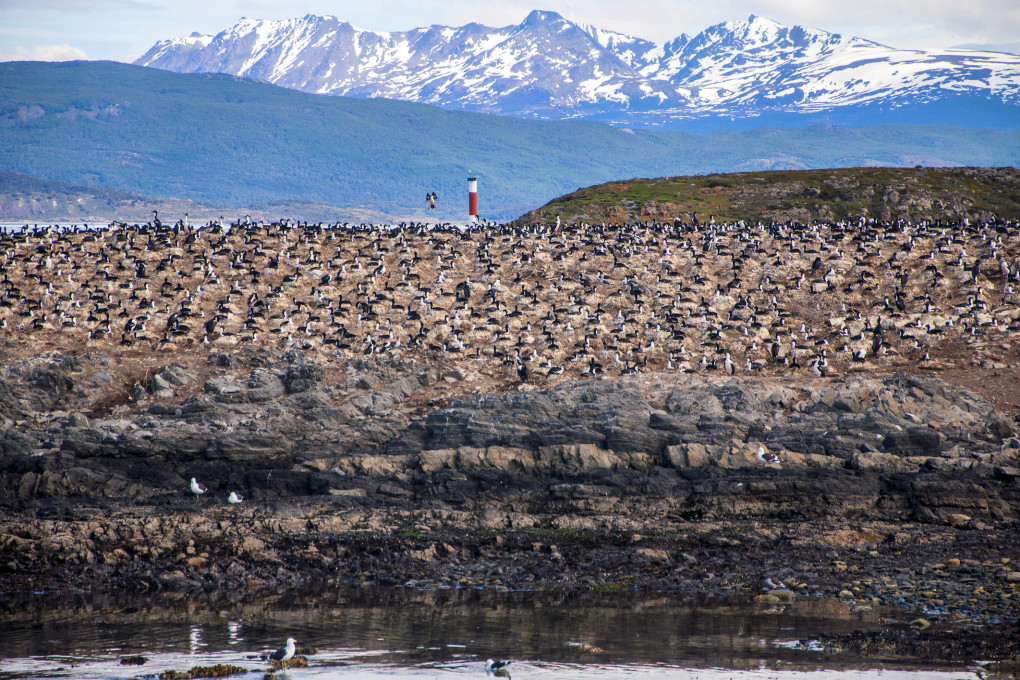
Last week, the Associated Press dropped a theory that went viral. Citing two Argentine sources working on the investigation, AP reported that local authorities suspected the couple had walked near a landfill in Ushuaia .
Here’s why that sounded plausible at first glance:
- The landfill is packed with rats .
- Rats attract scavenger birds like the white-throated caracara (Phalcoboenus albogularis) .
- Birdwatchers love unusual species.
- The long-tailed pygmy rice rat (Oligoryzomys longicaudatus) is the known reservoir of Andes hantavirus .
The theory: Leo inhaled particles from infected rodent droppings while watching birds feed at the dump .
Clean story. Great headline. Just one problem, it doesn’t hold up.
Why do local scientists reject the landfill theory?
Enter Juan Facundo Petrina, director general of epidemiology and environmental health for Tierra del Fuego. His statement was blunt: the province hasn’t seen a single case of hantavirus since 1996, the year Argentina made reporting mandatory through its National Surveillance System .
Why the absence? Three reasons, stacked on top of each other:
| Factor | What it means |
|---|---|
| 🐀 Missing host | Tierra del Fuego is an island. Any rodent trying to migrate would have to cross the Strait of Magellan. |
| 🌡️ Wrong climate | Tierra del Fuego lacks the humidity and temperature ranges of Patagonia that keep the virus alive . |
| 🌊 Geographic barrier | Tierra del Fuego is an island. Any rodent trying to migrate would have to cross the Strait of Magellan . |
Put simply, the biology doesn’t match the geography. You can have rats at a dump, but if they’re not those rats, you don’t get Andes hantavirus.
Where did the infection probably happen?
Here’s where it gets interesting. Scientists can work backward from symptoms using the virus’s incubation window, which can stretch up to 8 weeks after initial exposure .
Running the math, Petrina places the likely infection date between February 16 and March 13, 2026 . That’s weeks before the couple arrived in Ushuaia.
So where were they then? Probably in mountainous Patagonia, moving through the provinces of Chubut, Neuquén, or Río Negro . These regions sit squarely inside the Andes virus reservoir zone.
The long incubation period also makes Chile and Uruguay unlikely sources. The timing just doesn’t fit .
WHO director Tedros Adhanom Ghebreyesus confirmed the investigation’s direction, noting the couple “had visited places where the rat species that acts as a reservoir for hantavirus was present” .
The Argentine Ministry of Health is now testing rodents along the couple’s travel route to pin down the exact transmission point . Worth mentioning: Argentine President Javier Milei formalized the country’s withdrawal from the WHO in March, following the U.S. example, which complicates international cooperation on cases like this.
A small caveat we can’t ignore
Can we rule out Tierra del Fuego completely? Honestly, no. Environmental conditions shift. Predators of rodents can disappear through ecological imbalance. Global warming alters vegetation and pushes species into new territory. What’s improbable today might become possible tomorrow.
Science doesn’t deal in absolutes. It deals in the best available evidence, and right now the evidence points north.
How serious is hantavirus in Argentina right now?
Let’s put the numbers on the table so you can see the real scale.
| Period | Cases | Deaths | Fatality Rate |
|---|---|---|---|
| 2023–2024 | 82 | 13 | ≈15.8% |
| 2024–2025 | 64 | 14 | ≈21.9% |
| July 2025–present | 101 | 32 | ≈31.7% |
Source data from Argentine health authorities
Compared to hantavirus strains circulating in Asia every year, Argentina’s numbers remain limited . But the case fatality rate is climbing, and that deserves attention.
A quick word on incubation math
For the curious reader, here’s how epidemiologists estimate exposure windows:
Exposure Date ≈ Symptom Onset − Incubation Period
where incubation for Andes virus ranges from 1 to 8 weeks
Plug in Leo’s symptom onset (early April) minus 8 weeks, and you land in mid-February . That’s exactly the window Petrina identified.
What should we take home from this story?
We wrote this article for you here at FreeAstroScience.com, where we translate complicated science into language that respects your time and your intelligence. Our mission is simple: we want you never to switch your mind off. Because, as Goya warned us, the sleep of reason breeds monsters.
This hantavirus case teaches us three things worth remembering.
First, headlines move faster than evidence. A landfill in Ushuaia makes a dramatic story. The quiet truth, that the couple probably got infected weeks earlier in mountainous Patagonia, doesn’t sell papers. Yet it’s what the science supports.
Second, ecosystems don’t care about political borders or tourist itineraries. A rat species confined to a specific climate zone can still kill a traveler who walked through that zone on day 47 of a 150-day trip.
Third, and this one stings, climate change and ecological imbalance could redraw these maps. Tierra del Fuego isn’t safe forever. Neither is it anywhere else .
So the next time you see a bold claim about an outbreak, slow down. Ask where the evidence points. Check whether the biology, the geography, and the timeline actually agree. That’s not paranoia. That’s science.
Come back to FreeAstroScience.com whenever you want your curiosity fed and your critical thinking sharpened. We’ll keep asking the hard questions with you.
📚 References & Sources
- Focus.it — “Hantavirus: dove è stato infettato il paziente zero?” — Reporting on Argentine epidemiological investigation, statements by Juan Facundo Petrina (Director General of Epidemiology, Tierra del Fuego) and Dr. Tedros Adhanom Ghebreyesus (WHO). focus.it
- Associated Press reporting on the MV Hondius hantavirus outbreak investigation.
- Argentine National Surveillance System — hantavirus case data, 2023–2026.