The study of galaxy clusters offers a profound window into the structural evolution of the universe, as these entities represent the largest gravitationally bound systems in existence. Recently, a team of astronomers led by Pralay Biswas utilized the Upgraded Giant Metrewave Radio Telescope and the MeerKAT array to conduct a comprehensive analysis of RXCJ0232–4420. This research aims to clarify the complex radio emissions within the cluster, providing critical data on how small-scale radio structures transition into expansive cosmic phenomena.

High-Resolution Radio Observations of the Massive Galaxy Cluster RXCJ0232–4420
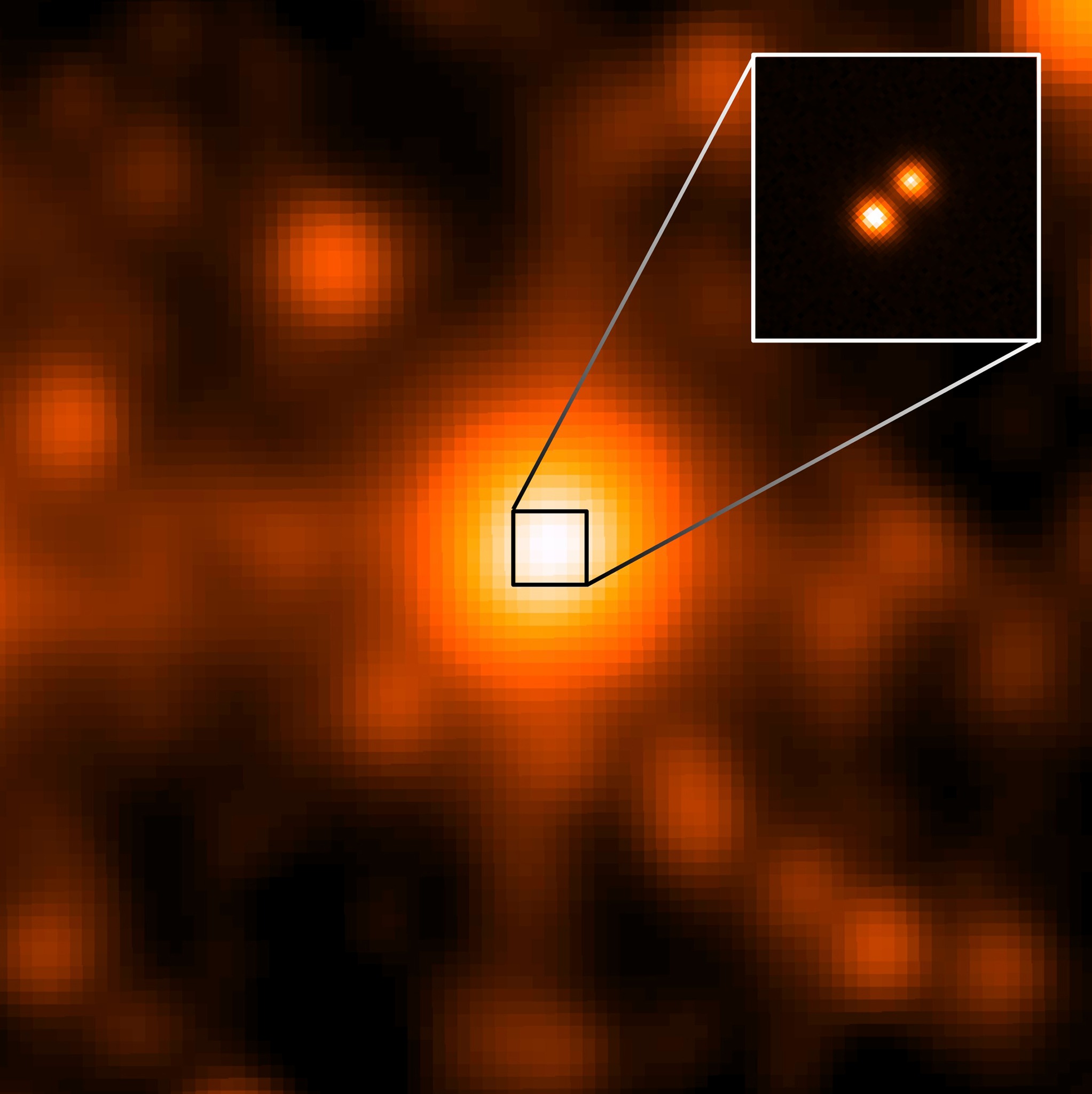
Galaxy clusters typically grow through the accretion of sub-clusters and violent mergers, serving as natural laboratories for cosmological research. RXCJ0232–4420 is a particularly massive cluster located at a redshift of approximately 0.066, first identified in 2002 as a relaxed cold-core system. It is characterized by the presence of two dominant brightest cluster galaxies, designated as BCG-A and BCG-B, which are separated by a distance of roughly 330,000 light-years.
Previous investigations into this system yielded conflicting results, with some data suggesting a localized mini-halo centered on BCG-A and others indicating diffuse emission on a much larger scale. The latest high-resolution observations have finally resolved this ambiguity by confirming that the central radio emission extends beyond 3.3 million light-years across all observed frequencies. This definitive finding classifies the emission as a giant radio halo, marking a significant departure from the smaller structures typically found in relaxed clusters.
Furthermore, the research identified a distinct radio relic situated to the east of the cluster center with a linear dimension of approximately 980,000 light-years. The presence of both a giant halo and a peripheral relic suggests that the cluster has experienced significant dynamical activity despite its cold-core appearance. These features provide a unique opportunity for scientists to study the specific mechanisms that allow radio structures to expand to such gargantuan proportions within the intracluster medium.
Spectral Characteristics and Particle Reacceleration Mechanisms
The spectral analysis of RXCJ0232–4420 provides essential clues regarding the energy distribution and age of the plasma within the cluster. According to the study, the giant radio halo and the eastern relic exhibit spectral indices of -1.17 and -0.85, respectively. Notably, the e-folding radius of the radio profile shows no significant variation across different frequencies, which implies an absence of radial spectral steepening that is often expected in such environments.
Detailed spectral index maps reveal a remarkable degree of uniformity across the cluster, with the majority of pixels falling within a range between -1.0 and -1.3. Such values are considered relatively shallow for a radio halo associated with a cold-core system, suggesting a specific physical process at play. This lack of steepness indicates that the charged particles are likely undergoing in situ reacceleration on small scales throughout the entire cluster region rather than losing energy rapidly as they move outward.
These findings challenge simpler models of cluster evolution and suggest that turbulence or weak shocks may be consistently replenishing the energy of the relativistic electrons. By examining these spectral properties, astronomers can better understand the balance between magnetic fields and particle energetics in the intracluster medium. The stability of the spectral index across the halo suggests that the reacceleration mechanism is remarkably efficient and widespread throughout the volume of the cluster.
Thermal and Non-Thermal Correlations in the Intracluster Medium
One of the most significant aspects of the recent study involves the relationship between the thermal plasma, which emits X-rays, and the non-thermal components responsible for radio emission. A point-to-point correlation analysis of the radio and X-ray surface brightness demonstrated a strong positive correlation between these two phases. This link suggests that the distribution of relativistic electrons and magnetic fields is closely tied to the density and temperature of the hot gas within the intracluster medium.
The X-ray morphology and thermodynamic properties further indicate that RXCJ0232–4420 is currently in an intermediate dynamical state. While it retains a prominent cold core, it also displays evidence of weak substructures that hint at recent or ongoing gravitational disturbances. This hybrid nature makes the cluster an outlier, as giant radio halos are usually associated with highly disturbed, non-imaging clusters rather than those maintaining a stable cold core.
Ultimately, the integration of data from uGMRT and MeerKAT portrays RXCJ0232–4420 as a transitional system that bridges the gap between relaxed and merging clusters. The detection of a giant halo within a system that still possesses a cold core suggests that the traditional classification of galaxy clusters may need to be refined. This research underscores the importance of multi-frequency radio observations in uncovering the hidden histories of the most massive structures in our Universe.
The study is published on arXiv.