
Tropical Rainforests Bounce Back: How Biodiversity Recovers in a Single Human Generation
A landmark study published in Nature reveals that when we simply step aside and let nature work, tropical rainforests can regain more than 90% of their biodiversity in just three decades — a finding that reshapes how we think about forest restoration.
A Rare Piece of Good Environmental News
We don’t often get to write hopeful headlines about the planet’s most biodiverse ecosystems. Tropical rainforests harbor at least 77% of the world’s tree species and more than 62% of its vertebrates, yet roughly 60% of them have already been lost or severely degraded. The usual story is one of retreat — of species vanishing, carbon escaping, and ancient landscapes giving way to pasture and cropland.
But a new study published in Nature (April 2026) offers a striking counterpoint. A large international team led by researchers at the Technical University of Darmstadt and the University of Würzburg has documented exactly how quickly a tropical rainforest can heal itself once human pressure is lifted. The answer is more encouraging than many ecologists dared hope: within about 30 years — roughly the length of a human generation — a recovering forest can recover more than 90% of its species abundance and diversity, and reach approximately 75% of the species composition of an untouched old-growth forest.
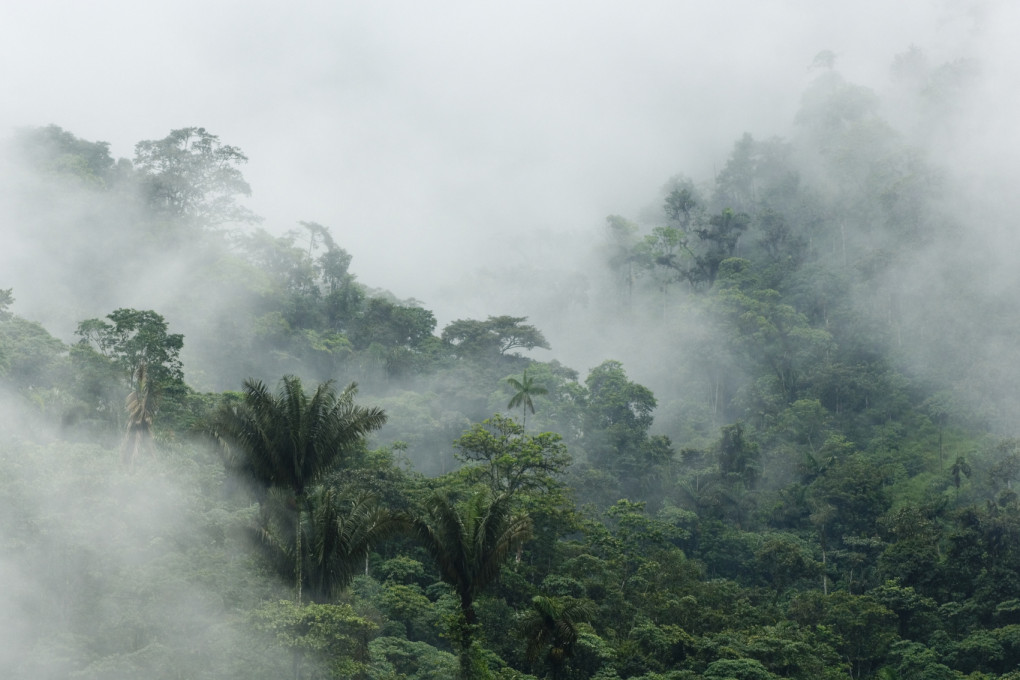
The message embedded in the data is both simple and radical: if we want nature to come back, the single most powerful thing we can do is leave it alone.
Where the Study Took Place
The research was carried out in the Chocó rainforest of northwestern Ecuador, a region recognized as one of the most biodiverse places on Earth. The scientists worked in the Canandé and Tesoro Escondido reserves, a landscape that offers an unusually clean natural experiment: a mosaic of actively farmed land, secondary forests of varying ages, and untouched primary forest all sit within about 200 square kilometers of relatively intact habitat.
In total, the team analyzed 62 plots, each a quarter-hectare in size:
- 12 actively used agricultural plots (6 cacao plantations and 6 cattle pastures)
- 33 secondary forests regenerating after being abandoned — ranging from 1 to 38 years old
- 17 old-growth forests as the untouched reference point
This setup is called a chronosequence — a way of substituting space for time. Instead of waiting decades to watch one patch recover, researchers compare many patches at different stages of regrowth and read the trajectory of recovery from that snapshot.
The Scope: 16 Taxonomic Groups, Three Kingdoms of Life
What makes this study exceptional is its breadth. Most previous work on rainforest regeneration focused narrowly on trees. This one casts a much wider net, tracking the recovery of 16 taxonomic groups from three kingdoms of life — animals, plants, and bacteria. Altogether, that meant documenting 10,856 species or morphospecies plus more than 23,000 bacterial sequences.
The groups studied included:
- Soil bacteria at two different depths (10 cm and 50 cm)
- Invertebrates such as leaf-litter arthropods, dung beetles, saproxylic beetles, moths, bees, ants, and nocturnal insects
- Vertebrates including frogs, several bird groups (forest birds, ground birds, frugivorous birds), bats, and ground-dwelling mammals
- Plants — both tree seedlings and adult trees
This multi-taxonomic scope is what allows the authors to say something genuinely new about how forests recover, not just whether they do.
Two Ingredients of Resilience: Resistance and Return Rate
To understand recovery, the team broke resilience down into two distinct components:
- Resistance — how much of a species group survives the disturbance itself. A bee community that keeps visiting a cacao plantation has high resistance; a tree community that is clear-cut has almost none.
- Return rate — how quickly the community heads back toward its old-growth reference state once farming stops.
A surprising result: return rates mattered 1 to 2.5 times more than resistance in determining how long full recovery took. In other words, what happens after agriculture is abandoned is a bigger driver of recovery than what survived during the farming period.
Who Recovers Fastest — and Why It Matters
The speeds of recovery varied dramatically across taxa, and the pattern tells an elegant ecological story.
The fast recoverers were mobile animals that deliver critical ecosystem services:
- Bats, frugivorous birds, and bees regained their species composition within roughly 6 to 30 years. These are the animals that disperse seeds and pollinate flowers.
- Dung beetles — which bury seeds and recycle nutrients — also recovered quickly, particularly in former cacao plantations.
This matters enormously because about 90% of tropical tree species depend on animals to disperse their seeds, and 94% rely on animals for pollination. When seed dispersers and pollinators move back in early, they essentially jump-start the return of everything else. The researchers describe this as a positive feedback loop: fast-growing pioneer trees provide nectar and fruit, which attracts more pollinators and dispersers, which in turn accelerate the establishment of more tree species.
In the authors’ framing, these animal groups are not passengers of forest recovery — they are the drivers.
The Slow Recoverers
Not every group bounces back quickly, and these findings are just as important for conservation planning.
- Adult old-growth trees take far longer than most animals — their slow generation times and rarity limit how quickly they can re-establish themselves.
- Leaf-litter arthropods recover slowly, largely because many of them are wingless and can only creep from one patch of forest to another.
- Ground-dwelling birds and mammals recover on a similar timescale to trees, possibly because many are targeted by hunters and have more specialized habitat needs.
- Soil bacteria showed the most striking outcome of all: their species composition barely recovered at all during the study window. This appears to be a case of “arrested regeneration” — the legacies of altered soil chemistry and microclimate from agriculture persist long after the plow has stopped.
This fine-grained picture is valuable precisely because it shows that “the forest is back” is never a single event. Different parts of the ecosystem return on very different clocks.
Cacao Plantations vs. Cattle Pastures: Legacy Matters
One of the more practical findings concerns which kind of abandoned farmland recovers fastest. The researchers compared former cacao plantations with former cattle pastures — the two dominant land uses in the region.
Former cacao plantations consistently recovered faster than former pastures for most animal groups, including bats, birds, bees, ants, dung beetles, and even tree seedlings. The likely reasons are straightforward: cacao plantations retain more shade, humidity, and woody structure than open pasture, and they provide more resources that returning species can exploit immediately.
The implication for conservation policy is clear. In landscapes where natural regeneration is being considered as a restoration strategy, abandoned agroforestry systems like cacao should be prioritized — they offer the biggest biodiversity return on investment.
Why Landscape Context Is Everything
The Chocó sites studied sit in a landscape with approximately 74% forest cover within a one-kilometer radius. That is not incidental — it is probably essential to the rapid recovery the researchers observed.
Recovery depends on a reservoir of source species in nearby intact forests. Birds and bats carry seeds from those reservoirs into regenerating patches. Pollinators commute between old-growth forest and new growth. Without that surrounding matrix of healthy forest, recovery would likely be far slower — or, in regions with very low forest cover, potentially arrested altogether.
The authors make this point pointedly: regions with already-depleted forest cover may find that natural regeneration simply cannot deliver the same results. The window for cost-effective, hands-off restoration narrows as deforestation progresses.
What About Full Recovery?
It’s worth underlining a caveat the researchers are careful to make. The headline figure — 90% recovery of abundance and diversity within 30 years — is not the same as complete recovery. Getting all the way back to an old-growth community, with every characteristic species present in its natural proportions, takes several decades longer, and in some cases (such as soil bacteria) may be measured in centuries.
This nuance matters because forest management decisions often hinge on short timeframes. Most secondary tropical forests worldwide are less than a decade old and are frequently cleared again before they can mature. To unlock the full conservation value of natural regeneration, the researchers argue that protection needs to extend over multiple decades — not the short rotation cycles typical in much of the tropics.
The Takeaway for Conservation
The study carries a message that is at once humbling and empowering. Humbling, because it reminds us that fully functional old-growth forests are irreplaceable on human timescales — once truly lost, they cannot simply be rebuilt in a lifetime. Empowering, because it demonstrates that the damage we’ve already done is not entirely final, provided we’re willing to let landscapes rest.
The practical implications for policymakers and landowners boil down to a few clear points:
- Protect old-growth forests first. They remain irreplaceable reservoirs of species that seed the recovery of nearby regenerating land.
- Prioritize connectivity. Recovering patches depend on nearby intact forests for animals, seeds, and pollen.
- Favor abandonment of agroforestry systems like cacao over pastures when choosing sites for natural regeneration.
- Give regenerating forests time. Thirty years is the threshold for meaningful recovery; shorter rotations squander the investment.
- Invest in natural regeneration as a restoration tool. It is dramatically cheaper than active replanting and, in the right landscape context, can deliver impressive biodiversity outcomes.
A Mandate in Step with the UN Decade on Ecosystem Restoration
This research lands in the middle of the UN Decade on Ecosystem Restoration (2021–2030), which has set ambitious global targets for reversing ecosystem degradation. The study provides empirical backing for one of the most cost-effective tools in the restoration toolbox — simply protecting the land that is already quietly regenerating.
In a world where environmental news often oscillates between alarm and despair, the core finding of this work deserves to be held up carefully: nature has a remarkable capacity to heal. Not perfectly. Not instantly. Not under all conditions. But given the right starting point — a mosaic of habitats, nearby forest cover, and above all, time — tropical rainforests can come back with a resilience that matches the scale of the challenges they face.
Our job, increasingly, is to create the conditions for that recovery to happen. And then to get out of the way.
Further Reading
- Metz, T., Farwig, N., Dormann, C. F., et al. (2026). Biodiversity resilience in a tropical rainforest. Nature. https://doi.org/10.1038/s41586-026-10365-2
- UN Decade on Ecosystem Restoration: http://www.decadeonrestoration.org
This article summarizes peer-reviewed research published in Nature in April 2026. The study was conducted by the DFG-funded Research Unit REASSEMBLY in the Chocó region of Ecuador.