
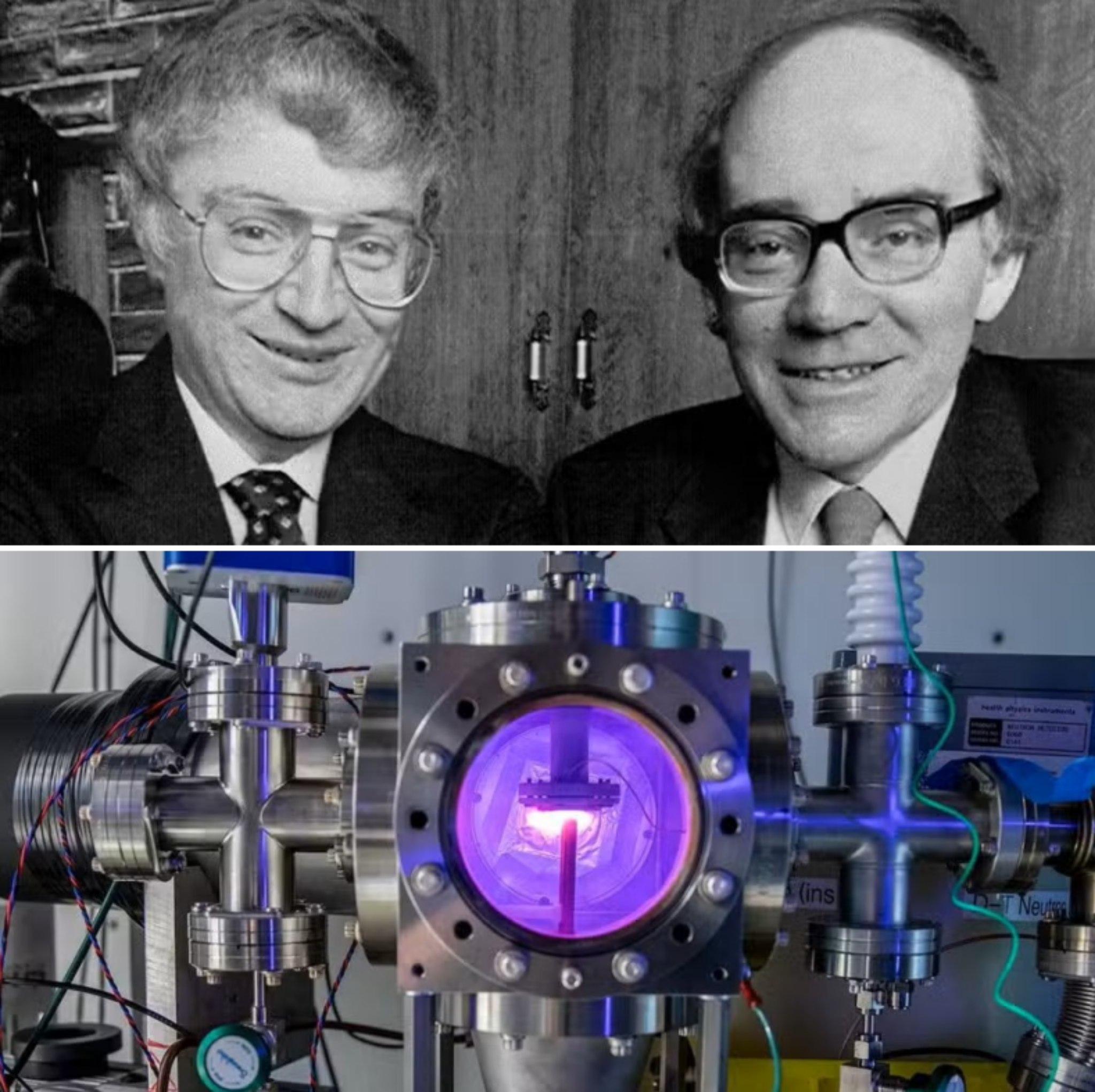
What if two scientists really did crack the code to unlimited clean energy inside a glass jar — and the whole world just… walked away?
Welcome to FreeAstroScience, where we turn complex scientific ideas into language that actually makes sense. We’re glad you’re here. Whether you landed on this page out of curiosity, a late-night Wikipedia spiral, or a genuine passion for physics, you belong in this conversation.
On March 23, 1989, two chemists told a roomful of reporters they’d achieved nuclear fusion on a tabletop. The claim sent shockwaves through every lab on the planet. Within weeks, the dream collapsed. But the story didn’t end there — not by a long shot. Nearly four decades later, a small and stubborn group of researchers still believes something real is hiding inside that experiment. Others are just as certain it was junk from the start.
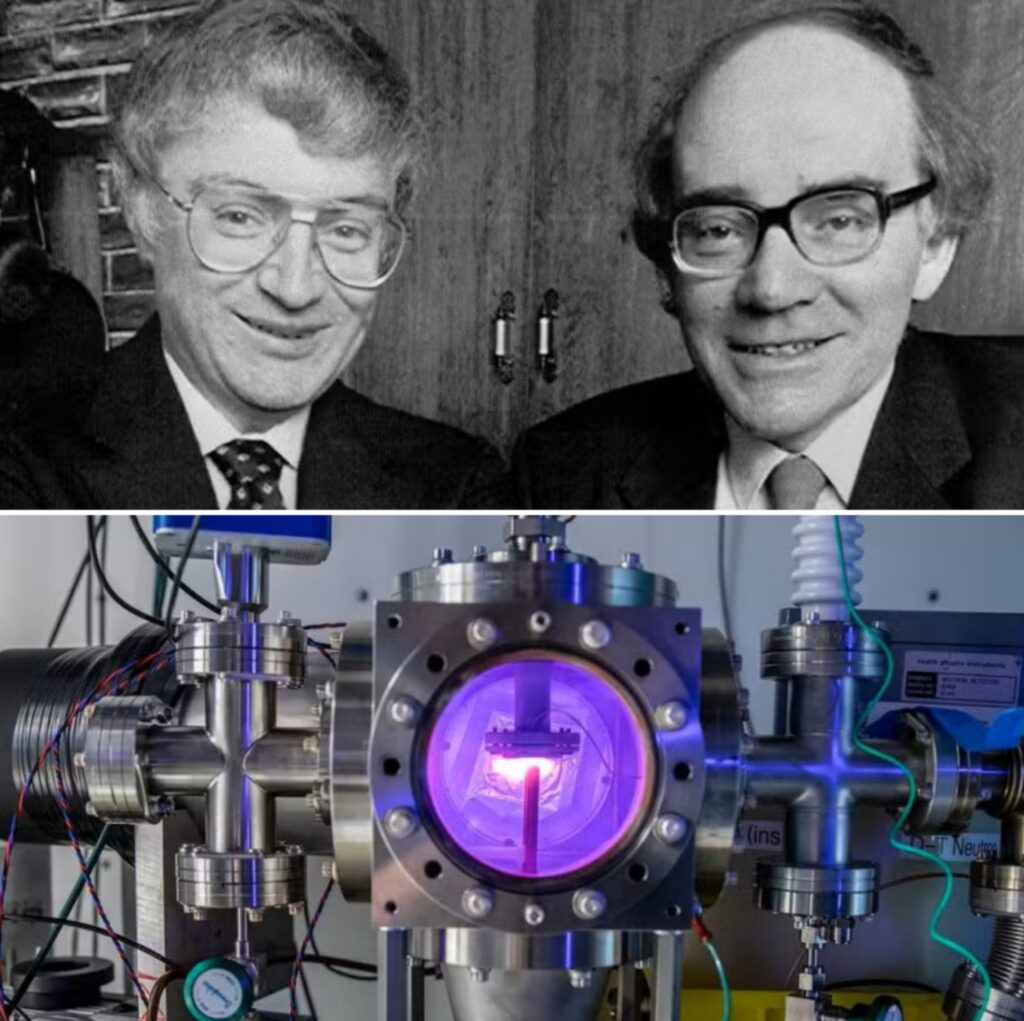
At FreeAstroScience, we believe you should never turn off your mind. Keep it awake, keep it questioning — because as the great Goya reminded us, the sleep of reason breeds monsters. So grab a coffee, settle in, and stay with us through every twist. This is one of science’s strangest, saddest, and most fascinating sagas — and it’s far from over.
📑 Table of Contents
- 1. What Is Cold Fusion — and Why Did It Promise So Much?
- 2. March 23, 1989 — The Day Two Chemists Stunned the World
- 3. Why Did the Dream Fall Apart So Fast?
- 4. What Became of Fleischmann and Pons?
- 5. Is Cold Fusion Really Dead — or Just Reborn?
- 6. What Did Google’s Multi-Million-Dollar Bet Reveal?
- 7. Why Hasn’t Anyone Built a Working Device?
- 8. Where Does Cold Fusion Stand Today?
The Rise and Fall of Cold Fusion — How a Lab Bench Shook the World
What Is Cold Fusion — and Why Did It Promise So Much?
Cold fusion is a hypothesized type of nuclear reaction that would occur at, or near, room temperature . Strip away the jargon and here’s what that means: imagine producing the same kind of energy that powers our Sun — not inside a machine the size of a building, but in a jar of water sitting on your desk.
Normal fusion — the “hot” kind — happens naturally inside stars, where temperatures soar to tens of millions of degrees . Here on Earth, we’re trying to recreate those conditions in enormous reactors like ITER in France, where the interior will need to reach about 270 million degrees Fahrenheit — a full ten times hotter than the Sun’s core .
Building those machines costs billions of dollars. Running them takes staggering amounts of initial power. So you can see why cold fusion electrified people. If it worked, it would mean cheap, abundant, pollution-free energy for every home, every city, every nation on the planet.
“Imagine if this were true, how wonderful it would be, how simple this would be,” said physicist Amitava Bhattacharjee, head theorist at the Princeton Plasma Physics Laboratory. “This would be a lot of people’s dream.”
A beautiful dream. But nature doesn’t give up her secrets easily.
The Physics: Why Fusion Is So Hard
To understand why cold fusion sounds almost impossible, we need to talk about one awkward fact: atomic nuclei hate being near each other.
Every nucleus carries a positive electric charge. When two positively charged particles get close, they repel each other — fiercely. Physicists call this the Coulomb barrier . Think of it like trying to push two magnets together at the same pole. The closer you get, the harder they push back.
Coulomb Barrier — Potential Energy
U(r) = k · Z1 · Z2 · e² ⁄ r
k = Coulomb’s constant | Z1, Z2 = atomic numbers of the two nuclei
e = elementary charge | r = distance between nuclei
For two deuterium nuclei, this barrier is roughly 0.4 MeV — an enormous energy wall at room temperature.
To smash through that wall, you normally need extreme temperatures, extreme pressure, or both. That’s why fusion happens inside stars, where gravity supplies the crushing force.
When two light nuclei do manage to fuse, the resulting nucleus weighs slightly less than the two originals combined. That tiny sliver of missing mass converts into energy — a lot of energy — according to Einstein’s most famous equation:
Mass–Energy Equivalence
E = mc²
E = energy released | m = mass difference | c = speed of light (≈ 3 × 10⁸ m/s)
Even a tiny loss of mass produces enormous energy because c² is such a huge number.
Cold fusion’s wild promise was this: maybe cleverly structured materials — like palladium metal — could somehow lower the energy needed for fusion, allowing it to happen at room temperature .
The Forgotten Pioneers Before 1989
Fleischmann and Pons weren’t the first to chase this idea. Not even close.
As early as the nineteenth century, British chemist Thomas Graham recognized that palladium could absorb large amounts of hydrogen — like a sponge soaking up water .
In the late 1920s, two Austrian-born scientists, Friedrich Paneth and Kurt Peters, reported transforming hydrogen into helium through “nuclear catalysis” using finely divided palladium at room temperature. They later retracted that claim, saying the helium they’d measured had leaked in from the surrounding air .
Around the same time, in 1927, Swedish scientist John Tandberg reported fusing hydrogen into helium in an electrolytic cell with palladium electrodes. He applied for a patent on “a method to produce helium and useful reaction energy.” It was denied .
After deuterium was discovered in 1932, Tandberg continued his experiments with heavy water. His final experiments looked remarkably similar to what Fleischmann and Pons would do decades later — though neither team knew about his work .
The term “cold fusion” itself first appeared in 1956, in a New York Times article about physicist Luis Alvarez’s research on muon-catalyzed fusion — a real, if rare, phenomenon .
So the idea had been floating around for over sixty years before that fateful day in Salt Lake City.
March 23, 1989 — The Day Two Chemists Stunned the World
Inside the Experiment
Martin Fleischmann was one of the world’s leading electrochemists, based at the University of Southampton in England. Stanley Pons was a respected chemistry professor at the University of Utah. Together, they’d been quietly running experiments for years — funded out of their own pockets with about $100,000 .
Their setup was deceptively simple. Take a palladium cathode. Submerge it in heavy water — a form of water where ordinary hydrogen is replaced by its heavier sibling, deuterium . Run an electric current through the cell.
The idea was bold: force deuterium atoms deep into the palladium’s crystal structure, packing them so tightly that they’d fuse together, releasing energy .
Current was applied continuously for weeks. Most of the time, the power going in equaled the power coming out, and the cell sat at a stable 30 °C. But then — at some unpredictable point — the temperature would suddenly jump to about 50 °C without any change in input power. These hot phases lasted two days or more and would repeat several times before eventually stopping .
Fleischmann and Pons claimed the excess heat was hundreds of times more than any chemical reaction could explain . Their conclusion? Deuterium nuclei inside the palladium were fusing.
A Planet Holds Its Breath
In 1988, Fleischmann and Pons had applied to the U.S. Department of Energy for larger-scale funding. One peer reviewer happened to be Steven Jones of Brigham Young University, who had his own interest in cold nuclear processes . The two teams agreed to publish simultaneously. But the University of Utah, eager to claim priority, pushed Fleischmann and Pons to go public first .
On March 23, 1989, they held a press conference in Salt Lake City . No peer-reviewed paper yet. No independent verification. Just a bold announcement and a wave of camera flashes.
The world went wild.
The timing mattered. Adults still remembered the 1973 oil crisis . The 1986 discovery of high-temperature superconductivity had primed scientists to accept unexpected breakthroughs . Cold fusion landed like a thunderclap in the middle of that hopeful climate.
“It got us all really excited,” Bhattacharjee recalled .
Within days, labs across the planet scrambled to replicate the experiment. In the frantic rush, chemists tried their hand at nuclear physics while physicists stumbled through electrochemistry . Some labs hastily announced confirmation — then had to issue equally speedy retractions .
Why Did the Dream Fall Apart So Fast?
The excitement lasted only a few weeks . Then reality set in.
Missing Evidence and Failed Replications
As laboratories worldwide tried to reproduce the results, problems stacked up fast:
Most labs got nothing. Research groups at MIT, Caltech, and dozens of other top institutions obtained negative or inconsistent results .
The nuclear signatures were missing. Fusion should produce clear byproducts — neutrons, tritium, helium-4. These were not detected in quantities that matched the reported heat .
Measurement errors. Many scientists concluded the “excess heat” was actually the result of calorimetric mistakes or ordinary chemical reactions .
Flawed spectra. A team at MIT found serious problems in the gamma-ray data that Fleischmann and Pons offered as evidence .
“In March 1989, everybody jumped on this topic, even serious fusion physicists like me,” said Hans-Stephan Bosch, head of the Wendelstein 7-X fusion experiment at the Max Planck Institute for Plasma Physics. “We didn’t find any positive result confirming their claims. So we finished our work, published it, and closed the topic.”
The DOE Delivers the Final Blow
In October 1989, a panel from the U.S. Department of Energy concluded that the reported excess heat didn’t present convincing evidence of a useful energy source. They recommended against funding cold fusion .
That was the death certificate.
The University of Utah’s cold fusion research institute was disbanded in 1991 when it failed to replicate the earlier results . A second DOE review in 2004, prompted by new research, reached similar conclusions — still no funding .
The Nobel-Prize-winning chemist Irving Langmuir had a term for this kind of situation: “pathological science” — where results hover near the limit of detectability and proponents always have a ready excuse .
Cold fusion became a synonym for junk science .
| Date | Event |
|---|---|
| 1927 | Swedish scientist John Tandberg reports hydrogen-to-helium fusion in an electrolytic cell. Patent denied. |
| 1956 | The term “cold fusion” appears in The New York Times in reference to Luis Alvarez’s work on muon-catalyzed fusion. |
| 23 Mar 1989 | Fleischmann and Pons announce cold fusion at a press conference at the University of Utah. |
| Apr–May 1989 | Labs worldwide scramble to replicate. Most fail. MIT finds flaws in gamma-ray data. |
| Oct 1989 | U.S. DOE panel concludes there is nothing to cold fusion. Recommends against federal funding. |
| 1991 | University of Utah cold fusion institute disbanded after failing to replicate results. |
| 1992 | Fleischmann and Pons leave the U.S. for France. Toyota subsidiary Technova funds their lab (IMRA). |
| 1995 | Fleischmann returns to Southampton after falling out with Pons. Research at IMRA continues. |
| 1998 | IMRA closes after spending ~£12 million. University of Utah abandons worldwide patent pursuit. |
| 2004 | Second DOE review examines new research. Conclusions unchanged — still no federal funding. |
| 2015 | Google quietly funds a team of researchers to revisit cold fusion with modern tools. |
| May 2019 | Google-funded team publishes results in Nature. No evidence of cold fusion, but new insights gained. |
What Became of Fleischmann and Pons?
The two men whose names became inseparable from science’s most dramatic letdown took very different paths after the fallout.
In 1992, they left the United States for the south of France. The Technova company — a subsidiary of Japanese automaker Toyota — funded a new laboratory called IMRA, where they continued their research .
But the partnership fractured. Fleischmann “had a nasty falling out with Stanley Pons over the direction of research at IMRA,” according to Physics World . By 1995, Fleischmann had returned to Southampton, England, where he kept working on theoretical models.
Looking back, Fleischmann insisted he was “thoroughly opposed to any public announcement of the cold-fusion results from the very beginning, but the University of Utah insisted on a press conference” . An uncomfortable detail often left out of the standard telling.
IMRA closed in 1998 after spending roughly £12 million on cold fusion work . That same year, the University of Utah gave up its struggle to obtain worldwide patents .
Stanley Pons reportedly became a French citizen. He moved to a farm in the south of France and, still bitter at his treatment by the press and the scientific community, refused to speak with anyone outside a small circle of friends .
Martin Fleischmann passed away in 2012. Pons largely vanished from public life.
Two careers. One press conference. A lifetime of consequences.
Is Cold Fusion Really Dead — or Just Reborn?
Here’s where the story takes an unexpected turn.
Despite the stigma, research never completely stopped . A dedicated circle of scientists kept the flame alive — some in university labs, others jury-rigging experiments in garages and basements .
Retired particle physicist Douglas Morrison, one of cold fusion’s most persistent critics, summed up the field’s state by the late 1990s: “Less science, fewer scientists, fewer funds — although there are more potential investors” .
From Cold Fusion to LENR
Because the name “cold fusion” had become toxic, researchers renamed their field. Today, we rarely hear that old label. Instead, scientists talk about LENR — Low-Energy Nuclear Reactions — or CMNS (Condensed Matter Nuclear Science) .
The shift isn’t only cosmetic. LENR researchers now hypothesize that the anomalous heat doesn’t necessarily come from fusion at all. It may stem from other nuclear processes not yet fully understood — interactions between protons, electrons, and neutrons on the surface of metals .
“It was never all the way gone, but also never quite developing the way other scientific fields typically do,” said David Kaiser, a science historian at MIT. “It was a kind of shadow community with different communal characteristics, let alone intellectual claims.”
That shadow community published its own journals, held its own conferences, and pressed on — invisible to mainstream physics but very much alive.
Several governments continued providing quiet support. The Italian and French governments funded small research programs. Reports circulated that the U.S. Department of Defense was also giving money to the field . Japan’s government supported research until 1997, when it officially pulled out .
Cold fusion also seeped into popular culture. The 1997 action movie The Saint featured cold fusion as a plot device — a physicist saving Russia with limitless energy from electrodes in a bottle . A former MIT professor produced a film called Breaking Symmetry, in which “evil hot-fusion scientists” scheme to suppress cold fusion research . A Cornell University professor even turned the whole saga into a hypertext game, where your choices determine whether your scientific career survives or burns .
The idea refused to die — in labs or in people’s imaginations.
What Did Google’s Multi-Million-Dollar Bet Reveal?
In 2015, a Google program manager named Matt Trevithick decided the cold fusion question deserved a fresh look.
He’d first heard of cold fusion while a student at MIT. From 2004 to 2005, he’d even worked for a company involved in LENR research. The nagging question never left him .
“The story of cold fusion was decided in a matter of months, and nothing in science is decided that quickly,” Trevithick said. “That’s what stayed in my craw for all these years.”
By April 2015, he’d assembled a team of researchers — none of whom knew each other well — and invited them to Google’s California campus. It was, by all accounts, an awkward day. “I’m not gonna lie, there were awkward moments,” Trevithick admitted .
The team spent months brainstorming experiments, then narrowed them down to three priorities. From the beginning, they agreed to rigorously check their work and publish everything — even when results came up empty .
Three Tests, No Smoking Gun — But a Surprise
Test 1: Packing palladium with deuterium. Cold fusion proponents had long claimed that loading at least seven deuterium atoms for every eight palladium atoms would trigger excess heat. The Google team discovered this loading ratio was incredibly difficult to achieve. They invented a new X-ray measurement technique to directly see how much the metal had swelled — revealing errors in previous methods .
Test 2: Heating hydrogen with metal powders. This tested claims made by Italian researchers since the 1990s, including Andrea Rossi’s E-Cat. Curtis Berlinguette at the University of British Columbia and his students built four of the world’s most precise calorimeters and ran 420 separate trials. None clearly produced excess heat .
Test 3: Detecting tritium from electrified palladium. This followed up on 1990s results from Los Alamos National Laboratory. Physicist Thomas Schenkel at Lawrence Berkeley National Laboratory didn’t find the expected spike of excess tritium. But he did find something unexpected: fusion reactions occurred 100 to 160 times more frequently than predicted at those low energies .
“When I see a factor of a hundred discrepancy between my data and established theory, that usually means it’s interesting,” Schenkel said .
The full results were published in Nature in 2019 . The bottom line? No evidence that cold fusion works as Fleischmann and Pons described. But the research yielded genuine scientific value — new insights into hydrogen-metal systems, better measurement tools, and anomalies that won’t stop tugging at curious minds .
“This project is by no means over,” said team member Yet-Ming Chiang, a materials scientist at MIT. “There’s lots of ongoing work we’re interested in doing.”
Why Hasn’t Anyone Built a Working Device?
Over the decades, several companies have promised to turn cold fusion — or LENR — into a commercial product. The pattern is always the same: announce a breakthrough, build prototypes, hold demonstrations, raise investor money, set a launch date. Then miss it .
Not one has delivered a working device as advertised .
Andrea Rossi’s E-Cat: The Biggest Tease
No name pops up more often in cold fusion circles than Andrea Rossi, the Italian inventor behind the E-Cat (Energy Catalyzer). Rossi claimed his device could produce virtually unlimited energy through low-energy nuclear reactions .
The trouble? No independent verification. No peer-reviewed publications. The Google team’s 420 calorimetry trials — designed partly to test claims like Rossi’s — came up empty . The E-Cat remains squarely among the unfulfilled promises of the LENR world .
Brilliant Light Power and the Hydrino Mystery
Then there’s Randell Mills, founder of Brilliant Light Power (BLP) in Cranbury, New Jersey. Mills grew up on a Pennsylvania farm, earned an undergraduate degree in chemistry from Franklin & Marshall College, a medical degree from Harvard, and studied electrical engineering at MIT .
In 1991, Mills announced a theory in which the electron in hydrogen could transition to previously unknown, lower energy states — releasing enormous energy. He named this shrunken hydrogen the “hydrino” .
It’s a claim that strikes at the very foundations of quantum mechanics. Most physicists accept that hydrogen’s electron is already in its lowest possible energy state — you simply can’t bring it closer to the nucleus .
As journalist Erik Baard once observed: “Telling physicists that they’ve got that wrong is like telling mothers across America that they’ve misunderstood apple pie.”
Andreas Rathke, a former research fellow at the European Space Agency described as having “debunked a high number of crackpots,” analyzed Mills’s theory in 2005 and concluded it was “flawed and incompatible with everything physicists knew” .
Synthetic organic chemist Howard J. Wilk studied Mills’s work, attended demonstrations, ran his own calculations — and still couldn’t decide if Mills was “a titanic genius, self-delusional, or something in between” .
Wilk did reach one firm conclusion: “If hydrinos existed, they would have been detected by others in laboratories or in nature years ago.”
BLP has been working on a commercial device for over three decades. Like every other company in this space, it hasn’t delivered one yet.
Where Does Cold Fusion Stand Today?
Cold fusion isn’t dead. But it isn’t alive in the way its founders imagined, either.
The current situation is a mix of academic skepticism and cautious, renewed interest .
The European Union has funded research projects exploring reactions in hydrogenated metals as a potential clean energy source . Several government agencies — including, reportedly, the U.S. Department of Defense — have continued quiet support .
Google’s team hoped their published work would “provide cover for young researchers and government funding agencies to reconsider this area of science with an open mind” .
“The timing is really good for this,” said lead author Curtis Berlinguette. “I’m just really excited to show the younger generations of scientists it’s okay to take risks — to take the long shots.”
Meanwhile, “hot” fusion — the kind happening in reactors like ITER — is making real progress toward commercial viability . That’s where the mainstream scientific community is placing its chips.
Cold fusion, or LENR, has moved out of mainstream physics labs into a more cautious research niche . It remains a fascinating hypothesis — but it still lacks what we might call a scientific smoking gun: clear, reproducible, peer-reviewed evidence strong enough to change the world .
| Feature | Cold Fusion (LENR) | Hot Fusion (e.g., ITER) |
|---|---|---|
| Temperature | Room temperature (~25 °C) | ~150 million °C (270 million °F) |
| Equipment | Tabletop electrolysis cell | Massive tokamak / stellarator reactor |
| Cost | Low (if it worked) | Billions of dollars (ITER: ~$22B+) |
| Scientific status | Unproven — no reproducible evidence | Demonstrated — nearing commercial stage |
| Key challenge | No accepted theory; no reliable replication | Confining superheated plasma long enough |
| Approach | Palladium + deuterium / hydrogen-metal systems | Magnetic / inertial confinement of plasma |
| Emissions | Zero (theoretical) | Zero (near-zero radioactive waste) |
As physicists like to say: “No experiment should be believed until it has been confirmed by theory” . Cold fusion has neither a confirmed experiment nor an accepted theory. That’s a tough place to build a revolution from.
But science is full of stories about ideas that were ridiculed before they were accepted. Sometimes the line between visionary and delusional only becomes clear decades later. And that — perhaps — is why this story keeps pulling us back.
Looking Back, Looking Forward
So what happened to cold fusion? We can sum it up like this:
In 1989, two respected chemists announced they’d achieved nuclear fusion at room temperature using a palladium electrode and heavy water . The world held its breath. Within months, the scientific community reached a consensus: the findings weren’t real . Cold fusion became shorthand for bad science.
But the story didn’t end. A small community rebranded the field as LENR and kept experimenting, publishing, and hoping . Fleischmann and Pons saw their careers derailed — one returning to England, the other disappearing to a French farm . Companies like BLP and Rossi’s E-Cat made grand commercial promises and delivered none .
In 2019, Google invested millions in the most rigorous revisit yet — and found no cold fusion . But they did find genuine anomalies, better tools, and something harder to measure: a reason to keep asking questions .
Today, cold fusion lives in a gray zone. Mainstream physics has moved on to hot fusion and ITER. Yet in quiet labs and small conferences, a handful of scientists still chases the faint heat signal that started it all.
Maybe they’ll find something. Maybe they won’t. But the willingness to keep asking — even when the crowd has turned away — is what makes science beautiful. The greatest breakthroughs often start with someone saying, “That’s odd.”
We wrote this article for you — and for everyone who believes that knowledge is the best tool we have against the darkness. Here at FreeAstroScience.com, we break down the universe’s biggest ideas into words everyone can understand. We exist to remind you that curiosity isn’t a luxury. It’s a survival skill.
Come back soon. There’s always more to explore. And as long as you keep reading, keep questioning, and keep that magnificent brain of yours switched on — we’ll keep writing.
📚 References & Sources
- Jacoby, M. (2016). “Cold fusion died 25 years ago, but the research lives on.” Chemical & Engineering News, Vol. 94, No. 44. cen.acs.org
- “Cold fusion.” Wikipedia. en.wikipedia.org
- Wei-Haas, M. (2019). “Cold fusion remains elusive—but these scientists may revive the quest.” National Geographic. nationalgeographic.com
- Voss, D. (1999). “Whatever happened to cold fusion?” Physics World. physicsworld.com
- Berlinguette, C.P. et al. (2019). “Revisiting the cold case of cold fusion.” Nature, Vol. 570, pp. 45–51. nature.com
- Rathke, A. (2005). “A critical analysis of the hydrino model.” New Journal of Physics, Vol. 7, No. 127. DOI: 10.1088/1367-2630/7/1/127
Article prepared for FreeAstroScience.com — where complex science finds simple words.


Cold Fusion, or LENR as they like to be called nowadays, have really gone nowhere in terms of any useful demonstrations, whereas Dr. Mills and company have demo’d devices that look to be capable of output power in the over 10 to the 3rd power range … no quibbling with calorimeters operating in the milliWatt range these days.
The EPR paper by one Prof. Hagen at Delft University of Technology looks quite to have put the cherry on examining the existence of Hydrinos too: https://pure.tudelft.nl/ws/portalfiles/portal/126823930/1_s2.0_S0360319922022406_main.pdf