What Happens When a 40-Kilometer Strait Holds an Entire Continent’s Summer Hostage?
Right now, somewhere between Iran and Oman, a narrow ribbon of water — barely 40 kilometers wide — is quietly deciding whether millions of Europeans will fly this summer. That’s not an exaggeration. That’s the reality we’re living in as of April 2026.
Welcome to FreeAstroScience.com, where we break down complex scientific, geopolitical, and energy topics in plain language — because the sleep of reason breeds monsters, and we believe you deserve to understand the forces shaping your world. We’re Gerd Dani, and today we’re tackling one of the most urgent energy stories of the year: Europe’s looming jet fuel crisis.

If you’ve got a summer flight booked — or you’re about to book one — stay with us. We’ll walk you through exactly what’s happening at the Strait of Hormuz, why European airports are rationing fuel, how much prices have jumped, and what this all means for you. Let’s get into it — all the way to the end.
📑 Table of Contents
- 1. Why Is the Strait of Hormuz So Important for Global Energy?
- 2. What Triggered the Current Crisis?
- 3. Why Is Aviation Kerosene Especially Vulnerable?
- 4. How Much Have Jet Fuel Prices Jumped?
- 5. What Are European Airports and Airlines Doing Right Now?
- 6. What Is ACI Europe Asking the EU Commission to Do?
- 7. Can Sustainable Aviation Fuels Save the Day?
- 8. What Does This Mean for Your Summer 2026 Travel Plans?
- 9. What’s the Bigger Lesson About Energy Dependence?
1. Why Is the Strait of Hormuz So Important for Global Energy?
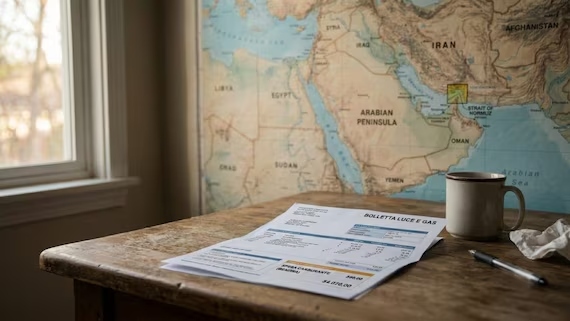
Think of the Strait of Hormuz as the world’s most critical chokepoint for energy. A narrow channel of water sits between Iran to the north and Oman to the south. It’s the only exit from the Persian Gulf to the open ocean .
Every drop of crude oil, every barrel of refined fuel leaving Saudi Arabia, Iraq, Kuwait, Qatar, and the United Arab Emirates — all of it must pass through this corridor. We’re talking about nearly 20% of the world’s total crude oil traffic squeezing through a passage narrower than the English Channel .
Before the current conflict erupted, an average of 138 to 140 ships transited the strait every single day . That’s a staggering volume. And when that flow stops — or even slows to a trickle — the ripple effects reach every corner of the globe within weeks.
2. What Triggered the Current Crisis?
Since late February 2026, U.S. and Israeli military operations against Iran have severely disrupted commercial shipping through the strait . On the worst days during the conflict, as few as zero tankers made the crossing in a 24-hour period . From 140 ships a day to zero. Let that sink in.
A ceasefire agreement reached on April 8, 2026, technically reopened the passage. But “open” is a generous word here. Iran now conditions transit through permits and tolls — up to $2 million per ship . Tracking data shows that traffic remains at just a handful of passages per day, nowhere near normal levels.
As the CEO of ADNOC (the UAE’s national oil company) put it bluntly: “The Gulf is not open — it is controlled” .
That single sentence tells you everything you need to know.
3. Why Is Aviation Kerosene Especially Vulnerable?
Here’s the part that catches most people off guard: Europe doesn’t just import crude oil from the Gulf. It imports finished jet fuel — aviation-grade kerosene, ready to pump straight into aircraft .
About 40% of Europe’s entire jet fuel supply comes from refineries in the Persian Gulf region . These aren’t raw materials waiting to be processed. They’re the finished product. And they all ship through the Strait of Hormuz.
To put this in perspective: the Al-Zour refinery in Kuwait alone supplies roughly 10% of all European aviation kerosene imports, according to Energy Intelligence data . Kuwait, the UAE, and Bahrain are all physically trapped inside the Gulf — their tankers can’t leave without passing through the chokepoint .
Over the past decade, Europe has gradually reduced its own refining capacity. We stopped producing enough kerosene domestically. That decision — made over years of cost-cutting and policy choices — now comes back to haunt us .
4. How Much Have Jet Fuel Prices Jumped?
The numbers speak louder than any headline.
| Metric | Pre-Crisis | Current (April 2026) | Change |
|---|---|---|---|
| Price per Tonne | ~$830 | $1,500 – $1,800 | +80% to +117% |
| Price per Barrel | ~$70 – $80 | $150 – $200 | More than doubled |
| Share of Airline Operating Costs | 20% – 40% (fuel is up to a quarter of expenses) | ||
Sources: Reuters, Geopop / ACI Europe
Jet fuel has gone from around $830 per tonne to between $1,500 and $1,800 per tonne in just weeks . Per barrel, that’s a jump from roughly $70–80 to $150–$200. When fuel already eats up 20% to 40% of an airline’s operating budget, a price spike this violent can’t stay invisible to passengers .
5. What Are European Airports and Airlines Doing Right Now?
The response has been swift — and sobering.
Fuel Rationing at Italian Airports
In Italy, several airports including Milan Linate, Venice, Bologna, Treviso, and Brindisi have introduced fuel rationing for non-priority flights . The supplier Air BP Italia notified airlines via aeronautical bulletin that distribution would be contingent and prioritized: medical flights first, then state flights, then long-haul routes .
The president of Italy’s civil aviation authority (ENAC), Pierluigi Di Palma, acknowledged the structural pressure from the Gulf crisis but also attributed some of the immediate strain to the Easter traffic peak . So far, no cancellations have been officially blamed on kerosene shortages in Italy.
Airlines Cutting Flights
Across Europe, the picture is more alarming:
- SAS has canceled over 1,000 flights in April alone .
- Ryanair says it can guarantee supply until mid- to late May — but will “evaluate cuts” if the crisis drags on .
- Lufthansa is preparing contingency plans that include the temporary parking of part of its fleet .
- Smaller airports, with less storage capacity and fewer logistical alternatives, are the most exposed .
The “Tankering” Emergency Tactic
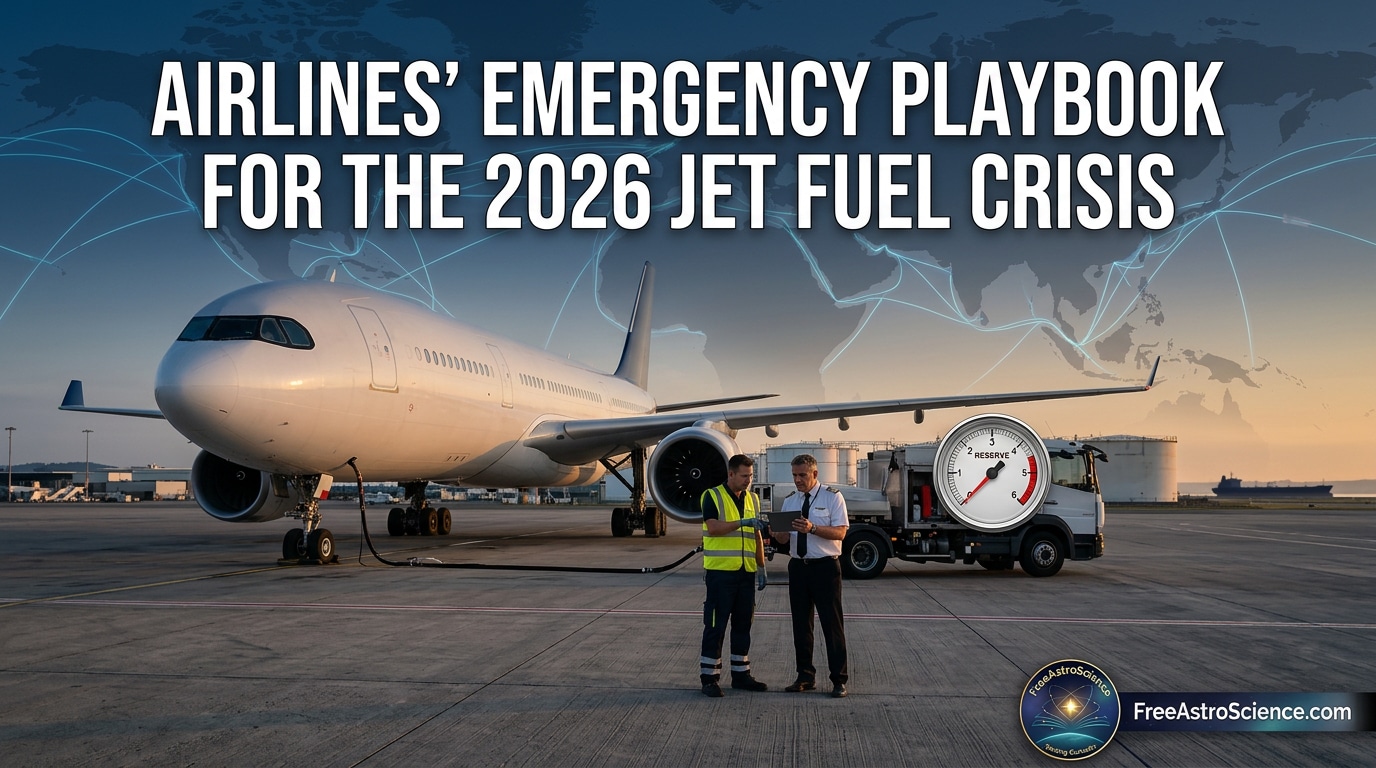
Some airlines have resorted to a practice called tankering — loading all the fuel needed for both the outbound and return flights at departure, to avoid depending on refueling at risky destinations . It works in a pinch. But it makes the aircraft heavier, burns more fuel, and causes delays. It’s a band-aid, not a cure .
6. What Is ACI Europe Asking the EU Commission to Do?
On April 9, 2026, ACI Europe — representing over 600 airports across the continent — sent a formal letter to two European Commissioners. The message was direct: act now, or face a systemic jet fuel shortage within three weeks .
ACI Director General Olivier Jankovec highlighted a startling gap: a meeting of the Commission’s oil coordination group that same week revealed no EU-wide mapping, assessment, or monitoring of jet fuel production and availability existed.
Here’s what ACI is asking for:
- Map current and projected jet fuel supply against demand across the EU .
- Identify alternative import sources outside the Persian Gulf .
- Assess threats to intra-EU fuel flows .
- Evaluate commercial and strategic reserve levels .
- Temporarily lift import restrictions on jet fuel — particularly those under the new EU methane regulation (set to take effect January 2027), which has already been discouraging third-country sellers from signing summer supply contracts
- Explore collective EU purchasing of jet fuel .
- Implement targeted refinery obligations to safeguard production
- Extend state aid to airports, airlines, and ground handlers affected by the crisis .
The stakes? Air connectivity contributes €851 billion in GDP annually to European economies and supports 14 million jobs. European airports handle 26% of the continent’s exports by value .
This isn’t just about vacation flights. It’s about the economic engine of an entire continent.
7. Can Sustainable Aviation Fuels Save the Day?
You might be wondering: what about green alternatives? Can’t we just switch to Sustainable Aviation Fuels (SAF)?
The honest answer: not right now.
SAF production remains structurally limited. It covers only a tiny fraction of global jet fuel demand . And its market cost? On average, it’s roughly double the price of conventional kerosene — which itself has already more than doubled .
The European regulation ReFuelEU Aviation, in force since 2025, requires a minimum of 2% SAF in airport fuel mixes . But in the current market environment, several airlines are asking for that mandate to be postponed .
SAF is absolutely the right direction for the long term. It represents the future of cleaner aviation. But it can’t rescue us from this crisis today. The production volumes simply aren’t there yet, and the economics don’t add up when fossil kerosene itself costs a fortune.
8. What Does This Mean for Your Summer 2026 Travel Plans?
Let’s be honest with each other. We won’t see a total shutdown of European air travel this summer . But dismissing the situation would be a mistake.
Here’s what to expect:
If you’ve already booked your flight, your ticket price should hold. Airlines generally don’t retroactively increase fares on purchased tickets .
If you’re about to book, prepare for higher prices. The fuel surcharge is rising, and it’ll show up in the fare.
If your flight gets canceled due to a fuel shortage, airlines may classify it as a “circostanza eccezionale” (extraordinary circumstance) under EU Regulation 261/2004. That could exempt them from paying the standard compensation of up to €600 — although they’d still owe you a full refund of the ticket price .
Strategic fuel reserves offer some breathing room. Italy and Germany each have roughly 7 months of reserve autonomy. Portugal sits around 4 months . These cushions exist, but they’re not bottomless — and they require a political decision to activate.
Suppliers including Ryanair have stated they can guarantee fuel through mid- to late May. After that, if the strait remains effectively closed, the picture darkens quickly .
9. What’s the Bigger Lesson About Energy Dependence?
Step back for a moment, and this crisis tells a story much larger than jet fuel.
European air transport — an €851 billion economic pillar — depends on a single waterway less than 40 kilometers wide for a huge chunk of its energy supply . Over the years, Europe reduced its domestic refining capacity. We outsourced the production of a vital resource. And when that supply route closed — due to conflict, geopolitics, or any disruption — the entire logistics chain buckled in a matter of weeks .
Three weeks. That’s all it takes to push a continent toward crisis.
We’re not here to spread panic. The situation as of mid-April 2026 is serious but not yet critical . Diplomatic windows remain open. Reserves exist. Contingency plans are rolling out.
But the fragility is real. And it raises questions we all need to ask: How much should we depend on a single chokepoint for our mobility? What kind of energy independence do we want to build for the decades ahead?
The Bottom Line
What we’ve seen over the past six weeks is a real-time lesson in energy vulnerability. A conflict thousands of kilometers away has doubled jet fuel prices, triggered rationing at European airports, forced airlines to cancel over a thousand flights, and put the entire summer travel season in question.
The facts are clear. Europe imports 40% of its aviation kerosene through a single narrow strait. When that strait closes, the clock starts ticking — and it ticks fast. ACI Europe gave us a three-week warning. Prices have already spiked by over 100%. Airlines are already cutting routes.
There’s still time for diplomacy to work. There’s still time for the EU to coordinate a supply response. And strategic reserves offer a safety net — for now.
But the deeper message can’t be ignored. We built a system that assumed the Strait of Hormuz would always be open. That assumption just failed. The question isn’t whether this specific crisis will pass — it probably will. The question is whether we’ll learn from it before the next one hits.
At FreeAstroScience.com, we believe in explaining complex realities in simple, honest language. Never turn off your mind. Keep it active. Always. Because the sleep of reason breeds monsters — and understanding the world is the first step to shaping it.
Come back to FreeAstroScience.com anytime you want to dig deeper, think harder, and see more clearly. We’re here for you. ✨
📚 References & Sources
- Reuters — “Europe could face jet fuel crunch within weeks, airports body warns” (April 10, 2026)
- Geopop — “Stretto di Hormuz, cosa sta succedendo davvero al carburante degli aerei e cosa rischiamo quest’estate” by Andrea Moccia, with geopolitical analysis by Andrea Gaspardo (April 11, 2026)