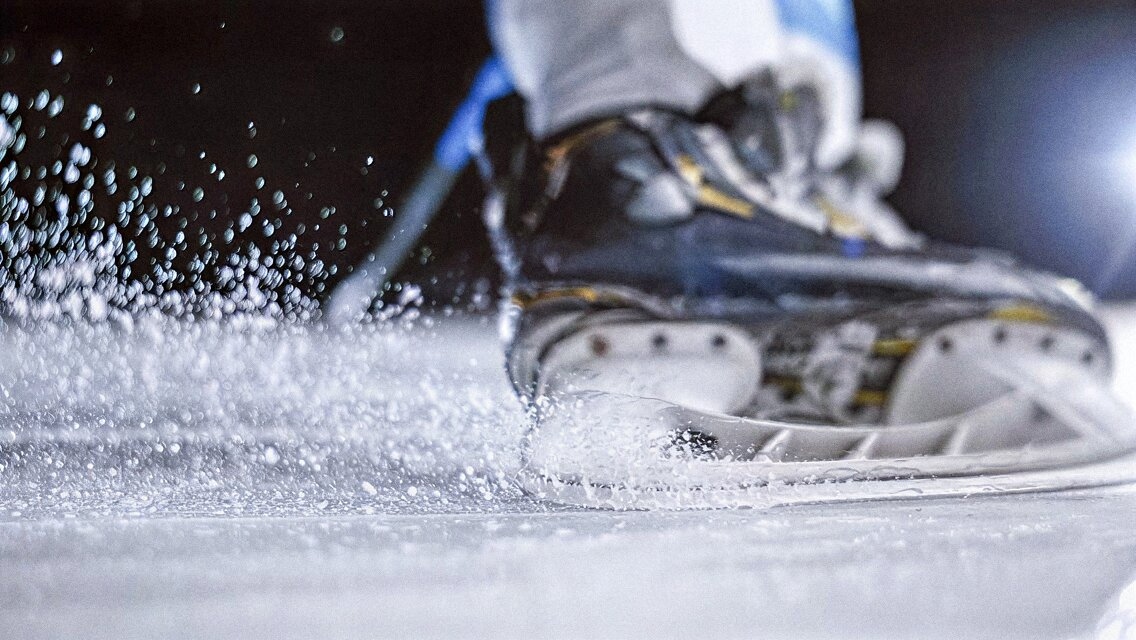
The Real Reason Ice Is Slippery — And Why Your Textbook Got It Wrong
Have you ever stepped onto a frozen sidewalk and felt your feet betray you in an instant? We all have. And most of us remember the same classroom explanation: your body weight melts a thin layer of ice beneath you, creating a slippery film of water. Sounds perfectly logical. Clean. Case closed.
Except it’s wrong — or, at best, painfully incomplete.
Welcome to FreeAstroScience.com, where we explain complex scientific principles in simple, honest terms. My name is Gerd Dani, and I write to you from a wheelchair, which — trust me — gives you a very personal relationship with slippery surfaces. As President of Free AstroScience — Science and Cultural Group, I believe the sleep of reason breeds monsters. So we never turn our minds off here. We keep them sharp, curious, and hungry.
Today, we’re going to walk (carefully) through one of physics’ most deceptively simple questions: Why is ice slippery? The real answer involves a ghost-like layer that’s neither solid nor liquid, a 19th-century genius who was ignored for a hundred years, and molecular drama playing out at scales thinner than a human hair. Stick with us to the very end — this story is worth every paragraph.
📑 Table of Contents
- 1. Does Your Weight Really Melt the Ice Beneath You?
- 2. What About Friction — Can Heat Alone Explain It?
- 3. What Did Michael Faraday Discover in 1859 — And Why Did We Forget?
- 4. What Is the Quasi-Liquid Layer on Ice?
- 5. How Thick Is This Invisible Layer — And How Do We Know?
- 6. The Numbers Behind Ice’s Slippery Secret
- 7. Does Surface Melting Happen on Other Solids Too?
- 8. Why Should We Care? From Glaciers to the Ozone Layer
- 9. Final Thoughts
Does Your Weight Really Melt the Ice Beneath You?
Let’s start with the story most of us learned in school.
Water is denser than ice. It occupies about 10% less volume per mole. According to Le Chatelier’s principle, pressing down on ice should push it toward the denser liquid state. Your skate blade touches the ice over a tiny area, the pressure spikes, and — presto — a thin film of water forms. You glide.
This idea dates back to 1850, when James Thomson worked out a mathematical expression for how pressure lowers the freezing point of water. His brother William (later Lord Kelvin) confirmed it experimentally. But neither of them mentioned ice skating.
That connection came in 1886, when a young Irish engineer named John Joly calculated that a skater’s blade edge could exert roughly 466 atmospheres of pressure. He figured that would lower the melting point by about −3.5 °C — just enough to create a thin water film.
Let’s run those numbers ourselves.
🧮 Pressure Melting Calculation
A 70 kg person on skate blades with a contact area of about 0.5 cm² (5 × 10⁻⁵ m²):
P = F / A = (70 × 9.81) / (5 × 10⁻⁵) ≈ 13.7 MPa ≈ 135 atm
That’s enough to lower ice’s melting point by roughly 1 °C . Not 3.5 °C. Not 10 °C. One single degree.
Now here’s the problem. You’ve slipped on ice while wearing regular shoes, haven’t you? Flat-soled shoes spread your weight across a much larger area, producing far less pressure. Yet the ice is still slippery.
Even more damning: Robert Falcon Scott reported skiing easily at −30 °C during his 1910 expedition to the South Pole. At that temperature, you’d need an absurd amount of pressure to melt ice. And the phase diagram shows that ice transitions to another solid phase at −22 °C — meaning no amount of pressure alone can produce liquid water below that point .
So the textbook answer has a gaping hole. Pressure melting helps a little near 0 °C. But it can’t be the whole story.
What About Friction — Can Heat Alone Explain It?
In 1939, Frank P. Bowden and T. P. Hughes proposed a different idea: maybe it’s the heat from friction that melts the ice, not pressure.
They ran experiments inside a cave carved from the ice above the Jungfraujoch research station in Switzerland, at 3,346 meters altitude, where temperatures never climbed above −3 °C . Using both wooden and metal surfaces, they measured static and kinetic friction.
Their finding was telling. Metal skis produced higher friction than wooden ones. If pressure melting were the main driver, the ski material shouldn’t matter — pressure depends on weight and area, not material. But thermal conductivity does affect how quickly frictional heat dissipates. Metal conducts heat away faster, leaving less warmth to melt the ice. The conclusion: frictional heating was doing the melting .
Decades later, geophysicist Samuel Colbeck attached thermocouples directly to skate blades and ski bottoms. Temperature rose with velocity — exactly what you’d expect from frictional heating. If pressure melting (an endothermic, heat-absorbing process) dominated, temperature should have dropped.
But there’s still a catch.
Ice is slippery even when you’re standing still on it . No movement means no friction. No friction means no heat. So frictional heating, while real, can’t explain the baseline slipperiness we all experience the moment our foot touches ice.
Something else is going on.
What Did Michael Faraday Discover in 1859 — And Why Did We Forget?
On June 7, 1850, at the Royal Institution in London, Michael Faraday gave a lecture that should have changed everything.
He described elegant experiments on regelation — the phenomenon of two ice cubes freezing together when you press them into contact. His explanation was radical for the time: a thin film of liquid water exists on the surface of ice, even below 0 °C. When two ice surfaces meet, this film gets trapped between them and refreezes, bonding the cubes together .
Think about that for a moment. Faraday was saying that ice wears a coat of liquid water all the time, regardless of pressure.
James Thomson disagreed strongly. He argued it was all about pressure: pressing the cubes together caused local melting, and then the heat absorption refroze the water . Thomson offered no new experimental evidence — just words. But his words won.
Faraday published a detailed rebuttal in 1859 and followed up with new experiments in 1860. He submerged two pieces of ice in a water bath at 0 °C, attached to threads with lead weights. When they touched, they stuck together despite the force pulling them apart J. Willard Gibbs, in a long footnote to his landmark 1876 paper on thermodynamics, sided with Faraday.
And yet, Faraday’s insight was ignored for nearly a century. Thomson’s purely verbal arguments somehow carried the day. It wasn’t until 1949 that C. Gurney revived the idea, proposing that molecules at the surface of ice — inherently unstable because they lack bonding partners above them — reorganize into a liquid-like phase . Two years later, W. A. Weyl built on Faraday’s concept with a molecular model.
The lesson? Even the greatest minds can be ahead of their time by a hundred years.
What Is the Quasi-Liquid Layer on Ice?
Here we reach the heart of the mystery.
Inside a crystal of ice, every water molecule is surrounded on all sides. It forms hydrogen bonds in every direction — up, down, left, right. The structure is stable, orderly, and locked in place .
But molecules at the surface live in a different world. They have bonding partners below and beside them, but nothing above. This asymmetry makes them restless. They vibrate more. They rotate faster. They’re more disordered .
The result is a thin layer that’s neither fully solid nor fully liquid — a quasi-liquid layer (QLL) . Imagine the surface of ice not as a hard floor, but as a floor covered in an impossibly thin film of something slick. Not water, exactly, but not ice either. Something in between.
This layer exists at all temperatures below 0 °C — even at −30 °C . Its thickness changes:
- ~70 nanometers just below 0 °C
- A few nanometers at −30 °C
- Surface melting onset: roughly −33 to −35 °C
The thinner it gets, the less slippery the ice feels. That’s why Edward Wilson, Scott’s chief scientist, described the snow surface as “sandlike” at −46 °C. At that temperature, the quasi-liquid layer is so thin it barely exists.
How Thick Is This Invisible Layer — And How Do We Know?
Proving the existence of a layer just nanometers thick on a surface that melts in your hand isn’t easy. Scientists threw every tool they had at the problem, and the results — gathered under very different conditions — didn’t always agree .
Here’s what the key experiments revealed:
| Method | Year | Key Finding | Temp. Range |
|---|---|---|---|
| Regelation wire experiments | 1963 / 1980 | Wire moves through ice via thin viscous fluid layer; thickness follows (T − Tm)−1/2.4 | −35 °C to −0.005 °C |
| Hydrocarbon adsorption | 1969 | Adsorption on ice matches liquid water above −35 °C; onset of premelting at −35 °C | Below & above −35 °C |
| NMR spectroscopy | 1960s–70s | Surface molecules rotate 105× faster than bulk ice; diffusion 102× faster | −20 °C to 0 °C |
| X-ray diffraction | 1987–2004 | Surface intermolecular distances smaller than liquid water; density up to 1.17 g/cm³ at −17 °C | −25 °C to 0 °C |
| Atomic Force Microscopy (AFM) | 1998 | Layer thickness: 12 nm at −24 °C to 70 nm at −0.7 °C; onset ~−33 °C | −33 °C to −0.7 °C |
| Molecular dynamics simulation | 2004 | Surface atoms vibrate with greater amplitude; periodic structure breaks down at surface | −20 °C (simulated) |
Let’s zoom in on a few of these.
The Wire That Slid Through Solid Ice
In 1963, J. W. Telford and J. S. Turner pressed a thin wire into ice and watched it slowly migrate through the solid at temperatures between −3.5 °C and the melting point. The wire wasn’t cutting. It wasn’t crushing. It was gliding through a thin viscous shear layer — a liquid-like film flowing around the wire like river water around a stone.
In 1980, R. R. Gilpin extended this work down to −35 °C and still found the effect. At −35 °C, the viscosity of the water in this layer was only a few times greater than ordinary liquid water. That’s astonishing. At thirty-five degrees below freezing, a film of near-liquid water persists.
The AFM That “Felt” the Layer
In 1998, Astrid Döppenschmidt and Hans-Jürgen Butt at Gutenberg University in Mainz, Germany, used an atomic force microscope — a device with a tip so fine it can feel individual nanometers of surface — to measure the layer directly The cantilever tip would approach the ice surface and suddenly jump when it hit the softer, liquid-like layer. Capillary forces pulled it in. Their measurements: 12 nm thick at −24 °C, growing to 70 nm at −0.7 °C.
They also found the layer was thicker when salt was present — which is why John Wettlaufer of Yale argued that impurities in ice help explain the wide variations in measured thickness across different studies.
X-Rays See What Eyes Cannot
X-ray diffraction studies from 1987 to 2004 by Helmut Dosch and colleagues provided some of the most convincing data They found a disordered, liquid-like layer on different crystallographic ice surfaces between −13.5 °C and 0 °C. At the lowest temperatures, the surface showed rotational disorder while still maintaining long-range positional order. As temperature rose, full disorder emerged.
In 2004, Harald Reichert and Dosch measured the density of this surface phase and found it varied from normal liquid-water density (at 0 °C) up to 1.17 g/cm³ at −17 °C — close to the density of high-density amorphous ice The surface of ice isn’t just melted. It’s something exotic.
The Numbers Behind Ice’s Slippery Secret
For those who love a good equation, here’s the mathematical backbone.
📐 Key Formulas
1. Clausius–Clapeyron: Freezing Point Depression Under Pressure
dT/dP = Tm · ΔV / ΔHf
Where Tm = melting point (273.15 K), ΔV = molar volume change (~−1.6 × 10⁻⁶ m³/mol), and ΔHf = enthalpy of fusion (6,010 J/mol). This gives about −0.0074 °C per atmosphere — meaning 135 atm from a skater only lowers the melting point by ~1 °C .
2. Quasi-Liquid Layer Thickness (Telford–Turner–Gilpin Model)
v ∝ (T − Tm)−1/2.4
Wire velocity through ice (proportional to layer thickness) increases sharply as temperature approaches the melting point Tm.
3. Surface Film Thickness (Logarithmic Growth)
d(T) ~ ln[(Tm − T)⁻¹]
For lead and similar materials, the surface film thickness rises logarithmically as temperature approaches the bulk melting point — a behavior confirmed for ice as well.
The math tells us something profound. The quasi-liquid layer isn’t an oddity. It’s a natural consequence of thermodynamics. Surface molecules have fewer bonding constraints, so they break free of the crystal structure earlier — at temperatures below the bulk melting point.
Does Surface Melting Happen on Other Solids Too?
Yes. And this is where the story gets even more surprising.
In 1985, Joost W. M. Frenken and J. F. van der Veen at the Institute for Atomic and Molecular Physics in Amsterdam fired ion beams at a lead crystal . Based on how the ions scattered, they deduced that lead develops a completely disordered surface layer at 307 °C — a full 20 degrees below its bulk melting point of 327 °C
Since then, scientists have confirmed liquid-like surface layers on metals, semiconductors, molecular solids, and even rare gases .
Here’s an unexpected comparison:
| Material | Friction Coefficient | Notes |
|---|---|---|
| Ice on ice | 0.1 – 1.5 | Varies with sliding velocity |
| Diamond-like carbon films | as low as 0.1 (in air) | No surface melting at room temp |
| Diamond (in vacuum) | ~0.6 | Reactive dangling bonds increase friction |
| Diamond (in water vapor) | Lower than in vacuum | Gas molecules tie up surface bonds |
Diamond — the hardest natural material — has a friction coefficient that can match ice’s. Not because of a quasi-liquid layer, but because of surface chemistry: gas molecules in the atmosphere passivate reactive bonds on the diamond surface, reducing friction
The lesson is that slipperiness isn’t unique to ice. Surface physics matters everywhere.
Why Should We Care? From Glaciers to the Ozone Layer
You might think the slipperiness of ice is a fun pub quiz question and nothing more. But this quasi-liquid layer has consequences that reach far beyond winter sidewalks.
Glaciers move because of it. At the base of a glacier, where pressure is enormous and temperatures hover near melting, a liquid water layer forms between ice and bedrock — a natural lubricant that lets millions of tons of ice slide downhill .
Thunderclouds electrify because of it. The liquid layer on ice chunks inside clouds allows the transfer of mass and charge when ice particles collide, contributing to the electrification of thunderstorms .
The ozone layer is thinned because of it. In the 1990s, Nobel laureate Mario Molina and his colleagues showed that hydrochloric acid adsorbs onto polar stratospheric clouds precisely because of the liquid-like layer on ice. That adsorption drives chemical reactions that destroy ozone .
Frost heave lifts boulders because of it. The freezing and melting dynamics at ice surfaces generate forces powerful enough to push rocks out of the ground .
One thin, ghostly, neither-solid-nor-liquid layer — and it shapes weather, geology, atmospheric chemistry, and yes, whether you break your hip on the way to the mailbox.
Final Thoughts
So, why is ice slippery?
Not just because of pressure. Not just because of friction. The real answer lives in the restless molecules at the very surface of ice — molecules that can’t form complete hydrogen bonds, that vibrate and rotate far more than their neighbors locked inside the crystal, and that create a quasi-liquid layer so thin you’d need a microscope to see it, yet powerful enough to send a 70 kg human sprawling.
Michael Faraday intuited this in 1859. The scientific community forgot about it for a century. And it took advanced microscopy in the 1990s to prove him right . Between Faraday’s first experiments and modern confirmation, almost 150 years passed — a reminder that even the simplest-seeming questions can hide answers of breathtaking depth.
Three mechanisms work together, depending on conditions:
- Pressure melting — real, but only significant very close to 0 °C.
- Frictional heating — important when you’re moving, but useless while standing still.
- The quasi-liquid layer — always present, always slippery, always at work.
We wrote this article for you — not for algorithms, not for search engines, but for you, the curious human who wants to understand the world beneath your feet. At FreeAstroScience.com, that’s what we do. We take complex scientific principles and make them human. Accessible. Real.
Because we believe the sleep of reason breeds monsters. And the best antidote? Keep asking questions. Keep reading. Keep that beautiful, stubborn mind of yours wide awake.
Come back soon. We’ll have something new to wonder about together.
📚 References & Sources
- R. Rosenberg, “Why Is Ice Slippery?”, Physics Today, 58(12), 50–55 (December 2005). DOI: 10.1063/1.2169444
- M. Faraday, Experimental Researches in Chemistry and Physics, Taylor and Francis, London (1859), p. 372.
- S. C. Colbeck, “Pressure melting and ice skating”, American Journal of Physics, 63, 888 (1995). doi:10.1119/1.18028
- F. P. Bowden, T. P. Hughes, “The mechanism of sliding on ice and snow”, Proc. R. Soc. London A172, 280 (1939).
- A. Döppenschmidt, H.-J. Butt, “Measuring the thickness of the liquid-like layer on ice surfaces with AFM”, Langmuir, 16, 6709 (2000).
- J. W. M. Frenken, J. F. van der Veen, “Observation of surface melting”, Phys. Rev. Lett., 54, 134 (1985). doi:10.1103/PhysRevLett.54.134
- T. Ikeda-Fukazawa, K. Kawamura, “Molecular dynamics simulations of ice surface melting”, J. Chem. Phys., 120, 1395 (2004). doi:10.1063/1.1634250
- F. Bonaventura, “Il vero motivo per cui il ghiaccio è scivoloso non è la pressione, ma la struttura molecolare del ghiaccio”, Geopop.it (2026). geopop.it
Article written by Gerd Dani for FreeAstroScience.com · Science and Cultural Group · Published March 2026