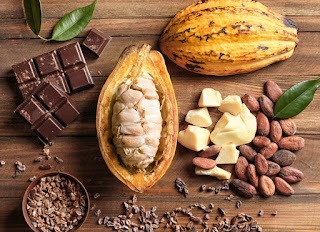

Have you ever indulged in the rich, velvety embrace of chocolate and pondered its origins? At FreeAstroScience.com, we take you on a scientific voyage through time, uncovering the roots of your favorite treat. Join us as we unravel the story of cocoa, from its humble beginnings in the Amazon to its global proliferation, promising a delectable blend of history, science, and the transformative powers of human innovation.
The Birth of Chocolate’s Scientific Name
It was in the mid-18th century that the scientific world was first introduced to Theobroma cacao, a name bestowed by the renowned botanist Carl Linnaeus. Little could he have known that this tropical plant would become a cornerstone of global cuisine. The journey of cocoa began over 5,000 years ago, as ancient civilizations in the Amazon basin first cultivated this cherished plant. Claire Lanaud of France’s University of Montpellier and her team have shone a light on cocoa’s past with research published in Nature, illustrating its South American origins and subsequent spread.
A Sacred Elixir Becomes Global
Cocoa flourished particularly in Mesoamerica, revered not only for its healing properties but also as a hallowed beverage. The Holmecs initially utilized it for medicinal purposes, and it was later embraced by the Maya and Aztecs, who crafted a sacred concoction known as xocolates. This blend of roasted cocoa beans, chili peppers, cornmeal, and water was cherished in their culture. The European encounter with cocoa came through Christopher Columbus, but it was Hernán Cortés who introduced its seeds to Spain in the early 16th century.
Unlocking Cocoa’s Genetic Past
The meticulous work of Lanaud and her colleagues involved analyzing organic residues from pottery dating back between 5,900 and 400 years, spanning regions from Ecuador to Panama. Their investigation of ancient cocoa DNA revealed three primary strains, tracing the exchange of these strains among diverse cultures. It was ascertained that cocoa, after its domestication in the Amazon, swiftly journeyed along the Pacific coastline.
Deciphering Cocoa’s Evolution and Domestication
The researchers uncovered the oldest strains’ diverse genetic makeup, indicating initial cultivation in disparate regions. These strains eventually gave rise to 12 genetic groups. The study highlights a significant genetic intermingling driven by human selection, facilitating T. cacao’s adaptation to new environments. Understanding the domestication history is not merely academic; it’s crucial for sustainable management of cocoa’s genetic resources.
The Making of a Global Delicacy
Cocoa’s narrative took a decisive turn in the West when Dutch chemist Koenraad van Houten revolutionized its processing in 1828. His hydraulic press method enabled the extraction of cocoa powder, thus transforming cocoa into a globally traded commodity. This innovation paved the way for J. S. Fry & Sons to craft the first chocolate bar in 1847, and later, the Swiss creation of milk chocolate in 1875. Today, cocoa plantations span an area as vast as Ireland, primarily in Africa and South America. The Swiss top the charts in consumption, while the Ivory Coast leads in production.
At FreeAstroScience.com, we are committed to bringing the wonders of science to your fingertips. Through this exploration of cocoa’s rich tapestry, we’ve traveled from ancient traditions to modern delights, demonstrating the profound influence of human curiosity and ingenuity on the world we savor. Stay curious, stay informed, and let the knowledge of the universe sweeten your day.