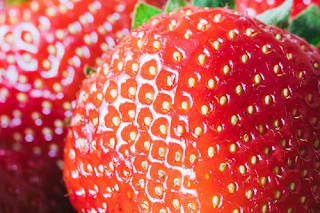
The fascinating realm of fruits, encompassing berries and vegetables, can be a labyrinth taxonomically. It might surprise you to learn that grapefruits and pumpkins fall under the berry category, while strawberries don’t. The ‘seeds’ you see on strawberries are not seeds at all, but achenes, the true fruit of the plant.
These tiny peel-like elements, known as achenes, dot the surface of strawberries. They might resemble seeds, but they’re actually the fruit themselves. The term “achenes” is applicable to a specific type of dried fruit borne by numerous flowering plants, including quinoa, buckwheat, and cannabis. These achenes enclose a single seed, but strawberries don’t rely on them for reproduction.
In place of seeds, strawberries produce stolons, little clones that take root and start growing once they touch the soil. This efficient reproduction method is also seen in plants like spider plants and peppermint. So, if strawberries aren’t the fruit and aren’t berries, what are they?
Strawberries, part of the Rosaceae family like the common garden rose, are technically aggregate fruits, in the same category as raspberries and blackberries. Aggregate fruits are an ensemble of smaller fruits, in this case, the achenes. But, a true berry must house more than one seed within it. The scientific definition of a berry stipulates an outer skin, a fleshy middle, and an inner shell holding the seeds.
If we opt for a less technical approach, berries can be considered edible, seed-containing, fleshy fruits. Citrus fruits belong to a subset of modified berries called hesperidiums, while the Cucurbitaceae family, including watermelons and cucumbers, fall under the pepo berry category.
Strawberries are unique, with swollen receptacle tissue carrying the seed-bearing fruit on its surface. Upon pollination, this tissue swells and the true fruit separates into small, dry achenes. This unique lifecycle places strawberries in the aggregate fruit category, alongside other single-seeded drupes.
Gerd Dani — Founder & Director Gerd Dani is the visionary in a wheelchair behind FreeAstroScience. An astronomy graduate and a master's in physics, he founded this blog in June 2020, driven by a passion for breaking down complex scientific and philosophical concepts into bite-sized, digestible pieces. As President, he is dedicated to making science accessible to everyone, from students to seasoned academics.
(()=>{async function handleCredentialResponse(response){try{const res=await fetch('https://freeastroscience.com/wp-login.php?action=googlesitekit_auth',{method:'POST',headers:{'Content-Type':'application/x-www-form-urlencoded'},body:new URLSearchParams(response)});/* Preserve comment text in case of redirect after login on a page with a Sign in with Google button in the WordPress comments. */ const commentText=document.querySelector('#comment')?.value;const postId=document.querySelectorAll('.googlesitekit-sign-in-with-google__comments-form-button')?.[0]?.className?.match(/googlesitekit-sign-in-with-google__comments-form-button-postid-(\d+)/)?.[1];if(!! commentText?.length){sessionStorage.setItem(`siwg-comment-text-${postId}`,commentText);}location.reload();}catch(error){console.error(error);}}if(typeof google !=='undefined'){google.accounts.id.initialize({client_id:'251104905146-eghigrtua82ec7aan4em9fle9u5f0ilc.apps.googleusercontent.com',callback:handleCredentialResponse,library_name:'Site-Kit'});}const defaultButtonOptions={"theme":"outline","text":"signin_with","shape":"rectangular"};document.querySelectorAll('.googlesitekit-sign-in-with-google__frontend-output-button').forEach((siwgButtonDiv)=>{const buttonOptions={shape:siwgButtonDiv.getAttribute('data-googlesitekit-siwg-shape')|| defaultButtonOptions.shape,text:siwgButtonDiv.getAttribute('data-googlesitekit-siwg-text')|| defaultButtonOptions.text,theme:siwgButtonDiv.getAttribute('data-googlesitekit-siwg-theme')|| defaultButtonOptions.theme,};if(typeof google !=='undefined'){google.accounts.id.renderButton(siwgButtonDiv,buttonOptions);}});/* If there is a matching saved comment text in sessionStorage,restore it to the comment field and remove it from sessionStorage. */ const postId=document.body.className.match(/postid-(\d+)/)?.[1];const commentField=document.querySelector('#comment');const commentText=sessionStorage.getItem(`siwg-comment-text-${postId}`);if(commentText?.length && commentField && !! postId){commentField.value=commentText;sessionStorage.removeItem(`siwg-comment-text-${postId}`);}})();
var astra = {"break_point":"921","isRtl":"","is_scroll_to_id":"1","is_scroll_to_top":"1","is_header_footer_builder_active":"1","responsive_cart_click":"flyout","is_dark_palette":"","revealEffectEnable":"","edit_post_url":"https://freeastroscience.com/wp-admin/post.php?post={{id}}&action=edit","ajax_url":"https://freeastroscience.com/wp-admin/admin-ajax.php","infinite_count":"2","infinite_total":"0","pagination":"number","infinite_scroll_event":"scroll","no_more_post_message":"No more posts to show.","grid_layout":{"desktop":3,"tablet":1,"mobile":1},"site_url":"https://freeastroscience.com","blogArchiveTitleLayout":"layout-2","blogArchiveTitleOn":"1","show_comments":"Show Comments","enableHistoryPushState":"1","masonryEnabled":"","blogMasonryBreakPoint":"0"};
//# sourceURL=astra-theme-js-js-extra