
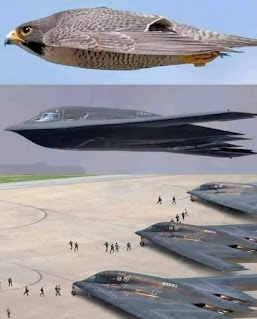

Ever wondered which creature holds the title for the fastest animal on the planet? Join us as we delve into the incredible world of the Peregrine Falcon, uncovering its unmatched speed and precision, and see how it stacks up against human engineering marvels like the B-2 Spirit stealth bomber.
The Peregrine Falcon: A Marvel of Nature
The Peregrine Falcon (Falco peregrinus) is more than just a bird; it’s a testament to the astonishing capabilities of nature. Despite being roughly the size of a crow, this raptor is a formidable predator.
Record-Breaking Speeds
When it comes to speed, the Peregrine Falcon leaves all other creatures—and even some human-made machines—in the dust. During its hunting stoop (high-speed dive), it can reach velocities over 389 km/h (242 mph). This makes it the fastest member of the animal kingdom.
Anatomical Adaptations
- Aerodynamic Body: Sleek and tapered, minimizing air resistance.
- Powerful Muscles: Especially in the chest, providing the strength needed for rapid dives.
- Specialized Feathers: Stiff and narrow, reducing drag.
Comparing to Human Engineering: The B-2 Spirit Stealth Bomber
The B-2 Spirit is a technological masterpiece, designed for stealth and precision.
Similarities in Design
- Stealth and Precision: Both the falcon and the B-2 are designed to approach targets undetected.
- Aerodynamics: Their shapes are optimized for minimal air resistance.
Differences Highlighting Nature’s Mastery
- Energy Efficiency: The falcon achieves its feats without engines, relying on gravity and muscle power.
- Adaptability: While the B-2 requires a runway and maintenance, the falcon thrives in diverse environments across the globe.
Conservation Status: A Story of Recovery
Once listed as endangered due to pesticide use (notably DDT), which led to eggshell thinning, the Peregrine Falcon has made a remarkable comeback.
Key Factors in Recovery
- Ban on DDT: Implemented in the 1970s in many countries.
- Conservation Efforts: Breeding programs and legal protections.
- Urban Adaptation: Falcons nesting on skyscrapers, capitalizing on city pigeon populations.
As of our latest knowledge cutoff in 2023, the Peregrine Falcon is listed as Least Concern on the IUCN Red List, reflecting its successful rebound.
The Falcon’s Role in Ecosystems
- Predator Dynamics: Helps control populations of medium-sized birds, maintaining ecological balance.
- Indicator Species: Reflects the health of the environment, signaling issues like pesticide overuse.
What We Can Learn from the Peregrine Falcon
- Biomimicry: Engineers study the falcon’s aerodynamics to improve aircraft design.
- Conservation Success: Demonstrates the positive impact of targeted environmental policies.
Conclusion
The Peregrine Falcon stands as a symbol of nature’s unparalleled engineering—a creature that combines speed, precision, and resilience. By appreciating and learning from this incredible raptor, we not only marvel at its capabilities but also recognize the importance of conservation efforts. Together, we can ensure that such magnificent species continue to soar for generations to come.