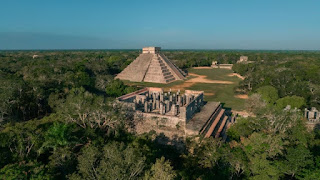

Welcome, Curious Minds! We’re thrilled you’re here to explore the awe-inspiring differences among the Maya, Aztechi, and Inca. Their stories span astronomy, intricate cities, and captivating rites that continue to fascinate scholars worldwide. Join us in uncovering their major achievements, their lasting linguistic legacies, and why these precolumbian civilizations remain so important. Stick with us till the end to deepen your understanding of these remarkable cultures.
Body of the Article
The Geographic Landscape
Different regions shaped these civilizations’ identities. The Maya flourished in the Yucatán Peninsula along with parts of Guatemala, Belize, El Salvador, and Honduras. The Aztechi (known to themselves as the Mexica) thrived in the highlands of central Mexico, specifically around Lake Texcoco. Meanwhile, the Inca erected their Andean empire spanning modern-day Peru, Bolivia, and Chile with stunning mountain cities.
Maya: Astronomers and City-States
Blossoming in Mesoamerica
The Maya established prolific city-states such as Tikal and Chichén Itzá, especially between the 5th and 9th centuries CE. They never united under a single ruler; independent kingdoms often vied for farmland, trade routes, and prestige.
Written Language and Scholarly Achievements
They pioneered a system of glyphic writing depicting both phonetic and logographic elements. Ancient scribes recorded mathematics and astronomy on tree-bark manuscripts called “codices.” This drive toward learning influenced neighboring cultures, including the Aztechi.
Reverence for Spiritual Forces
Their pantheon included gods like Itzamnà, the sun deity, and Kukulkan (the Feathered Serpent). Rituals featured human sacrifice, though less frequently than in Aztec practice. Archaeological discoveries reveal the Maya also worshipped ancestors, highlighting a belief system centered on cyclical time and cosmic balance.
Aztechi: Warriors of the Plateau
From Nomads to Empire Builders
The term “Aztechi” was introduced by outsiders; they identified themselves as “Mexica.” After arriving from northern regions in the early 13th century, the Mexica built Tenochtitlan on an island within Lake Texcoco. They soon formed the “Triple Alliance” with Texcoco and Tlacopan, crushing rival communities and expanding rapidly.
Military Might and Architectural Feats
Society revolved around a militaristic hierarchy under the Huey Tlatoani (Revered Speaker). Monumental temples and wide causeways showcased their prowess, alongside advanced agricultural techniques that supported large urban populations.
Religion and Ritual Sacrifice
Like the Maya, the Aztechi believed in many gods. However, they engaged in large-scale sacrificial rituals, convinced that cosmic equilibrium hinged on offerings of human blood. Prisoners of war bore the brunt of these ceremonies, though elite volunteers saw it as a noble fate.
Inca: Masters of the Andes
The Rise of an Unmatched Empire
Originating in the Cuzco region, the Inca forged the largest precolumbian domain in South America. They favored central authority with the Inca (the emperor) at the pinnacle of power.
Andean Infrastructure and Innovation
Though they lacked a proper writing system, they used quipu—strings with coded knots—for recordkeeping. Their cities, including Machu Picchu, exhibit advanced engineering. They built terraced fields and roads that conquered mountainous terrain, ensuring efficient communication.
Spiritual Worldview and Royal Customs
The Inca believed in a pantheon tied to natural phenomena. Sacrifices happened but on a lesser scale. Mummies unearthed at high altitudes indicate reverence for mountain deities. Anakena, the Inca language known as Quechua, still thrives among millions in the Andes.
Modern Perspectives and Ongoing Discoveries
Archaeologists continue to unearth artifacts that offer new insights. Laser-based mapping of Maya city-states, new breakthroughs on Aztec hydraulic systems, and genetic studies on Andean populations reshape our view of these empires. This blending of past and present resonates with us at FreeAstroScience.com, where we simplify complex scientific principles for everyone to appreciate.
Conclusion
The Maya, Aztechi, and Inca charted different paths to influence, pushing the boundaries of architecture, astronomy, governance, and religious practice. Their legacies cannot be reduced to mere pyramids or gold; they encompass living languages, oral histories, and ongoing archaeological revelations that broaden our view of civilization. We hope you’ll reflect on the complexity of these precolumbian societies and carry forward a renewed sense of awe and respect for their stories.
(Article written for you by FreeAstroScience.com, where complex scientific principles are simplified.)