Welcome to another insightful article from the team at freeastroscience.com. As we navigate the universe’s mysteries and marvels, we bring you the latest updates on the most groundbreaking developments in space exploration. Today, we delve into the details of NASA’s historic Artemis II lunar mission, a significant step towards the future of space exploration.
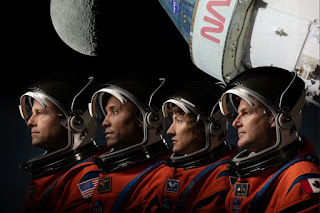
In an unprecedented move, NASA has announced the quartet of astronauts who will embark on the ground-breaking Artemis II lunar mission. The team, composed of three Americans – Reid Wiseman, Victor Glover, Christina Koch, and one Canadian, Jeremy Hansen, is set to make history. Scheduled for November 2024, the mission’s primary objective is to propel the Orion spacecraft with a crew on board the Space Launch System for the first time ever, marking a key milestone in space exploration. The astronauts are anticipated to spend approximately nine days in space, testing the spacecraft’s lunar approach and ensuring safe return to Earth.
The Artemis II mission, following the successful unmanned Artemis I mission, is paving the way for the eagerly-awaited Artemis III mission. This latter mission, expected to occur between late 2025 and early 2026, promises to land the first woman and another man on the moon’s surface. The preparations for Artemis II are well underway at the Kennedy Space Center, with a unique, colossal tank designed to accommodate over 5 million liters of liquid hydrogen to expedite future launch attempts.
The SpaceX Starship, selected by NASA for transporting crews from lunar orbit to the moon’s surface, however, presents an element of uncertainty. The Starship, equipped with 33 engines and boasting a height of 50 meters, is scheduled for its inaugural orbital test by the end of April. Yet, doubts linger regarding its preparedness for the Artemis III mission slated for the end of 2025. Stay tuned at freeastroscience.com for more updates on these exciting ventures into the cosmos.
Gerd Dani — Founder & Director Gerd Dani is the visionary in a wheelchair behind FreeAstroScience. An astronomy graduate and a master's in physics, he founded this blog in June 2020, driven by a passion for breaking down complex scientific and philosophical concepts into bite-sized, digestible pieces. As President, he is dedicated to making science accessible to everyone, from students to seasoned academics.
(()=>{async function handleCredentialResponse(response){try{const res=await fetch('https://freeastroscience.com/wp-login.php?action=googlesitekit_auth',{method:'POST',headers:{'Content-Type':'application/x-www-form-urlencoded'},body:new URLSearchParams(response)});/* Preserve comment text in case of redirect after login on a page with a Sign in with Google button in the WordPress comments. */ const commentText=document.querySelector('#comment')?.value;const postId=document.querySelectorAll('.googlesitekit-sign-in-with-google__comments-form-button')?.[0]?.className?.match(/googlesitekit-sign-in-with-google__comments-form-button-postid-(\d+)/)?.[1];if(!! commentText?.length){sessionStorage.setItem(`siwg-comment-text-${postId}`,commentText);}location.reload();}catch(error){console.error(error);}}if(typeof google !=='undefined'){google.accounts.id.initialize({client_id:'251104905146-eghigrtua82ec7aan4em9fle9u5f0ilc.apps.googleusercontent.com',callback:handleCredentialResponse,library_name:'Site-Kit'});}const defaultButtonOptions={"theme":"outline","text":"signin_with","shape":"rectangular"};document.querySelectorAll('.googlesitekit-sign-in-with-google__frontend-output-button').forEach((siwgButtonDiv)=>{const buttonOptions={shape:siwgButtonDiv.getAttribute('data-googlesitekit-siwg-shape')|| defaultButtonOptions.shape,text:siwgButtonDiv.getAttribute('data-googlesitekit-siwg-text')|| defaultButtonOptions.text,theme:siwgButtonDiv.getAttribute('data-googlesitekit-siwg-theme')|| defaultButtonOptions.theme,};if(typeof google !=='undefined'){google.accounts.id.renderButton(siwgButtonDiv,buttonOptions);}});/* If there is a matching saved comment text in sessionStorage,restore it to the comment field and remove it from sessionStorage. */ const postId=document.body.className.match(/postid-(\d+)/)?.[1];const commentField=document.querySelector('#comment');const commentText=sessionStorage.getItem(`siwg-comment-text-${postId}`);if(commentText?.length && commentField && !! postId){commentField.value=commentText;sessionStorage.removeItem(`siwg-comment-text-${postId}`);}})();
var astra = {"break_point":"921","isRtl":"","is_scroll_to_id":"1","is_scroll_to_top":"1","is_header_footer_builder_active":"1","responsive_cart_click":"flyout","is_dark_palette":"","revealEffectEnable":"","edit_post_url":"https://freeastroscience.com/wp-admin/post.php?post={{id}}&action=edit","ajax_url":"https://freeastroscience.com/wp-admin/admin-ajax.php","infinite_count":"2","infinite_total":"0","pagination":"number","infinite_scroll_event":"scroll","no_more_post_message":"No more posts to show.","grid_layout":{"desktop":3,"tablet":1,"mobile":1},"site_url":"https://freeastroscience.com","blogArchiveTitleLayout":"layout-2","blogArchiveTitleOn":"1","show_comments":"Show Comments","enableHistoryPushState":"1","masonryEnabled":"","blogMasonryBreakPoint":"0"};
//# sourceURL=astra-theme-js-js-extra