
The Forgotten Genius Who Changed Chemistry Forever
What if the man who first isolated the oxygen you’re breathing right now
never received a single line of credit for it?
Welcome to FreeAstroScience.com — where we explain complex
scientific principles in plain, honest language. We’re Gerd Dani, writing to
you as always from our community that refuses to let good science go unnoticed.
Today we tell the story of Carl Wilhelm Scheele: an 18th-century
pharmacist who discovered more chemical elements and compounds than almost anyone
in history — and was quietly erased from the textbooks anyway.
It’s a story about genius, bad timing, possible academic theft, and a truly
tragic ending. Read it to the end. We promise it’s worth every minute.
Who Was Carl Wilhelm Scheele?
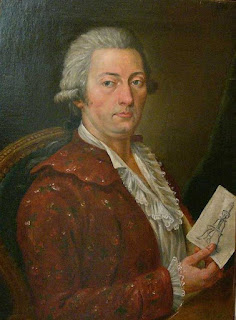
Born on 9 December 1742 in Stralsund — a small Baltic
coastal town then under Swedish rule, now part of Germany — Scheele grew
up as one of eleven children of an unsuccessful brewer. Not exactly the
biography you’d expect for one of history’s most productive chemists.
At just 14 years old, he became an apprentice apothecary
in Gothenburg. That pharmacy bench was his real university. Over the next
three decades, he moved through Malmö, Stockholm, and Uppsala before
settling permanently in the quiet provincial town of Köping.
He stayed there for the rest of his short life — mixing medicines by day,
making world-changing discoveries in every spare hour.
No grand university laboratory. No wealthy patron. No prestigious title.
Just a stove, a few glass flasks, and a curiosity that simply could not
be switched off.
- Born: 9 December 1742, Stralsund, Pomerania
- Died: 21 May 1786, Köping, Sweden — aged 43
- Profession: Pharmaceutical chemist and apothecary
- Nationality: German-Swedish
- Academy member: Royal Swedish Academy of Sciences, from 1775
- Main publication: Chemical Observations and Experiments
on Air and Fire, Uppsala & Leipzig, 1777 - Estimated discoveries: 7 new elements, 4 gases,
6 inorganic acids, 8 organic acids, glycerin, and more
In 1775, the Royal Swedish Academy of Sciences elected him a member —
a rare honour for a self-taught pharmacist. He attended only one
meeting in his life. He was always too busy doing the actual science.
How Did He Discover Oxygen?
He Named It Feuerluft — “Fire-Air”
Between 1770 and 1774, while working in Uppsala alongside
the chemistry professor Torbern Bergman, Scheele began heating a series
of compounds: mercuric oxide, potassium nitrate, silver carbonate, manganese
dioxide. Each time, the same result. A colourless, odourless gas appeared
— and candles burned inside it with spectacular intensity.
He named it Feuerluft — “fire-air” in German.
We know it today as oxygen. He described its properties carefully in
letters and experimental notes. The discovery was real, methodical, and
reproduced across multiple reactions. By any scientific standard, Scheele
had found oxygen roughly a year before anyone else.
But he didn’t publish until 1777. And that delay
cost him everything.
— Δ →
2 Hg
+
O2 ↑
— Δ →
2 KNO2
+
O2 ↑
He didn’t stumble onto oxygen once and stop. He reproduced it from multiple
different starting materials. That’s not luck. That’s rigorous chemistry.
Who Really Deserves the Credit for Discovering Oxygen?
Three men are tied to this discovery. History has not been equally kind
to all of them.
| Scientist | Discovery (est.) | Published | Key Contribution |
|---|---|---|---|
| Carl Wilhelm Scheele | c. 1772–1773 | 1777 | First to isolate and describe “fire-air” (oxygen); published too late to claim credit |
| Joseph Priestley | 1 August 1774 | 1775 | Independent discovery; published first; called it “dephlogisticated air” |
| Antoine Lavoisier | 1775 | 1777–1778 | Correctly identified oxygen as a chemical element; debunked phlogiston theory; coined the name “oxygen” |
Here’s the part that still stings, 240 years later. Scheele wrote
to Lavoisier — he sent the French chemist a detailed letter
describing “fire-air” before Lavoisier had published anything on the
subject. Lavoisier never acknowledged receiving that letter. Some
historians have suggested that Lavoisier’s wife — who managed his
scientific correspondence — may have hidden the letter so her husband
could claim the discovery as his own.
suggested that Lavoisier’s wife hid the letter from her husband to allow
him to claim credit for the discovery of oxygen.”
— American Journal of Physiology-Lung Cellular and Molecular
Physiology, 2014
Scheele, for his part, still believed in the phlogiston theory
— the old alchemical idea that a fire-element called phlogiston
was released during combustion. So did Priestley. It was Lavoisier alone
who discarded phlogiston entirely and explained oxygen’s true role. He
named it from the Greek oxys (acid) + genes (producer):
oxygen. The name stuck. And so did his reputation — at Scheele’s expense.
Science, like life, isn’t always fair. But the facts don’t bend
to fame.
What Else Did Carl Wilhelm Scheele Discover?
Oxygen was just one chapter. In a career of barely 20 active years —
working from a provincial pharmacy — Scheele arguably discovered
seven new chemical elements and an extraordinary range
of compounds. The full list is almost hard to believe.
| Discovery | Year | Type | Modern Name / Notes |
|---|---|---|---|
| Oxygen (“fire-air”) | c. 1772–73 | Element — Gas | O₂; first isolated; published last |
| Chlorine | 1774 | Element — Gas | Cl₂; called “dephlogisticated muriatic acid”; named by Davy in 1810 |
| Manganese | 1774 | Element | Mn; identified from pyrolusite (black magnesia) |
| Barium | 1772 | Element | Ba; announced as “baryta” (barium oxide) |
| Molybdenum | 1778 | Element | Mo; extracted from molybdenite mineral |
| Tungsten | 1781 | Element | W; the mineral scheelite (CaWO₄) still bears his name |
| Nitrogen (jointly) | 1772 | Element — Gas | N₂; shared credit with Rutherford and Cavendish |
| Tartaric acid | 1770 | Organic acid | C₄H₆O₆; found in wine sediment |
| Lactic acid | 1780 | Organic acid | C₃H₆O₃; isolated from sour milk |
| Citric acid | 1784 | Organic acid | C₆H₈O₇; isolated from lemon juice |
| Oxalic acid | 1776 | Organic acid | (COOH)₂; present in many plants |
| Prussic acid (HCN) | 1782 | Inorganic acid | Hydrogen cyanide; one of the most potent poisons known |
| Glycerol | 1779 | Organic compound | C₃H₈O₃; still widely used in cosmetics and pharmaceuticals |
| Hydrofluoric acid | 1771 | Inorganic acid | HF; highly corrosive; etches glass |
| Hydrogen sulfide | 1777 | Inorganic compound | H₂S; the “rotten egg” gas |
| Scheele’s Green | 1775 | Pigment | Copper arsenite (CuHAsO₃); hugely popular in 19th-century wallpaper — later found toxic |
| Silver salt photodecomposition | c. 1777 | Principle | Silver salts decompose under light — the founding principle of photography |
That list covers 4 gases, 6 inorganic acids, 8 organic acids, isolated
glycerin, and the groundwork for photography. He did all of this before
any major institution gave him serious resources. If that doesn’t make
you stop and think, we don’t know what will.
The Chemistry Behind the Breakthroughs
How Scheele Made Chlorine in 1774
Scheele’s chlorine discovery came from reacting what he called “muriatic
acid” (hydrochloric acid) with black magnesia (manganese dioxide). A
sharp-smelling, yellowish-green gas appeared. He noted it bleached fabric,
dissolved metals, and produced common salt when combined with soda. Despite
all that evidence, his commitment to phlogiston theory meant he called it
“dephlogisticated muriatic acid” rather than naming it a new element.
Sir Humphry Davy finally confirmed it as an element in 1810.
+
4 HCl
— Δ →
MnCl2
+
Cl2 ↑
+
2 H2O
manganese(II) chloride + chlorine gas + water
Prussic Acid — The Compound That Killed Him
In 1782, Scheele isolated prussic acid from Prussian blue
pigment. He described its smell and, as was his habit, its taste. He had
no idea what he was dealing with. We now call it hydrogen cyanide
(HCN) — one of the fastest-acting, most potent poisons ever
identified.
(Hydrogen Cyanide — lethal at trace concentrations)
Oral lethal dose: approximately 1–3 mg per kg of body weight.
Scheele tasted it without knowing any of this.
handle unknown substances. Scheele’s era predated toxicology as we know
it. What was accepted scientific method in 1782 is considered dangerous
and irresponsible today. Always follow laboratory safety guidelines.
Why Did He Taste His Chemicals?
It sounds almost absurd by today’s standards. But in the 18th century,
sensory description was part of the scientific method. Chemists and
naturalists were expected to note the colour, smell, texture, and taste
of new substances. It was data. It was protocol.
Scheele followed this practice throughout his career. He inhaled chlorine,
tasted prussic acid, and handled arsenic, mercury, and lead compounds with
his bare hands — routinely, over decades. The concept of cumulative
chemical toxicity barely existed in his time.
He wasn’t reckless. He was a man of his era, doing exactly what the science
of his era required. That’s what makes his story so genuinely tragic.
His most dangerous experiments were also, by the standards of 1774,
perfectly normal ones.
How Did Carl Wilhelm Scheele Die?
By autumn 1785, Scheele was visibly deteriorating.
He showed signs of kidney disease and a severe skin condition —
both almost certainly the result of years of exposure to arsenic,
mercury, lead, hydrofluoric acid, and other toxic compounds he had
worked with unprotected.
He knew the end was coming. On 19 May 1786 — two days before
his death — he married Sara Margaretha Pohl, the widow of
his predecessor at the Köping pharmacy. The marriage had one practical
purpose: so she could legally inherit the pharmacy and all his
possessions. Even in dying, Scheele thought of someone else first.
He died on 21 May 1786, in Köping, Sweden.
He was 43 years old.
and, perhaps, hydrofluoric acid… took their toll on Scheele.
He died at the early age of 43.”
— American Journal of Physiology, 2014
The document we studied for this article describes him being found dead
one morning with an astonished expression — after conducting experiments
with prussic acid. Whether that detail is precise or embellished in the
retelling, the core truth doesn’t change: the man who discovered hydrogen
cyanide was almost certainly killed by it, and by the accumulated toll of
his life’s work.
The discoverer of oxygen died not knowing whether his own country would
remember him. It’s a sentence that should sit with you for a while.
What Is Scheele’s Legacy Today?
Despite the injustice of the historical record, Scheele’s name hasn’t
completely disappeared. You’ll find traces of him in surprising places:
-
Scheelite (CaWO₄) — the calcium tungstate mineral
named in his honour. It’s used today in extracting tungsten for
electronics, lighting filaments, and hard metal tools. -
Scheele’s Green (CuHAsO₃) — his copper arsenite
pigment became the most popular green colour of the 19th century.
It coloured wallpapers, fabrics, artificial flowers, and children’s
toys across Europe — until its arsenic content was finally linked
to widespread illness decades later. -
Chemical Observations and Experiments on Air and Fire
(1777) — his landmark publication, still referenced in the
history of chemistry. -
Photography — his observation that silver salts
decompose under light was the foundational principle on which the
entire science of photography was later built. -
A statue in Köping — the quiet Swedish town where
he lived and died now honours him in bronze. -
The Royal Swedish Academy of Sciences — recognised
him as a member in 1775, while he was still alive. One of the few
official recognitions he received.
We at FreeAstroScience believe his story matters far beyond the history
of chemistry. It’s a reminder that real discovery doesn’t always come
with a standing ovation. Sometimes it comes with silence. Sometimes it
comes while you’re standing alone in a small pharmacy on a cold
Swedish morning.
We keep this site alive because — as we always say — the sleep of
reason breeds monsters. Scheele never let his mind sleep. Not even
when the academic world refused to wake up and notice him.
One Last Thought
Carl Wilhelm Scheele was a pharmacist in a small town. He had no
famous university behind him, no powerful patrons, and no talent for
self-promotion. What he had was an extraordinary mind and an
inexhaustible appetite for discovery.
He isolated oxygen before anyone else — then got no credit for it.
He wrote to Lavoisier about his findings — and the letter disappeared.
He discovered chlorine, manganese, barium, molybdenum, tungsten,
prussic acid, citric acid, glycerol, and the principle behind
photography — and history largely forgot his name.
His story forces us to ask a hard question: how many other Scheeles
are out there — brilliant, productive, honest scientists whose work
was absorbed by more famous names, lost to bad timing, or simply
never acknowledged?
We think you should hold onto that question. Good science deserves
good memory. That’s exactly why FreeAstroScience exists — to make sure
these stories don’t stay buried under the weight of more convenient
narratives.
Come back to FreeAstroScience.com. There are more
forgotten geniuses waiting to be rediscovered — and we’ll be here to
tell their stories clearly, honestly, and without putting you to sleep.
Keep your mind active. Always.