Happy Mother’s Day 🌹 — From the Cosmic Womb to Your Heart
Key Takeaway:
Motherhood is written in the stars, the Moon, the animal kingdom, and the very atoms that make us who we are. Today, we celebrate mothers everywhere—on Earth and across the universe.
The Universe’s Greatest Love Story: What Science Reveals About Motherhood
Have you ever wondered what connects the birth of a star, the devotion of an elephant, and the love you feel for your mother? What if I told you that the story of motherhood is as old as the universe itself, woven into the fabric of space, life, and even the atoms in your body? Welcome to FreeAstroScience.com, where we break down the wonders of science into stories that touch your heart and spark your mind. Today, on Mother’s Day, let’s journey together from cosmic nurseries to the warmth of your own home. Stick with us to the end—you’ll see motherhood in a whole new light.
Table of Contents
- Why Do We Celebrate Mother’s Day?
- How Does the Universe Celebrate Motherhood?
- What Can We Learn from Animal Mothers?
- What Makes the Human Mother-Child Bond So Special?
- How Is Mother’s Day Celebrated Around the World?
- Mother’s Day by the Numbers
- Conclusion: The Science—and Magic—of Motherhood
Why Do We Celebrate Mother’s Day?
Mother’s Day isn’t just a date on the calendar. It’s a story of love, gratitude, and sometimes, a little rebellion. Anna Jarvis started it all in 1908, inspired by her own mother, Ann Reeves Jarvis, who ran “Mother’s Day Work Clubs” in the 1850s to help families stay healthy. The first official celebration happened on May 10, 1908, in a small church in Grafton, West Virginia, and at Wanamaker’s department store in Philadelphia. By 1912, the idea had spread like wildfire, and in 1914, President Woodrow Wilson made it a national holiday in the United States—the second Sunday in May.
Anna Jarvis wanted Mother’s Day to be about personal reflection and gratitude. She even picked the carnation as the official flower—white for mothers who have passed, red for those still with us. Ironically, she later fought against the holiday’s commercialization, but the world had already fallen in love with the idea. Today, it’s the third biggest card-sending holiday in the U.S., with 133 million cards exchanged every year. Americans are expected to spend $38 billion on Mother’s Day in 2026, with the average household spending $274 in 2023. That’s a lot of love—and a lot of flowers, jewelry, and special outings.
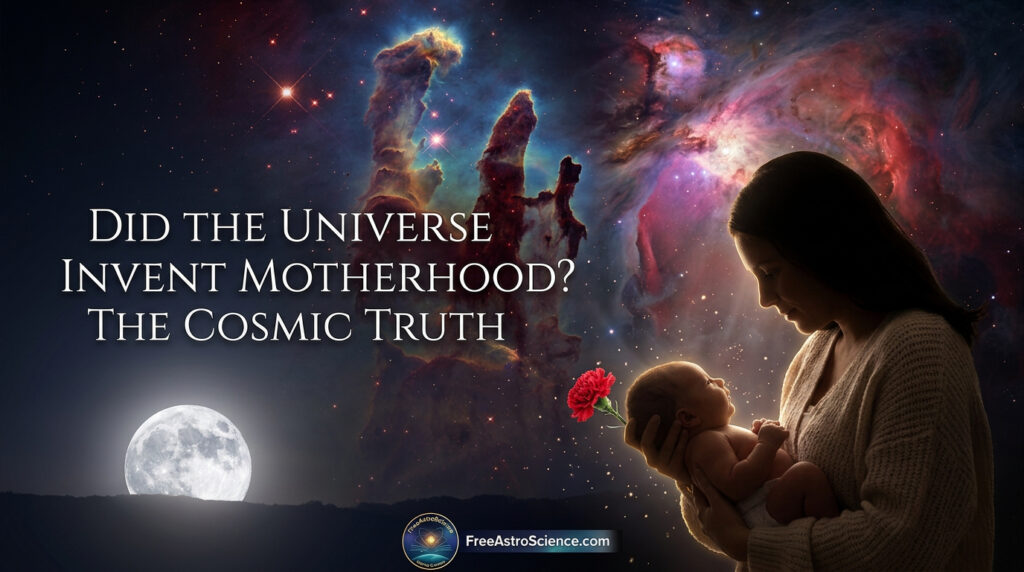
How Does the Universe Celebrate Motherhood?
The Cosmic Womb: Where Stars Are Born
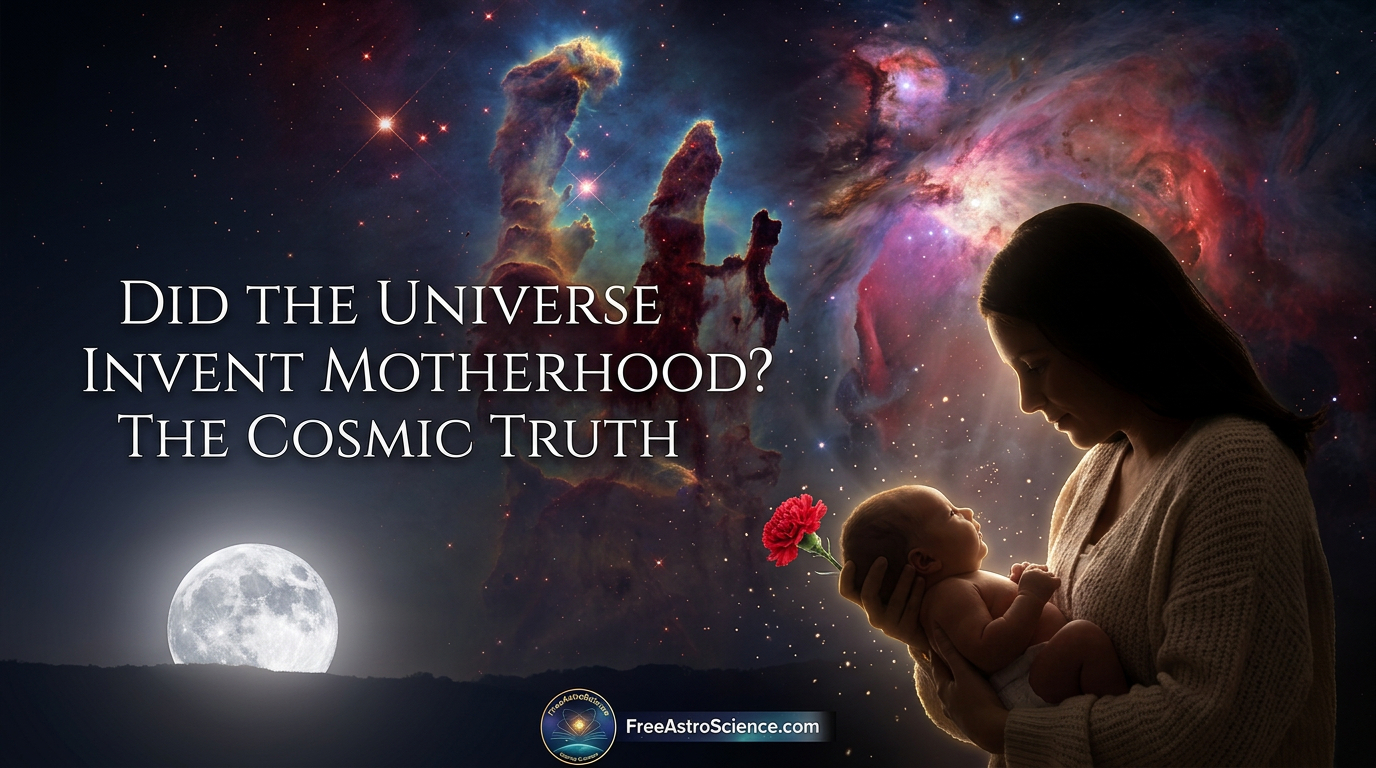
Look up at the night sky. Every twinkling star was once cradled in a cosmic nursery—a nebula. The Orion Nebula, just 1,344 light-years away, is home to about 700 baby stars. The Eagle Nebula’s Pillars of Creation are towering columns of gas and dust, sculpted by gravity and time, where new stars are born. These nebulae are the universe’s version of a mother’s womb, providing shelter and the raw materials for new life.
The Physics of Star Birth: The Jeans Instability Criterion
When does a cloud of gas become a star? It all comes down to a cosmic tipping point called the Jeans instability criterion. If a cloud’s mass is big enough, gravity wins, and the cloud collapses to form a star. Here’s the formula that predicts this moment:
The Jeans Mass Formula:
MJ = ( 5kBT / GμmH )3/2 × ( 3 / 4πρ0 )1/2
Where: kB = Boltzmann’s constant, T = temperature, G = gravitational constant, μ = mean molecular weight, mH = mass of hydrogen atom, ρ0 = initial density.
If the cloud’s mass is greater than MJ, gravity takes over, and a star is born. It’s the universe’s way of saying, “It’s time.”
Stars: The Original Mothers
Every atom in your body—except hydrogen—was made inside a star. Carbon, oxygen, calcium, iron: all forged in the hearts of stars and scattered across the cosmos by stellar winds and supernova explosions. As Carl Sagan said, “We are made of star stuff.” Stars are the universe’s original mothers, giving us the elements we need for life.
The Moon: A Symbol of Motherhood
The Moon has always been linked to motherhood and femininity. In Greek mythology, goddesses like Selene and Artemis personify the Moon’s nurturing and protective qualities. The Moon’s phases mirror the stages of womanhood: waxing for growth, full for the peak of motherhood, waning for wisdom. Across cultures, the Moon stands for renewal, cycles, and the gentle power of mothers everywhere.
What Can We Learn from Animal Mothers?
Motherhood isn’t just a human story. Nature is full of mothers whose devotion puts even the best of us to shame.
The Octopus: The Ultimate Sacrifice
Take the Graneledone boreopacifica octopus. She lays thousands of eggs, then spends over four years—without eating—guarding and cleaning them. When her babies hatch, she dies. It’s a one-time act of pure devotion.
The Elephant: Lifelong Guidance
Elephant mothers carry their babies for 22 months—the longest pregnancy of any land mammal. Calves weigh up to 200 pounds at birth and nurse for up to four years. Elephant families are matriarchal, with grandmothers, aunts, and sisters all pitching in. It’s a true village.
The Orangutan: The Patient Teacher
Orangutan mothers care for their young for six to eight years, teaching them everything they need to survive. They only give birth once every eight years, focusing all their energy on one child at a time. Even after the young leave, they come back for advice until they’re teenagers.
The Polar Bear: Survival in the Arctic
Polar bear mothers dig dens in the snow, give birth, and nurse their cubs for up to eight months without eating. Cubs are born blind and helpless, but their mother’s fat reserves and fierce protection give them a fighting chance in the harsh Arctic.
What Makes the Human Mother-Child Bond So Special?
Fetal Microchimerism: A Lasting Connection
During pregnancy, some fetal cells cross the placenta and stay in the mother’s body for decades. This is called fetal microchimerism. These cells have been found in the mother’s heart, liver, and even brain. They may help repair tissue and can make up to 6% of the free-floating DNA in a pregnant woman’s blood plasma. It’s a physical reminder that a mother carries her child with her, always.
The Science of the Mother-Child Bond
When a mother hears her baby cry, her brain releases oxytocin—the “love hormone.” This triggers caregiving and reduces stress. Comforting a baby activates opioid receptors in the mother’s brain, bringing feelings of satisfaction and well-being. Even before birth, a mother’s emotions can shape her baby’s brain through chemical signals.
Secure Attachment: The Foundation for Life
A strong mother-child bond leads to better emotional regulation, stronger social connections, and even a healthier immune system. When a mother and baby lock eyes, endorphin levels rise in both, creating a wave of joy and emotional synchronization. The quality of this bond shapes a child’s brain, resilience, and ability to form healthy relationships for life.
How Is Mother’s Day Celebrated Around the World?
Here’s a look at how different cultures honor mothers. The love is universal, but the traditions are as varied as the stars.
| Country/Region | Date | Tradition |
|---|---|---|
| United States | Second Sunday in May | Cards, flowers, gifts, family meals |
| United Kingdom | Fourth Sunday of Lent | “Mothering Sunday,” rooted in religious tradition |
| Arab World | March 21 | Celebrates the start of spring |
| Panama | December 8 | Honors the Virgin Mary |
| Thailand | August 12 | Queen Sirikit’s birthday |
| Japan | Second Sunday in May | Children draw pictures for mothers |
| Native American Tribes | Varies | Powwows, ceremonies, feasts, and songs |
Mother’s Day by the Numbers
Let’s put some numbers to the love and gratitude we show on Mother’s Day.
| Fact | Number/Detail |
|---|---|
| Cards exchanged (U.S.) | 133 million (3rd largest holiday) |
| Expected U.S. spending (2026) | $38 billion |
| Average household spending (2023) | $274 |
| Top gifts (2023) | Jewelry ($7.8B), special outings ($5.6B), electronics ($4.0B) |
| Flowers and greeting cards | 74% of Americans buy them |
| Special outings or meals | 60% plan them |
| Phone traffic spike | Up to 37% (most calls of any day) |
| UK retail spending (2022) | £1.49 billion |
Conclusion: The Science—and Magic—of Motherhood
Motherhood is everywhere. It’s in the stars that made our atoms, in the Moon that lights our nights, in the animal kingdom’s fierce devotion, and in the quiet, lasting bond between a mother and her child. Science shows us that this love is more than a feeling—it’s written into our biology, our history, and even the universe itself.
At FreeAstroScience.com, we believe that understanding the science behind these connections makes them even more beautiful. We’re here to explain complex ideas in simple words, to keep your mind awake and curious—because the sleep of reason breeds monsters. So, next time you look up at the stars or hug your mom, remember: you’re part of the universe’s greatest love story.
Happy Mother’s Day—from the cosmic womb to your heart.
References & Further Reading
- History.com: Mother’s Day
- Smithsonian Magazine: A Brief History of Mother’s Day
- National Geographic: Animal Moms
- Scientific American: Fetal Microchimerism
- NASA: The Pillars of Creation
- Space.com: Orion Nebula
- Psychology Today: Attachment Theory
- National Retail Federation: Mother’s Day Spending
Come back to FreeAstroScience.com for more stories that connect science, life, and the universe. Keep son breeds monsters.