The discovery of a diverse array of organic molecules on Mars by NASA’s Curiosity rover marks a significant advancement in planetary science. These findings identify chemical compounds that are widely recognized as the fundamental building blocks for the origin of life as it is understood on Earth. While this breakthrough represents a major achievement in the exploration of another planet, it serves as a foundational step rather than a final conclusion in the search for extraterrestrial biology.
Unveiling the chemical history of Mars
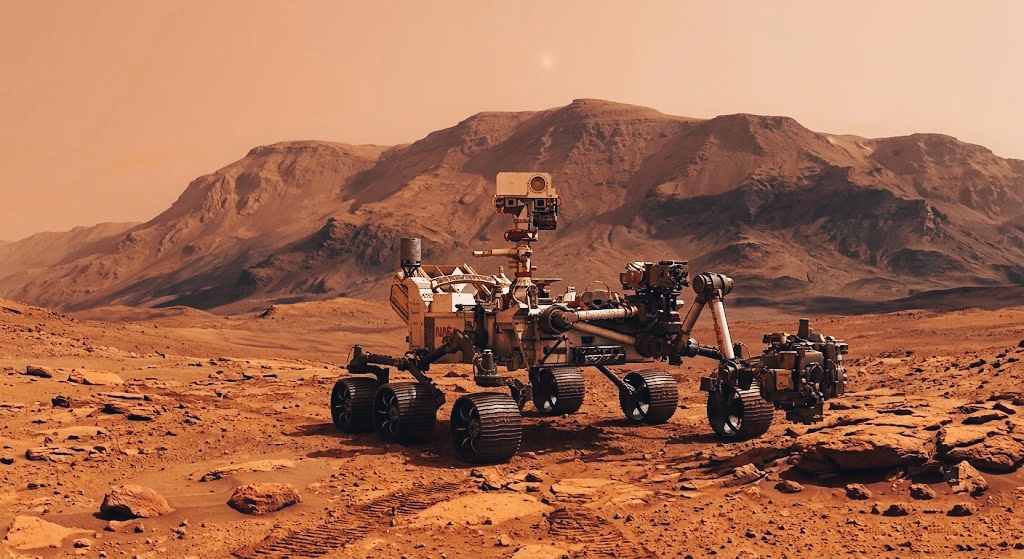
NASA’s Curiosity rover has identified a wide array of organic molecules on the Martian surface, including compounds frequently cited as the essential building blocks for life. This discovery represents a significant scientific milestone, achieved through a sophisticated chemical experiment performed for the first time on another planet. The results suggest that the Martian surface possesses the capability to preserve molecules which may act as potential indicators of ancient biological activity.
The findings indicate that this organic matter has likely been preserved on Mars for approximately 3.5 billion years, according to Amy Williams, a professor of geological sciences and a mission scientist who contributed to the experiment. Such evidence is crucial for scientists seeking to evaluate the historical habitability of the Martian environment. Williams emphasizes that the existence of preserved organic carbon demonstrates that the planet’s surface conditions were, at some point, conducive to the stabilization of such material.
Among the more than 20 substances identified by the experiment were unique chemicals, including a nitrogen-containing molecule with a structure resembling DNA precursors, a detection unprecedented on Mars. The rover also identified benzothiophene, a sulfur-bearing molecule often delivered to planets via meteorites. Dr. Williams notes that this material likely parallels the influx of organic matter that once reached early Earth, potentially providing the fundamental components necessary for the emergence of life on our own planet.
Geological context and mission methodology
Since landing in the Gale Crater in 2012, Curiosity has been tasked with determining whether the ancient Martian environment could have supported microbial life. The rover has traversed the region, eventually focusing on Glen Torridon, an area abundant in clay minerals. These geological formations are vital because they signify the presence of water in the deep past, creating an environment that was historically more conducive to biological processes and chemical stability.
Clay minerals are particularly significant in this context due to their physical properties, which allow them to retain and protect organic substances far more effectively than other geological materials. This specific capability made the region a primary target for the mission team. The strategic selection of these sites was necessary to maximize the chances of uncovering preserved organic compounds, as different geological environments offer varying levels of preservation potential.
The analysis was conducted using the Sample Analysis at Mars, or SAM, instrument suite. This sophisticated collection of tools has been instrumental in the mission’s most vital discoveries regarding the atmosphere and the chemical potential of the planet. Dr. Jennifer Eigenbrode, an astrobiologist at NASA’s Goddard Space Flight Center and a co-author of the study, played a critical role in guiding this complex analytical process and facilitating the mission’s understanding of Martian organic chemistry.
Advancing the search with chemical analysis
To analyze the samples, the team employed a chemical known as TMAH, which was used to break down larger organic molecules into more manageable forms for the onboard instruments. Because the supply of TMAH was strictly limited to only two doses on board the rover, the experimental procedure required meticulous planning. The team had to ensure the chosen location for the sample collection offered the highest probability of success, making every aspect of the operation a delicate balancing act of resources and objectives.
The outcome of this experiment has profound implications for future space exploration initiatives. The success of the TMAH test has paved the way for upcoming missions, including the Rosalind Franklin mission on Mars and the Dragonfly expedition to Saturn’s moon, Titan. These future ventures plan to utilize similar test methods to continue the search for complex organic compounds in various extraterrestrial environments, building upon the protocols and lessons established by the Curiosity mission.
As concluded by Dr. Williams, the knowledge that large, complex organic molecules have been preserved in the shallow subsurface of Mars is a highly promising development. While this current experiment cannot yet definitively distinguish between organic compounds arising from biological processes and those formed through abiotic geological or extraterrestrial means, it confirms that the environment was capable of preserving the chemical signatures necessary to support the rigorous scientific search for past life.
The study is published in Nature Communications.