Ramanujan’s Unproved Results

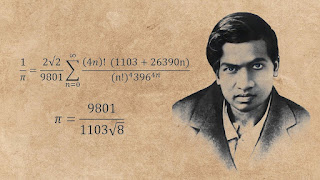
Portrait of Srinivasa Ramanujan, the self-taught Indian mathematician whose notebooks are still being studied today

If a man leaves 3,900 mathematical claims and almost no proofs, how do you sort the true ones from the wrong?

Welcome to FreeAstroScience. Checking the sources on our own page about Ramanujan, we found one credited to two mathematicians who did not write it, so here is the corrected version, sorting his claims into the proved, the merely verified, and the still only asserted.

Ramanujan compiled nearly 3,900 results, mostly written up without derivations, and mathematicians have been proving them one at a time ever since. Pierre Deligne settled the largest of them in 1974, as a consequence of proving the Weil conjectures, confirming a bound on the tau function that Ramanujan had asserted in 1916. Lehmer’s 1947 conjecture that the tau function never takes the value zero is still unproved, though it has been checked by computer for every number below 816212624008487344127999.

Hardy had this problem before we did. Nine pages of formulas reached him from an unknown clerk in Madras on 16 January 1913, and his first reading of them was that he might be looking at a fraud. He wrote back on 8 February saying it was “essential that I should see proofs of some of your assertions.” Every reader of an unrefereed claim inherits that sentence. A century on it arrives as a preprint nobody has refereed, and this article ends on one of those.

Nearly 3,900 claims, almost no derivations

Ramanujan recorded the bulk of his work in four notebooks of loose-leaf paper while he was still in Madras, and they were mostly written up without any derivations at all. Page after page of statements sits there in a clerk’s careful hand, each one either a theorem or a mistake, with nothing underneath it to say which. He died at Kumbakonam on 26 April 1920, thirty-two years old, and the job of finding out passed to everybody else.

Mathematicians who work ahead of their own proofs are not unknown, and our piece on how blindness sharpened his mathematics follows Euler doing something adjacent. What makes this case different is the silence underneath the claims. There is often nothing to reconstruct.

How fast is Ramanujan’s series for pi?

In 1914 he published seventeen series for 1/π in the Quarterly Journal of Pure and Applied Mathematics. The best known of the seventeen looks like this:

1/π = (2√2 / 9801) × ∑ (4n)!(1103 + 26390n) / ((n!)⁴ × 396⁴ⁿ)

Read aloud, it says that the reciprocal of pi equals one fixed constant, two root two over 9801, multiplied by an endless sum whose terms are built out of factorials. Here n runs over every whole number from zero upward. Vishaka Datta’s account in Bhāvanā, on Ramanujan and the pi explorers, credits this series with eight digits of pi for every term evaluated, so we ran it ourselves to eighty-digit precision and counted.

Table 1 — Correct digits of pi from Ramanujan’s 1914 series, computed for this article on 9 August 2026.

Terms usedCorrect digits of pi
17
216
324
432
540

One term on its own lands on 3.1415927, right to seven digits. Every term after that pays out eight more, without slowing down, for as long as you care to keep going. Datta’s figure holds.

Fast for 1914, slow for now. David and Gregory Chudnovsky published a series in 1988 that yields around fourteen digits a term, and every record computation of pi listed since 2009 has used theirs rather than his, the most recent being 314 trillion digits, finished by StorageReview on 23 November 2025. Datta is careful about the lineage there: the Chudnovskys worked with methods similar to those in the 1914 paper, though the terms they arrive at are different ones. Print that record out at ordinary book size, two millimetres to a digit, and the string of numerals would run about four times the distance from here to the Sun.

1729 was never a dull number

Hardy told this one himself, and it is worth having in his words. He had ridden to Putney in taxi-cab number 1729, remarked to the sick man that the number seemed rather a dull one, and said he hoped it was not an unfavourable omen. Ramanujan’s reply, as Hardy reports it, was that 1729 is “the smallest number expressible as the sum of two cubes in two different ways.”

1729 = 1³ + 12³ = 9³ + 10³

One cubed plus twelve cubed is 1729, and so is nine cubed plus ten cubed. We ran every pair of positive cubes up to forty cubed and found nothing smaller with the property, then 4104, 13832 and 20683 waiting next in line. One word there is load-bearing: positive. Allow a negative cube and 91 gets there first, as three cubed plus four cubed and again as six cubed minus five cubed. That is why the phrasing you usually see needs tightening.

What the anecdote leaves out is that the taxi did not surprise him. John Baez, working from Ken Ono and Sarah Trebat-Leder’s work on the 1729 K3 surface, points out that Ramanujan had written the identity down before he ever came to England. It appears in Question 441 of the Journal of the Indian Mathematical Society in 1913, and again as Item 20(iii) of the second notebook. In that entry he sets out a method for generating such solutions and lists a pile of them. Hardy’s dull taxi number had been sitting in a notebook in Madras for years.

What Baez does not settle, and we could not settle from his page either, is who first noticed the property in the whole history of mathematics. His argument is only about Ramanujan against the anecdote, and we are leaving the wider priority question alone rather than guessing at it.

The seventeen functions in his last letter

On 12 January 1920, fifteen weeks before he died, Ramanujan wrote to Hardy and listed seventeen functions he called mock theta functions. He gave examples. For many years afterwards there was no good definition of what a mock theta function actually was, which is an unusual thing to be able to say about a named mathematical object.

Sander Zwegers broke it open in 2001 by finding the relation to non-holomorphic modular forms, and he set the work out in 2002 in his Utrecht doctoral thesis. Eight decades passed between the examples and the definition.

Then came the part an astronomy magazine has to report. Atish Dabholkar, Sameer Murthy and Don Zagier showed that mock modular forms are tied to the degeneracies of quantum black holes in N=4 string theories. Their own 2012 paper on quantum black holes, wall crossing and mock modular forms puts it this way: the quantum degeneracies of single-centered black holes are Fourier coefficients of a mock Jacobi form, while an Appell-Lerch sum captures the degeneracies of multi-centered black holes which decay upon wall-crossing. A dying man’s list of curious functions turned out to be counting black hole states.

This is where we owe you a correction. Updated in August 2026: until this revision the page credited a 2014 paper in the Proceedings of the National Academy of Sciences on holomorphic projections and Ramanujan’s mock theta functions to Ken Ono and Kathrin Bringmann. It is not theirs. The authors were Özlem Imamoğlu, Martin Raum and Olav K. Richter, and their paper runs from page 3961 to page 3967 of volume 111. Ono and Bringmann are real and prominent workers on mock theta functions, which is exactly why the wrong names looked right for two years.

None of this was planned. Prime-number arithmetic sat unused for centuries before it became the thing standing between a stranger and your bank details, which we walked through in our explainer on the math securing your data. Pure mathematics keeps losing that argument about its own uselessness.

Proved, verified, or only claimed?

In his 1916 paper on certain arithmetical functions Ramanujan asserted a bound on the tau function: its size at any prime never exceeds twice that prime raised to the power eleven halves. Pierre Deligne proved it in 1974, and not head-on. It fell out of his proof of the Weil conjectures, published that December in volume 43 of the Publications Mathématiques de l’IHÉS. That one is closed and has stayed closed.

Lehmer’s is not. Derrick Lehmer conjectured in 1947 that the tau function never returns the value zero, and nobody has proved it. What exists instead is verification, which is a different thing wearing similar clothes. Maarten Derickx, Mark van Hoeij and Jinxiang Zeng pushed the check up to every whole number below 816212624008487344127999, about 8.16 times ten to the twenty-third. Count more numbers than there are water molecules in a 24-millilitre mouthful, and you have still not proved anything.

Then there is the third category, and it landed recently. On 30 March 2025, Minjia Shi, Lu Wang and Patrick Solé posted a preprint to arXiv, number 2503.23498, titled a proof of the Lehmer conjecture on Ramanujan’s tau function. It claims to settle the question using a criterion of de la Harpe, Pache and Venkov built on spherical designs in the E8 lattice. Sixteen months later it has not appeared in a refereed journal and carries no recorded citations. Nobody has withdrawn it either. Solé is a research director at CNRS, so nobody should file this under crankery. It is simply not finished being checked.

We are not qualified to referee it and will not pretend otherwise. What we can give you is its status, which is the part most coverage of such claims leaves out. As of today, Lehmer’s conjecture is open.

Whether the gap between verified and proved matters as much as mathematicians insist is an old quarrel, and our piece on math’s most contested foundation is where we took it up. Ramanujan sits awkwardly inside that argument. He was right far more often than a man with no proofs has any business being.

Why the unproved results are the interesting ones

Deligne closed the tau bound in 1974 and it has stayed shut. Lehmer’s conjecture has survived seventy-nine years and a machine check running past 8.16 times ten to the twenty-third without becoming a theorem, and the 2025 preprint that claims to finish it is still sitting unrefereed. The seventeen functions in the January 1920 letter waited eight decades for a definition and then turned up counting black hole states.

We wrote this out because the Ramanujan you meet everywhere else stops at the taxi and the tuberculosis, and you deserve the part where people did the work. A mind left asleep is where bad ideas move in. Our own position is that the unproved entries are worth more than the proved ones, because a claim nobody can close still tells you how little anyone understands modular forms. Argue with us, since we would rather be corrected than agreed with early. Come back when the Shi, Wang and Solé preprint either clears a journal or quietly does not, because we will say which. FreeAstroScience, Rimini. Gerd Dani.

Sources

  1. Ramanujan, S. (1914). “Modular Equations and Approximations to Pi.” Quarterly Journal of Pure and Applied Mathematics, 45, 350-372.
  2. Ramanujan, S. (1916). “On certain arithmetical functions.” Transactions of the Cambridge Philosophical Society.
  3. Deligne, P. (1974). “La conjecture de Weil : I.” Publications Mathématiques de l’IHÉS, 43, 273-307. DOI 10.1007/BF02684373. https://www.numdam.org/item/PMIHES_1974__43__273_0/
  4. Zwegers, S. P. (2002). Mock Theta Functions. PhD thesis, Universiteit Utrecht.
  5. Dabholkar, A., Murthy, S., and Zagier, D. (2012). “Quantum Black Holes, Wall Crossing, and Mock Modular Forms.” arXiv:1208.4074. https://arxiv.org/abs/1208.4074
  6. Imamoğlu, Ö., Raum, M., and Richter, O. K. (2014). “Holomorphic projections and Ramanujan’s mock theta functions.” Proceedings of the National Academy of Sciences, 111(11), 3961-3967. DOI 10.1073/pnas.1311621111.
  7. Derickx, M., van Hoeij, M., and Zeng, J. (2013). “Computing Galois representations and equations for modular curves.” arXiv:1312.6819. Corollary 1.2 gives the non-vanishing bound for the tau function.
  8. Shi, M., Wang, L., and Solé, P. (2025). “Proof of the Lehmer conjecture on Ramanujan’s tau function.” arXiv:2503.23498, submitted 30 March 2025. Unrefereed preprint at the time of writing.
  9. Datta, V. (2017). “Ramanujan: The Patron Saint of Pi Explorers.” Bhāvanā, 1(1). https://bhavana.org.in/ramanujan-pi/
  10. Baez, J. C. (2022). “Hardy, Ramanujan and Taxi No. 1729.” Azimuth, 30 January 2022. https://johncarlosbaez.wordpress.com/2022/01/30/hardy-ramanujan-and-taxi-no-1729/
  11. Biographical dates, the 16 January 1913 letter, the count of notebook results, the 12 January 1920 letter and the Chudnovsky record list were taken from the Wikipedia articles on Srinivasa Ramanujan, the Ramanujan tau function, mock modular forms and the Chudnovsky algorithm, consulted 9 August 2026.
Scroll to Top