
A monumental figure in scientific history, Sir Isaac Newton, revolutionized our comprehension of the natural world with his groundbreaking laws of motion. These three cardinal laws are the bedrock of classical mechanics and continue to shape our understanding of the physical universe. This discussion delves into the profound depths of Newton’s three laws, their significance, and the principles underpinning them.
Law One: The Principle of Inertia
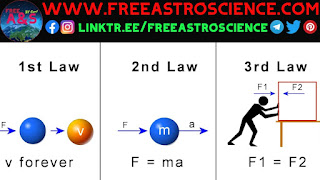
Newton’s first law, commonly referred to as the law of inertia, elucidates that an object at rest stays at rest, and an object in motion continues with constant velocity unless influenced by an external force. This principle signifies that an object will preserve its motion state until an unbalanced force disrupts it. The concept of inertia, a property of matter that resists motion change, is central to this law. The inertia of an object increases with its mass, necessitating more force to alter its motion state.
Law Two: The Equation of Force and Acceleration
Newton’s second law or the law of force and acceleration delineates the connection between force, mass, and acceleration. According to this law, an object’s acceleration is directly proportional to the force exerted on it and inversely proportional to its mass (F=ma). This principle is practically employed to compute the force necessary to propel an object of specific mass at a particular acceleration rate.
Law Three: The Doctrine of Action and Reaction
Newton’s third law, popularly known as the law of action and reaction, posits that every action triggers an equal and opposite reaction. This law means that when an object exerts force on another, the second object applies an equal and opposite force on the first one.
Wrapping Up
In summation, Newton’s laws of motion are the pillars of classical mechanics and continue to be pivotal to our understanding of the physical universe. These laws describe inertia, the correlation between force, mass, and acceleration, and the principle of action and reaction. Gaining an understanding of Newton’s three laws is imperative to comprehend the natural world and the physical laws that govern it.